
solo per uso di ricerca
Erastin Induttore di Ferroptosis
N. Cat.S7242
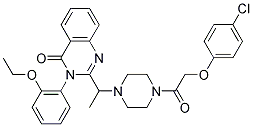
Struttura chimica
Peso molecolare: 547.04
Vai a
Controllo Qualità
Lotto:
Purezza:
99.89%
99.89
Prodotti spesso usati con Erastin
| Target correlati | Dehydrogenase HSP Transferase P450 (e.g. CYP17) PDE phosphatase PPAR Vitamin Carbohydrate Metabolism Mitochondrial Metabolism |
|---|---|
| Altro Ferroptosis Inibitori | Imidazole Ketone Erastin (IKE) FIN56 iFSP1 UAMC-3203 SRS11-92 SRS16-86 icFSP1 N6F11 Bufotalin FSEN1 |
Coltura cellulare, trattamento e concentrazione di lavoro
| Linee cellulari | Tipo di saggio | Concentrazione | Tempo di incubazione | Formulazione | Descrizione dellattività | PMID |
|---|---|---|---|---|---|---|
| human BJeH cells | Function assay | 6 h | Induction of reactive oxygen species production in human BJeH cells expressing wild type RAS after 6 hrs by DCF-based flow cytometric analysis | 22832321 | ||
| human BJeLR cells | Cytotoxic assay | 10 μM | 12 h | Cytotoxicity against human BJeLR cells expressing RAS G12V mutant at 10 uM at 12 hrs by trypan blue staining | 22832321 | |
| human BJ cells | Function assay | 4.6 μM | Increase in intracellular oxidative species in human BJ cells expressing TERT, LT, ST and RAS G12V mutant genes cells at 4.6 uM | 17568748 | ||
| human BJ cells | Function assay | 9 μM | Induction of cell death in human BJ cells expressing TERT, LT, ST and RAS G12V mutant genes cells at 9 uM. | 17568748 | ||
| human BJ cells | Function assay | Induction of cell death in human BJ cells expressing TERT, LT, ST and RAS G12V mutant genes in presence of U0126 by trypan blue exclusion method, IC50=31.2 μM. | 17568748 | |||
| human A673 cells | Function assay | Induction of cell death in human A673 cells, EC50=30 μM. | 17568748 | |||
| human MX2 cells | Function assay | Induction of cell death in human MX2 cells, EC50=18 μM. | 17568748 | |||
| human HOS cells | Function assay | Induction of cell death in human HOS cells , EC50=17 μM. | 17568748 | |||
| human Hs925.T cells | Function assay | Induction of cell death in human Hs925.T cells, EC50=17 μM. | 17568748 | |||
| human Hs51.T cells | Function assay | Induction of cell death in human Hs51.T cells, EC50=12 μM. | 17568748 | |||
| human EWS502 cells | Function assay | Induction of cell death in human EWS502 cells, EC50=10 μM. | 17568748 | |||
| human BJ cells | Function assay | Induction of cell death in TERT expressing human BJ cells, EC50=10 μM. | 17568748 | |||
| human TC71 cells | Function assay | Induction of cell death in human TC71 cells, EC50=10 μM. | 17568748 | |||
| human U937 cells | Function assay | Induction of cell death in human U937 cells, EC50=10 μM. | 17568748 | |||
| human SK-N-MC cells | Function assay | Induction of cell death in human SK-N-MC cells, EC50=10 μM. | 17568748 | |||
| human TC32 cells | Function assay | Induction of cell death in human TC32 cells | 17568748 | |||
| human U2OS cells | Function assay | Induction of cell death in human U2OS cells, EC50=6 μM. | 17568748 | |||
| human LNCaP cells | Function assay | Induction of cell death in human LNCaP cells, EC50=6 μM. | 17568748 | |||
| human Calu1 cells | Function assay | Inhibition of human Calu1 cells expressing KRAS with activating mutations by trypan blue exclusion assay, IC50=4 μM. | 17568748 | |||
| human SKUT cells | Function assay | Induction of cell death in human SKUT cells, EC50=4 μM. | 17568748 | |||
| human MES-SA cells | Function assay | Induction of cell death in human MES-SA cells, EC50=3 μM. | 17568748 | |||
| human SVR cells | Function assay | Induction of cell death in human SVR cells, EC50=2.5 μM. | 17568748 | |||
| human HT1080 cells | Function assay | Induction of cell death in human HT1080 cells in presence of PD-98059 by trypan blue exclusion method, IC50=1 μM. | 17568748 | |||
| human BJ cells | Function assay | Induction of cell death in human BJ cells expressing TERT, LT, ST and RAS G12V mutant genes cells in presence of PD-98059 by trypan blue exclusion method, IC50=0.9 μM. | 17568748 | |||
| human HeLa cells | Function assay | Induction of cell death in human HeLa cells, EC50=0.6 μM. | 17568748 | |||
| human CCF-STTG1 cells | Function assay | Inhibition of Xct in human CCF-STTG1 cells assessed as glutamate release after 2 hrs by fluorometry, IC50=0.2 μM. | 26231156 | |||
| Clicca per visualizzare più dati sperimentali sulle linee cellulari | ||||||
Informazioni chimiche, conservazione e stabilità
| Peso molecolare | 547.04 | Formula | C30H31ClN4O4 |
Conservazione (Dalla data di ricezione) | 3 years -20°C powder |
|---|---|---|---|---|---|
| N. CAS | 571203-78-6 | Scarica SDF | Conservazione delle soluzioni stock | Le soluzioni sono instabili. Preparare al momento o acquistare formati piccoli e preconfezionati. Riconfezionare al ricevimento. | |
| Sinonimi | N/A | Smiles | CCOC1=CC=CC=C1N2C(=O)C3=CC=CC=C3N=C2C(C)N4CCN(CC4)C(=O)COC5=CC=C(C=C5)Cl | ||
Solubilità
|
In vitro |
DMSO
: 25 mg/mL
(45.7 mM)
Riscaldato con bagno dacqua a 50°C;
Sonicato;
Water : Insoluble Ethanol : Insoluble |
Calcolatore di Molarità
Calcolatore di Diluizione
Calcolatore del Peso Molecolare
|
In vivo |
|||||
Calcolatore di formulazione in vivo (Soluzione chiara)
Passo 1: Inserire le informazioni di seguito (Consigliato: Un animale aggiuntivo per tenere conto della perdita durante lesperimento)
mg/kg
g
μL
Passo 2: Inserire la formulazione in vivo (Questo è solo il calcolatore, non la formulazione. Contattateci prima se non cè una formulazione in vivo nella sezione Solubilità.)
% DMSO
%
% Tween 80
% ddH2O
%DMSO
%
Risultati del calcolo:
Concentrazione di lavoro: mg/ml;
Metodo per preparare il liquido master di DMSO: mg farmaco predissolto in μL DMSO ( Concentrazione del liquido master mg/mL, Vi preghiamo di contattarci prima se la concentrazione supera la solubilità del DMSO del lotto del farmaco. )
Metodo per preparare la formulazione in vivo: Prendere μL DMSO liquido master, quindi aggiungereμL PEG300, mescolare e chiarire, quindi aggiungereμL Tween 80, mescolare e chiarire, quindi aggiungere μL ddH2O, mescolare e chiarire.
Metodo per preparare la formulazione in vivo: Prendere μL DMSO liquido master, quindi aggiungere μL Olio di mais, mescolare e chiarire.
Nota: 1. Si prega di assicurarsi che il liquido sia limpido prima di aggiungere il solvente successivo.
2. Assicurarsi di aggiungere il/i solvente/i in ordine. È necessario assicurarsi che la soluzione ottenuta, nellaggiunta precedente, sia una soluzione limpida prima di procedere allaggiunta del solvente successivo. Metodi fisici come il vortex, gli ultrasuoni o il bagno dacqua calda possono essere utilizzati per facilitare la dissoluzione.
Meccanismo dazione
| Targets/IC50/Ki |
Ferroptosis
|
|---|---|
| In vitro |
Erastin è selettivamente letale per le linee cellulari mutanti RAS oncogeniche e innesca una forma unica di morte cellulare non apoptotica ferro-dipendente chiamata ferroptosi. Questo composto si lega direttamente a VDAC2 e causa danni mitocondriali tramite la produzione di ROS in modo NADH-dipendente, che induce la morte cellulare in alcune cellule tumorali che ospitano mutazioni attivanti nella via RAS-RAF-MEK. Inoltre, questa sostanza chimica, inducendo la CID (morte cellulare indipendente dalle caspasi) mediata da ROS, potenzia fortemente l'effetto nelle cellule EGFR WT. |
| In vivo |
Erastin è un attivatore della ferroptosis inibendo i canali anionici voltaggio-dipendenti (VDAC2/VDAC3). Questo composto inibisce anche l'antiporto cistina-glutammato (xCT). |
Riferimenti |
|
Applicazioni
| Metodi | Biomarcatori | Immagini | PMID |
|---|---|---|---|
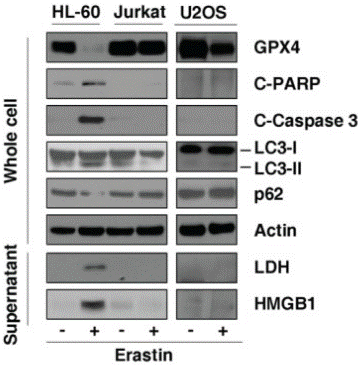
| Western blot | GPX4 / cleaved-PARP / cleaved-caspase3 / LC3 / p62 / LDH / HMGB1 TfR1 / p-JNK / JNK / p-P38 HSPA5 / p-EIF2AK3 GRP78 |
|
27308510 |
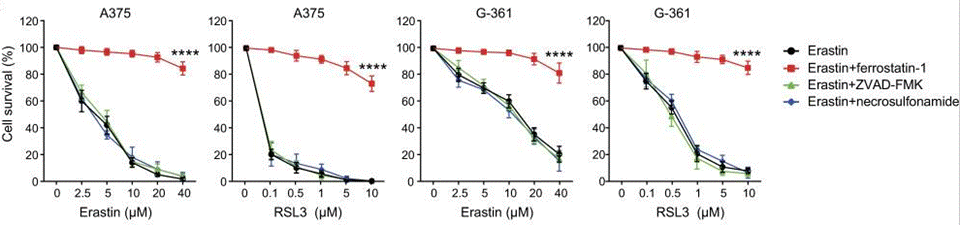
| Growth inhibition assay | Cell survival |
|
29348676 |
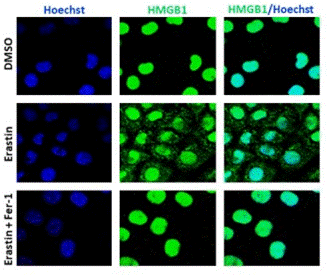
| Immunofluorescence | HMGB1 |
|
31105999 |
Supporto tecnico
Istruzioni per la manipolazione
Tel: +1-832-582-8158 Ext:3
Per qualsiasi altra domanda, si prega di lasciare un messaggio.

I prodotti sono solo per uso di ricerca. Non per uso umano. Non vendiamo a pazienti.
©Copyright 2013 Selleck Chemicals. Tutti i diritti riservati.