
solo per uso di ricerca
Triapine (3-AP) DNA/RNA Synthesis inibitore
N. Cat.S7470
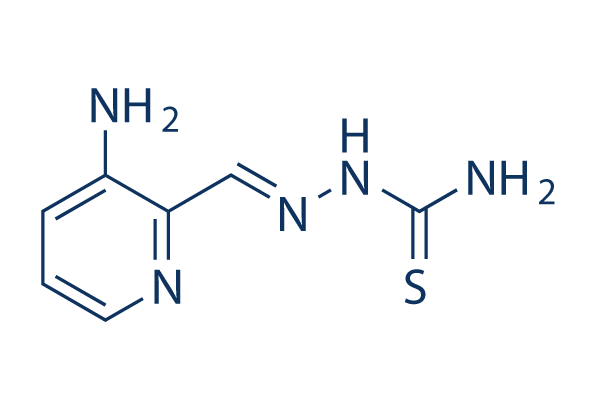
Struttura chimica
Peso molecolare: 195.24
Controllo Qualità
| Target correlati | HDAC PARP ATM/ATR DNA-PK WRN Topoisomerase PPAR Sirtuin Casein Kinase eIF |
|---|---|
| Altro DNA/RNA Synthesis Inibitori | CX-5461 (Pidnarulex) B02 SCR7 Favipiravir (T-705) EED226 RK-33 BMH-21 Carmofur YK-4-279 Halofuginone |
Coltura cellulare, trattamento e concentrazione di lavoro
| Linee cellulari | Tipo di saggio | Concentrazione | Tempo di incubazione | Formulazione | Descrizione dellattività | PMID |
|---|---|---|---|---|---|---|
| SK-N-MC | Antiproliferative assay | Antiproliferative activity against human SK-N-MC cells by MTT assay, IC50=0.31μM | 17142046 | |||
| SK-N-MC | Antiproliferative assay | 72 hrs | Antiproliferative activity against human SK-N-MC cells after 72 hrs by MTT assay, IC50=0.26μM | 17602603 | ||
| SK-N-MC | Antiproliferative assay | Antiproliferative activity against human SK-N-MC cells by MTT assay, IC50=0.54μM | 17963372 | |||
| BT-37 | qHTS assay | qHTS of pediatric cancer cell lines to identify multiple opportunities for drug repurposing: Primary screen for BT-37 cells | 18159922 | |||
| KB-3-1 | Cytotoxicity assay | 72 hrs | Cytotoxicity against human P-gp-negative KB-3-1 cells after 72 hrs by MTT assay, IC50=1.4μM | 19397322 | ||
| KB-3-1 | Cytotoxicity assay | 72 hrs | Cytotoxicity against human P-gp-negative KB-3-1 cells after 72 hrs by MTT assay, IC50=1.41254μM | 19397322 | ||
| KBV1 | Cytotoxicity assay | 72 hrs | Cytotoxicity against human P-glycoprotein-expressing KBV1 cells after 72 hrs by MTT assay, IC50=5.88844μM | 19397322 | ||
| KBV1 | Cytotoxicity assay | 72 hrs | Cytotoxicity against human P-glycoprotein-expressing KBV1 cells after 72 hrs by MTT assay, IC50=5.9μM | 19397322 | ||
| SK-N-MC | Antiproliferative assay | 72 hrs | Antiproliferative activity against human SK-N-MC cells after 72 hrs by MTT assay, IC50=0.26μM | 19601577 | ||
| HCT116 | Dark cytotoxicity assay | 96 hrs | Dark cytotoxicity against human HCT116 cells expressing wild type p53 after 96 hrs by MTT assay, IC50=1.226μM | 24900837 | ||
| HCT116 | Photocytotoxicity assay | 24 hrs | Photocytotoxicity against human HCT116 cells expressing wild type p53 incubated for 24 hrs followed by light irradiation measured after 24 hrs by MTS assay in presence of ALA and FeCl3 | 24900837 | ||
| HCT116 | Function assay | 4 uM | 24 hrs | Induction of ROS generation in human HCT116 cells expressing wild type p53 at 4 uM after 24 hrs by spectrophotometry | 24900837 | |
| NB-EBc1 | qHTS assay | qHTS of pediatric cancer cell lines to identify multiple opportunities for drug repurposing: Primary screen for NB-EBc1 cells | 27336684 | |||
| OHS-50 | qHTS assay | qHTS of pediatric cancer cell lines to identify multiple opportunities for drug repurposing: Primary screen for OHS-50 cells | 27336684 | |||
| KB-3-1 | Cytotoxicity assay | 72 hrs | Cytotoxicity against human KB-3-1 cells incubated for 72 hrs by MTT assay, IC50=3.1μM | 27336684 | ||
| KBC1 | Cytotoxicity assay | 72 hrs | Cytotoxicity against human KBC1 cells incubated for 72 hrs by MTT assay, IC50=8.9μM | 27336684 | ||
| SW480 | Function assay | 2.5 uM | 48 hrs | Induction of morphological changes in human SW480 cells assessed as induction of massive cell flattening at 2.5 uM incubated for 48 hrs by phase contrast microscopy | 27336684 | |
| HL60 | Function assay | 1 and 5 uM | 30 mins | Induction of intracellular ROS generation in human HL60 cells at 1 and 5 uM in presence of CuCl2 incubated for 30 mins by DCF-DA staining based fluorescence assay | 27336684 | |
| L1210 | Growth inhibition assay | Growth inhibition of mouse L1210 cells by MTS assay, IC50=1.3μM | 30904782 | |||
| SJ-GBM2 | qHTS assay | qHTS of pediatric cancer cell lines to identify multiple opportunities for drug repurposing: Primary screen for SJ-GBM2 cells | 31614257 | |||
| WPMY-1 | Antiproliferative assay | 72 hrs | Antiproliferative activity against human WPMY-1 cells assessed as reduction in cell proliferation incubated for 72 hrs by MTT assay, IC50=4.96μM | 31614257 | ||
| GES-1 | Antiproliferative assay | 72 hrs | Antiproliferative activity against human GES-1 cells assessed as reduction in cell proliferation incubated for 72 hrs by MTT assay, IC50=5.6μM | 31614257 | ||
| HEK293 | Cytotoxicity assay | Cytotoxicity against HEK293 cells (CO-ADD:MA_007); CC50 by cell viability assay in DMEM (10% FBS) media using TC plates, by Resazurin F(560/590), CC50=2.827μM | ChEMBL | |||
| GES-1 | Cytotoxicity assay | 72 hrs | Cytotoxicity against human GES-1 cells after 72 hrs by MTT assay, IC50=5.4μM | ChEMBL | ||
| MGC803 | Antiproliferative assay | 72 hrs | Antiproliferative activity against human MGC803 cells after 72 hrs by MTT assay, IC50=9.68μM | ChEMBL | ||
| MCF7 | Antiproliferative assay | 72 hrs | Antiproliferative activity against human MCF7 cells after 72 hrs by MTT assay, IC50=18.85μM | ChEMBL | ||
| SMMC7721 | Antiproliferative assay | 72 hrs | Antiproliferative activity against human SMMC7721 cells after 72 hrs by MTT assay, IC50=42.81μM | ChEMBL | ||
| Clicca per visualizzare più dati sperimentali sulle linee cellulari | ||||||
Informazioni chimiche, conservazione e stabilità
| Peso molecolare | 195.24 | Formula | C7H9N5S |
Conservazione (Dalla data di ricezione) | |
|---|---|---|---|---|---|
| N. CAS | 200933-27-3 | Scarica SDF | Conservazione delle soluzioni stock |
|
|
Solubilità
|
In vitro |
DMSO
: 39 mg/mL
(199.75 mM)
Water : Insoluble Ethanol : Insoluble |
Calcolatore di Molarità
|
In vivo |
|||||
Calcolatore di formulazione in vivo (Soluzione chiara)
Passo 1: Inserire le informazioni di seguito (Consigliato: Un animale aggiuntivo per tenere conto della perdita durante lesperimento)
Passo 2: Inserire la formulazione in vivo (Questo è solo il calcolatore, non la formulazione. Contattateci prima se non cè una formulazione in vivo nella sezione Solubilità.)
Risultati del calcolo:
Concentrazione di lavoro: mg/ml;
Metodo per preparare il liquido master di DMSO: mg farmaco predissolto in μL DMSO ( Concentrazione del liquido master mg/mL, Vi preghiamo di contattarci prima se la concentrazione supera la solubilità del DMSO del lotto del farmaco. )
Metodo per preparare la formulazione in vivo: Prendere μL DMSO liquido master, quindi aggiungereμL PEG300, mescolare e chiarire, quindi aggiungereμL Tween 80, mescolare e chiarire, quindi aggiungere μL ddH2O, mescolare e chiarire.
Metodo per preparare la formulazione in vivo: Prendere μL DMSO liquido master, quindi aggiungere μL Olio di mais, mescolare e chiarire.
Nota: 1. Si prega di assicurarsi che il liquido sia limpido prima di aggiungere il solvente successivo.
2. Assicurarsi di aggiungere il/i solvente/i in ordine. È necessario assicurarsi che la soluzione ottenuta, nellaggiunta precedente, sia una soluzione limpida prima di procedere allaggiunta del solvente successivo. Metodi fisici come il vortex, gli ultrasuoni o il bagno dacqua calda possono essere utilizzati per facilitare la dissoluzione.
Meccanismo dazione
| Targets/IC50/Ki |
Ribonucleotide reductase
|
|---|---|
| In vitro |
Triapine (3-AP) inibisce potentemente l'attività della ribonucleotide reduttasi sia nelle cellule di carcinoma nasofaringeo KB di tipo selvaggio che nelle cellule KB resistenti all'HU, e mostra un'ampia attività antitumorale inibendo la sintesi del DNA in una serie di linee cellulari tumorali. In vitro, blocca la neurotossicità ischemica e la tossicità ipossica con EC50 rispettivamente di 0,35 μM e 0,75 μM. Questo composto mostra anche la sua attività neuroprotettiva sopprimendo la morte cellulare indotta da agenti neurotossici, inclusi staurosporina, veratridina e glutammato.
|
| Saggio chinasico |
Saggio della ribonucleotide reduttasi
|
|
La CDP reduttasi viene saggiata utilizzando la cromatografia a scambio ionico Dowex 1-borato. La miscela di saggio contiene 0,02 μCi di [14C]CDP (52,9 mCi/mmol), 3 mM di ditiotreitolo, 6 mM di MgCl2, 30 mM di HEPES, 5 mM di ATP, 0,15 mM di CDP non marcato e 10 μL di estratto cellulare in un volume finale di 0,02 mL. Il tempo di incubazione per la reazione è di 60 min, durante il quale la reazione è lineare.
|
|
| In vivo |
In topi affetti da leucemia L1210, Triapine (3-AP) (da 1,25 a 20 mg/kg) è curativa per alcuni topi senza tossicità letale. Questo composto inibisce anche la crescita di tumori solidi in xenotrapianti di carcinoma polmonare M109 di topo e carcinoma ovarico umano A2780. Inoltre, la sua combinazione con varie classi di agenti che danneggiano il DNA si traduce in un'inibizione sinergica della leucemia L1210. In un modello di ratto di ischemia transitoria, riduce il volume dell'infarto del 59% quando somministrato i.c.v. (50 μ per ratto) e del 35% quando somministrato i.v. (1 mg/kg).
|
Riferimenti |
|
Applicazioni
| Metodi | Biomarcatori | Immagini | PMID |
|---|---|---|---|
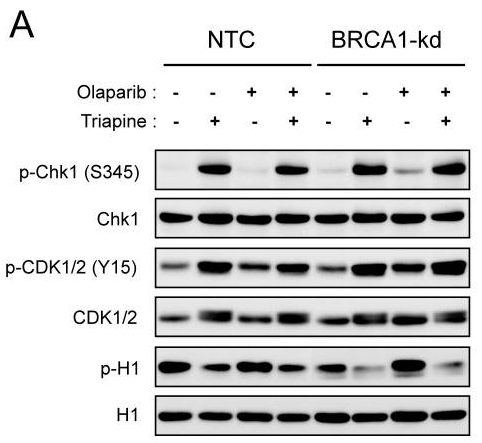
| Western blot | p-Chk1 / Chk1 / p-CDK1/2 / CDK1/2 / p-H1 |
|
24413181 |
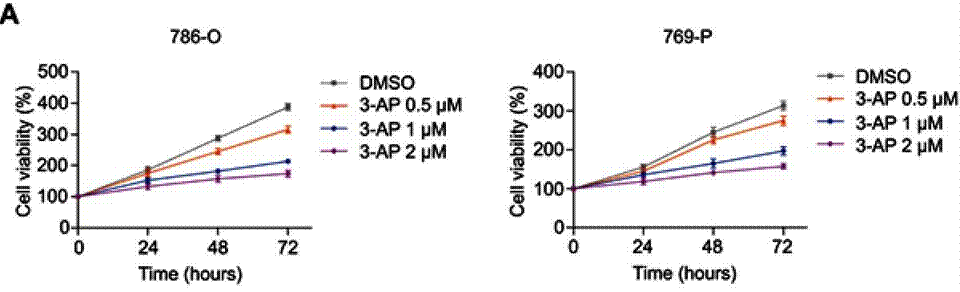
| Growth inhibition assay | Cell viability |
|
31118677 |
Informazioni sullo studio clinico
(dati da https://clinicaltrials.gov, aggiornato il 2024-05-22)
| Numero NCT | Reclutamento | Condizioni | Sponsor/Collaboratori | Data di inizio | Fasi |
|---|---|---|---|---|---|
| NCT00293345 | Completed | Anaplastic Large Cell Lymphoma|Angioimmunoblastic T-cell Lymphoma|Extranodal Marginal Zone B-cell Lymphoma of Mucosa-associated Lymphoid Tissue|Intraocular Lymphoma|Nodal Marginal Zone B-cell Lymphoma|Primary Central Nervous System Hodgkin Lymphoma|Primary Central Nervous System Non-Hodgkin Lymphoma|Recurrent Adult Burkitt Lymphoma|Recurrent Adult Diffuse Large Cell Lymphoma|Recurrent Adult Diffuse Mixed Cell Lymphoma|Recurrent Adult Diffuse Small Cleaved Cell Lymphoma|Recurrent Adult Hodgkin Lymphoma|Recurrent Adult Immunoblastic Large Cell Lymphoma|Recurrent Adult Lymphoblastic Lymphoma|Recurrent Adult T-cell Leukemia/Lymphoma|Recurrent Cutaneous T-cell Non-Hodgkin Lymphoma|Recurrent Grade 1 Follicular Lymphoma|Recurrent Grade 2 Follicular Lymphoma|Recurrent Grade 3 Follicular Lymphoma|Recurrent Mantle Cell Lymphoma|Recurrent Marginal Zone Lymphoma|Recurrent Mycosis Fungoides/Sezary Syndrome|Recurrent Small Lymphocytic Lymphoma|Small Intestine Lymphoma|Splenic Marginal Zone Lymphoma|Stage III Adult Burkitt Lymphoma|Stage III Adult Diffuse Large Cell Lymphoma|Stage III Adult Diffuse Mixed Cell Lymphoma|Stage III Adult Diffuse Small Cleaved Cell Lymphoma|Stage III Adult Hodgkin Lymphoma|Stage III Adult Immunoblastic Large Cell Lymphoma|Stage III Adult Lymphoblastic Lymphoma|Stage III Adult T-cell Leukemia/Lymphoma|Stage III Cutaneous T-cell Non-Hodgkin Lymphoma|Stage III Grade 1 Follicular Lymphoma|Stage III Grade 2 Follicular Lymphoma|Stage III Grade 3 Follicular Lymphoma|Stage III Mantle Cell Lymphoma|Stage III Marginal Zone Lymphoma|Stage III Mycosis Fungoides/Sezary Syndrome|Stage III Small Lymphocytic Lymphoma|Stage IV Adult Burkitt Lymphoma|Stage IV Adult Diffuse Large Cell Lymphoma|Stage IV Adult Diffuse Mixed Cell Lymphoma|Stage IV Adult Diffuse Small Cleaved Cell Lymphoma|Stage IV Adult Hodgkin Lymphoma|Stage IV Adult Immunoblastic Large Cell Lymphoma|Stage IV Adult Lymphoblastic Lymphoma|Stage IV Adult T-cell Leukemia/Lymphoma|Stage IV Cutaneous T-cell Non-Hodgkin Lymphoma|Stage IV Grade 1 Follicular Lymphoma|Stage IV Grade 2 Follicular Lymphoma|Stage IV Grade 3 Follicular Lymphoma|Stage IV Mantle Cell Lymphoma|Stage IV Marginal Zone Lymphoma|Stage IV Mycosis Fungoides/Sezary Syndrome|Stage IV Small Lymphocytic Lymphoma|Unspecified Adult Solid Tumor Protocol Specific|Waldenström Macroglobulinemia |
National Cancer Institute (NCI) |
June 2006 | Phase 1 |
Supporto tecnico
Istruzioni per la manipolazione
Tel: +1-832-582-8158 Ext:3
Per qualsiasi altra domanda, si prega di lasciare un messaggio.

I prodotti sono solo per uso di ricerca. Non per uso umano. Non vendiamo a pazienti.
©Copyright 2013 Selleck Chemicals. Tutti i diritti riservati.