
solo per uso di ricerca
R788 (Fostamatinib) Disodium Syk Inibitore
N. Cat.: S2206
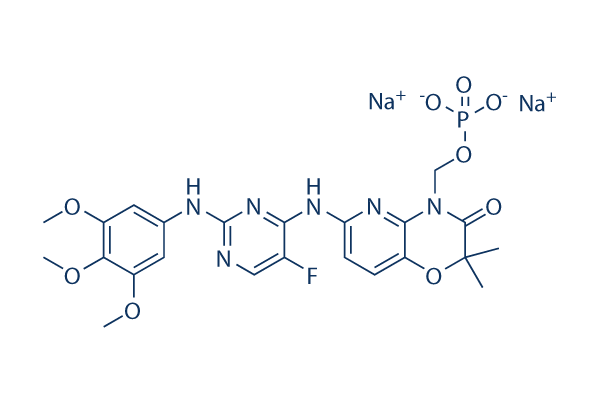
Struttura chimica
Peso molecolare: 624.42
Controllo Qualità (Quality Control)
| Target correlati | EGFR VEGFR JAK FGFR PDGFR Src HIF FLT3 HER2 FLT |
|---|---|
| Altro Syk Inibitori | R406 R406 (free base) PRT062607 (P505-15) HCl Entospletinib (GS-9973) Piceatannol BAY 61-3606 dihydrochloride PRT-060318 2HCl TAK-659 Hydrochloride Lanraplenib (GS-SYK) RO9021 |
Coltura cellulare, trattamento e concentrazione di lavoro
(Cell Culture, Treatment & Working Concentration)
| Linee cellulari | Tipo di saggio | Concentrazione | Tempo di incubazione | Formulazione | Descrizione dell'attività | PMID |
|---|---|---|---|---|---|---|
| Ramos | Function assay | Inhibition of SYK in human Ramos cells, IC50 = 0.267 μM. | 23350847 | |||
| SJ-GBM2 | qHTS assay | qHTS of pediatric cancer cell lines to identify multiple opportunities for drug repurposing: Primary screen for SJ-GBM2 cells | 29435139 | |||
| A673 | qHTS assay | qHTS of pediatric cancer cell lines to identify multiple opportunities for drug repurposing: Primary screen for A673 cells | 29435139 | |||
| SK-N-MC | qHTS assay | qHTS of pediatric cancer cell lines to identify multiple opportunities for drug repurposing: Primary screen for SK-N-MC cells | 29435139 | |||
| NB-EBc1 | qHTS assay | qHTS of pediatric cancer cell lines to identify multiple opportunities for drug repurposing: Primary screen for NB-EBc1 cells | 29435139 | |||
| U-2 OS | qHTS assay | qHTS of pediatric cancer cell lines to identify multiple opportunities for drug repurposing: Primary screen for U-2 OS cells | 29435139 | |||
| Saos-2 | qHTS assay | qHTS of pediatric cancer cell lines to identify multiple opportunities for drug repurposing: Primary screen for Saos-2 cells | 29435139 | |||
| SK-N-SH | qHTS assay | qHTS of pediatric cancer cell lines to identify multiple opportunities for drug repurposing: Primary screen for SK-N-SH cells | 29435139 | |||
| NB1643 | qHTS assay | qHTS of pediatric cancer cell lines to identify multiple opportunities for drug repurposing: Primary screen for NB1643 cells | 29435139 | |||
| LAN-5 | qHTS assay | qHTS of pediatric cancer cell lines to identify multiple opportunities for drug repurposing: Primary screen for LAN-5 cells | 29435139 | |||
| Rh18 | qHTS assay | qHTS of pediatric cancer cell lines to identify multiple opportunities for drug repurposing: Primary screen for Rh18 cells | 29435139 | |||
| OHS-50 | qHTS assay | qHTS of pediatric cancer cell lines to identify multiple opportunities for drug repurposing: Primary screen for OHS-50 cells | 29435139 | |||
| RD | qHTS assay | qHTS of pediatric cancer cell lines to identify multiple opportunities for drug repurposing: Primary screen for RD cells | 29435139 | |||
| MG 63 (6-TG R) | qHTS assay | qHTS of pediatric cancer cell lines to identify multiple opportunities for drug repurposing: Primary screen for MG 63 (6-TG R) cells | 29435139 | |||
| Rh41 | qHTS assay | qHTS of pediatric cancer cell lines to identify multiple opportunities for drug repurposing: Primary screen for Rh41 cells | 29435139 | |||
| NB1643 | qHTS assay | qHTS of pediatric cancer cell lines to identify multiple opportunities for drug repurposing: Confirmatory screen for NB1643 cells | 29435139 | |||
| A673 | qHTS assay | qHTS of pediatric cancer cell lines to identify multiple opportunities for drug repurposing: Confirmatory screen for A673 cells) | 29435139 | |||
| SK-N-MC | qHTS assay | qHTS of pediatric cancer cell lines to identify multiple opportunities for drug repurposing: Confirmatory screen for SK-N-MC cells | 29435139 | |||
| LAN-5 | qHTS assay | qHTS of pediatric cancer cell lines to identify multiple opportunities for drug repurposing: Confirmatory screen for LAN-5 cells | 29435139 | |||
| DAOY | qHTS assay | qHTS of pediatric cancer cell lines to identify multiple opportunities for drug repurposing: Confirmatory screen for DAOY cells | 29435139 | |||
| BT-37 | qHTS assay | qHTS of pediatric cancer cell lines to identify multiple opportunities for drug repurposing: Confirmatory screen for BT-37 cells | 29435139 | |||
| TC32 | qHTS assay | qHTS of pediatric cancer cell lines to identify multiple opportunities for drug repurposing: Confirmatory screen for TC32 cells | 29435139 | |||
| MG 63 (6-TG R) | qHTS assay | qHTS of pediatric cancer cell lines to identify multiple opportunities for drug repurposing: Confirmatory screen for MG 63 (6-TG R) cells | 29435139 | |||
| U-2 OS | qHTS assay | qHTS of pediatric cancer cell lines to identify multiple opportunities for drug repurposing: Confirmatory screen for U-2 OS cells | 29435139 | |||
| Rh41 | qHTS assay | qHTS of pediatric cancer cell lines to identify multiple opportunities for drug repurposing: Confirmatory screen for Rh41 cells | 29435139 | |||
| RD | qHTS assay | qHTS of pediatric cancer cell lines to identify multiple opportunities for drug repurposing: Confirmatory screen for RD cells | 29435139 | |||
| Rh30 | qHTS assay | qHTS of pediatric cancer cell lines to identify multiple opportunities for drug repurposing: Confirmatory screen for Rh30 cells | 29435139 | |||
| Saos-2 | qHTS assay | qHTS of pediatric cancer cell lines to identify multiple opportunities for drug repurposing: Confirmatory screen for Saos-2 cells | 29435139 | |||
| OHS-50 | qHTS assay | qHTS of pediatric cancer cell lines to identify multiple opportunities for drug repurposing: Confirmatory screen for OHS-50 cells | 29435139 | |||
| SK-N-SH | qHTS assay | qHTS of pediatric cancer cell lines to identify multiple opportunities for drug repurposing: Confirmatory screen for SK-N-SH cells | 29435139 | |||
| Clicca per visualizzare più dati sperimentali sulle linee cellulari | ||||||
Informazioni chimiche, conservazione e stabilità (Chemical Information, Storage & Stability)
| Peso molecolare | 624.42 | Formula | C23H24FN6O9P.2Na |
Conservazione (Dalla data di ricezione) | |
|---|---|---|---|---|---|
| N. CAS | 1025687-58-4 | Scarica SDF | Conservazione delle soluzioni stock |
|
|
| Sinonimi | Tamatinib Fosdium | Smiles | CC1(C(=O)N(C2=C(O1)C=CC(=N2)NC3=NC(=NC=C3F)NC4=CC(=C(C(=C4)OC)OC)OC)COP(=O)([O-])[O-])C.[Na+].[Na+] | ||
Solubilità (Solubility)
|
In vitro |
DMSO
: 12 mg/mL
(19.21 mM)
Water : Insoluble Ethanol : Insoluble |
Calcolatore di Molarità
|
In vivo |
|||||
Calcolatore di formulazione in vivo (Soluzione chiara)
Passo 1: Inserire le informazioni di seguito (Consigliato: Un animale aggiuntivo per tenere conto della perdita durante l'esperimento)
Passo 2: Inserire la formulazione in vivo (Questo è solo il calcolatore, non la formulazione. Contattateci prima se non c'è una formulazione in vivo nella sezione Solubilità.)
Risultati del calcolo:
Concentrazione di lavoro: mg/ml;
Metodo per preparare il liquido master di DMSO: mg farmaco predissolto in μL DMSO ( Concentrazione del liquido master mg/mL, Vi preghiamo di contattarci prima se la concentrazione supera la solubilità del DMSO del lotto del farmaco. )
Metodo per preparare la formulazione in vivo: Prendere μL DMSO liquido master, quindi aggiungereμL PEG300, mescolare e chiarire, quindi aggiungereμL Tween 80, mescolare e chiarire, quindi aggiungere μL ddH2O, mescolare e chiarire.
Metodo per preparare la formulazione in vivo: Prendere μL DMSO liquido master, quindi aggiungere μL Olio di mais, mescolare e chiarire.
Nota: 1. Si prega di assicurarsi che il liquido sia limpido prima di aggiungere il solvente successivo.
2. Assicurarsi di aggiungere il/i solvente/i in ordine. È necessario assicurarsi che la soluzione ottenuta, nell'aggiunta precedente, sia una soluzione limpida prima di procedere all'aggiunta del solvente successivo. Metodi fisici come il vortex, gli ultrasuoni o il bagno d'acqua calda possono essere utilizzati per facilitare la dissoluzione.
Meccanismo d'azione (Mechanism of Action)
| Caratteristiche |
Clinically used oral formulation of R406.
|
|---|---|
| Targets/IC50/Ki |
Syk
(Cell-free assay) 41 nM
|
| In vitro |
R935788 is a methylene phosphate prodrug of R406, which can be rapidly converted to R406 in vivo. R406 (in vitro active form of R935788) selectively inhibits Syk-dependent signaling with EC50 values ranging from 33 nM to 171 nM, more potently than Syk-independent pathways in different cells. R406 inhibits cellular proliferation of a variety of diffuse large B-cell lymphoma (DLBCL) cell lines with EC50 values ranging from 0.8 μM to 8.1 μM. R406 treatment reduces basal phosphorylation of BLNK, Akt, glycogen synthase kinase-3 (GSK-3), forkhead box O (FOXO) and ERK not only in cells with high (TCL-002) but also in cells with low levels of phosphorylated Syk (TCL1-551). In addition, R406 completely inhibits the anti-IgM induced Bcr signal in TCL1 leukemias. Despite the higher levels of constitutively active Syk in TCL1 leukemias, R406 is not selectively cytotoxic to the leukemic cells.
|
| Saggio chinasico |
Saggi di chinasi a polarizzazione di fluorescenza in vitro
|
|
R406 (forma attiva in vitro di R935788) viene diluito in serie in DMSO e poi diluito all'1% di DMSO in tampone chinasi (20 mM HEPES, pH 7,4, 5 mM MgCl2, 2 mM MnCl2, 1 mM DTT, 0,1 mg/mL BGG acetilato). ATP e substrato in tampone chinasi vengono aggiunti a temperatura ambiente, risultando in una concentrazione finale di DMSO dello 0,2%. Le reazioni chinasiche vengono eseguite in un volume finale di 20 μL contenente 5 μM di substrato peptidico HS1 e 4 μM di ATP e avviate con l'aggiunta di 0,125 ng di Syk in tampone chinasi. La reazione viene lasciata procedere per 40 minuti a temperatura ambiente. La reazione viene interrotta con l'aggiunta di 20 μL di miscela di spegnimento PTK contenente EDTA/anticorpo anti-fosfotirosina (1× finale)/tracciante di fosfopeptidi fluorescenti (0,5× finale) diluita in tampone di diluizione FP. La piastra viene incubata per 30 minuti al buio a temperatura ambiente e quindi letta su un lettore di piastre a polarizzazione di fluorescenza Polarion. I dati vengono convertiti per determinare la quantità di fosfopeptide presente utilizzando una curva di calibrazione generata per competizione con il fosfopeptide competitore fornito nel kit di saggio della tirosina chinasi. Per la determinazione dell'IC50, R406 viene testato a undici concentrazioni in duplicato e l'adattamento della curva viene eseguito mediante analisi di regressione non lineare utilizzando il software Prism GraphPad.
|
|
| In vivo |
Given that plasma half-life of R406 in mice is less than 2 hours, R935788 is administered in 3 divided doses at 3-hour intervals to provide continuous Syk inhibition during each day of treatment, mimicking the longer plasma half-life in humans (15 hours). Despite the relatively modest cytotoxic effect in vitro, R935788 significantly inhibits the proliferation and survival of leukemic cell in vivo, which is associated with the blocking of antigen-dependent B-cell receptor (Bcr) signaling rather than inhibition of constitutive Syk activity. R935788 treatment at 80 mg/kg/day for 18-21 days potently inhibits tumor growth of TCL1-002, TCL1-551 and TCL1-870 in mice with undetectable leukemic CD5+/B220+ cells at the last day of treatment, significantly prolongs the survival of the treated mice with median survival increased from 45/46 days to 170/172 days, and completely eradicates the malignant cells in a substantial proportion of mice after a 6-month follow-up period without affecting the production of normal B lymphocytes. R935788 treatment also induces an early and transient migration of both normal and malignant B cells from spleen and lymph nodes to peripheral blood, which is subsequently followed by selective growth inhibition of the malignant B-cell population. In addition, R935788 is also effective against spontaneously developing TCL1 leukemias in Eμ-TCL1 transgenic mice.
|
Riferimenti |
|
Applicazioni (Applications)
| Metodi | Biomarcatori | Immagini | PMID |
|---|---|---|---|
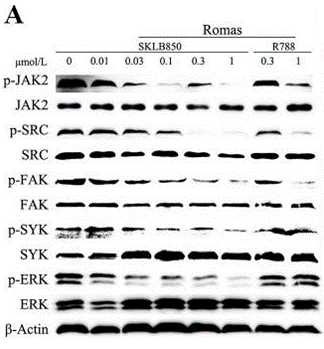
| Western blot | p-JAK2 / JAK2 / p-SRC / SRC / p-FAK / FAK / p-SYK / SYK / p-ERK / ERK p-SYK(525-526) / t-SYK / p-SYK(323) / p-BTK / t-BTK p-MEK / MEK / p-ERK / ERK / p-AKT / AKT |
|
29340070 |
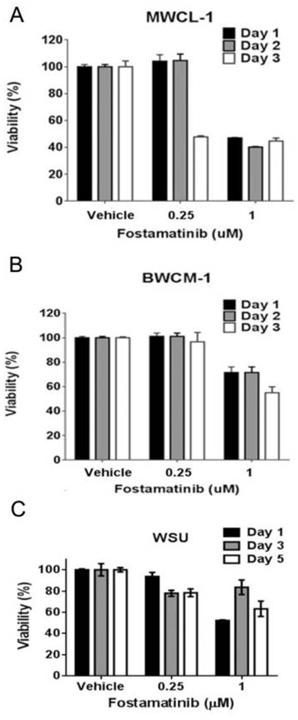
| Growth inhibition assay | Cell viability |
|
25748087 |
Informazioni sullo studio clinico (Clinical Trial Information)
(dati da https://clinicaltrials.gov, aggiornato il 2026-01-22)
| Numero NCT | Reclutamento | Condizioni | Sponsor/Collaboratori | Data di inizio | Fasi |
|---|---|---|---|---|---|
| NCT06233110 | RECRUITING | Chronic Graft Versus Host Disease |
Stefanie Sarantopoulos, MD, PhD. |
2025-10-29 | PHASE1 |
| NCT06948097 | RECRUITING | Lung Transplantation |
National Heart, Lung, and Blood Institute (NHLBI) |
2026-09-09 | PHASE1 |
| NCT06639724 | RECRUITING | Pancreatic Ductal Adenocarcinoma (PDAC) |
University of California, San Diego |
2024-12-05 | PHASE1 |
| NCT06564207 | NOT_YET_RECRUITING | Acute Respiratory Distress Syndrome; ARDS |
Inova Health Care Services |
2026-08-30 | PHASE2 |
| NCT05904093 | RECRUITING | Sickle Cell Disease; Hb-SS Disease; Hemoglobin S; Disease Sickle Cell Anemia; Sickle Cell Disorders; Hemoglobin Beta Thalassemia Disease |
National Heart, Lung, and Blood Institute (NHLBI) |
2024-12-18 | PHASE1 |
| NCT05509582 | WITHDRAWN | Immune Mediated Anemia; Immune Mediated Thrombocytopenia; Chronic GVHD |
National Heart, Lung, and Blood Institute (NHLBI) |
2025-11-07 | PHASE2 |
Domande Frequenti (Frequently Asked Questions)
Domanda 1:
What’s the difference between S2625 and S2206?
Risposta:
The differences between S2625 and S2206: 1. S2206 is more stable than S2625; 2. The water solubility of S2206 is better than S2625; 3. The absorption of S2206 is harder than S2625, so you need to test the suitable dosage if you use it in animal assays; 4. The potency of S2206 and S2625 is similar.

I prodotti sono solo per uso di ricerca. Non per uso umano. Non vendiamo a pazienti.
©Copyright 2013 Selleck Chemicals. Tutti i diritti riservati.