
solo per uso di ricerca
4-PBA (Sodium Phenylbutyrate) HDAC Inibitore
N. Cat.: S4125
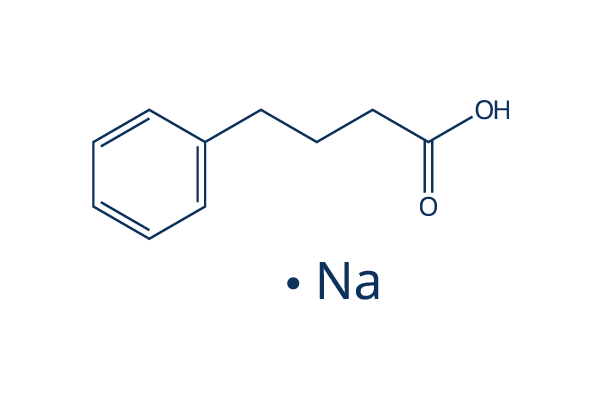
Struttura chimica
Peso molecolare: 187.19
Controllo Qualità (Quality Control)
Coltura cellulare, trattamento e concentrazione di lavoro
(Cell Culture, Treatment & Working Concentration)
| Linee cellulari | Tipo di saggio | Concentrazione | Tempo di incubazione | Formulazione | Descrizione dell'attività | PMID |
|---|---|---|---|---|---|---|
| Hela | Function assay | Inhibition of HDAC in human Hela cells nuclear extracts by fluorimetric assay, Ki=6.34μM | 19520580 | |||
| U937 | Function assay | 4 mM | 8 to 48 hrs | Induction of CAMP mRNA expression in human U937 cells at 4 mM after 8 to 48 hrs by RT-PCR analysis | 19770273 | |
| VA10 | Function assay | 4 mM | 24 hrs | Induction of CAMP mRNA expression in human VA10 cells at 4 mM after 24 hrs by RT-PCR analysis | 19770273 | |
| HT-29 | Function assay | 4 mM | 8 to 48 hrs | Induction of CAMP mRNA expression in human HT-29 cells at 4 mM after 8 to 48 hrs by RT-PCR analysis | 19770273 | |
| A498 | Function assay | 4 mM | 8 to 48 hrs | Induction of CAMP mRNA expression in human A498 cells at 4 mM after 8 to 48 hrs by RT-PCR analysis | 19770273 | |
| VA10 | Function assay | 4 mM | 24 hrs | Induction of DEFB1 mRNA expression in human VA10 cells at 4 mM after 24 hrs by RT-PCR analysis | 19770273 | |
| VA10 | Function assay | 4 mM | 24 hrs | Induction of LL-37 protein expression in human VA10 cells at 4 mM after 24 hrs by Western blotting | 19770273 | |
| VA10 | Function assay | 20 nM | 24 hrs | Induction of LL-37 protein expression in human VA10 cells at 20 nM after 24 hrs by Western blotting | 19770273 | |
| Clicca per visualizzare più dati sperimentali sulle linee cellulari | ||||||
Informazioni chimiche, conservazione e stabilità (Chemical Information, Storage & Stability)
| Peso molecolare | 187.19 | Formula | C10H11O2.Na |
Conservazione (Dalla data di ricezione) | |
|---|---|---|---|---|---|
| N. CAS | 1716-12-7 | Scarica SDF | Conservazione delle soluzioni stock |
|
|
| Sinonimi | 4-Phenylbutyric acid, NaPB | Smiles | C1=CC=C(C=C1)CCCC(=O)[O-].[Na+] | ||
Solubilità (Solubility)
|
In vitro |
DMSO
: 37 mg/mL
(197.66 mM)
Water : 37 mg/mL Ethanol : Insoluble |
Calcolatore di Molarità
|
In vivo |
|||||
Calcolatore di formulazione in vivo (Soluzione chiara)
Passo 1: Inserire le informazioni di seguito (Consigliato: Un animale aggiuntivo per tenere conto della perdita durante l'esperimento)
Passo 2: Inserire la formulazione in vivo (Questo è solo il calcolatore, non la formulazione. Contattateci prima se non c'è una formulazione in vivo nella sezione Solubilità.)
Risultati del calcolo:
Concentrazione di lavoro: mg/ml;
Metodo per preparare il liquido master di DMSO: mg farmaco predissolto in μL DMSO ( Concentrazione del liquido master mg/mL, Vi preghiamo di contattarci prima se la concentrazione supera la solubilità del DMSO del lotto del farmaco. )
Metodo per preparare la formulazione in vivo: Prendere μL DMSO liquido master, quindi aggiungereμL PEG300, mescolare e chiarire, quindi aggiungereμL Tween 80, mescolare e chiarire, quindi aggiungere μL ddH2O, mescolare e chiarire.
Metodo per preparare la formulazione in vivo: Prendere μL DMSO liquido master, quindi aggiungere μL Olio di mais, mescolare e chiarire.
Nota: 1. Si prega di assicurarsi che il liquido sia limpido prima di aggiungere il solvente successivo.
2. Assicurarsi di aggiungere il/i solvente/i in ordine. È necessario assicurarsi che la soluzione ottenuta, nell'aggiunta precedente, sia una soluzione limpida prima di procedere all'aggiunta del solvente successivo. Metodi fisici come il vortex, gli ultrasuoni o il bagno d'acqua calda possono essere utilizzati per facilitare la dissoluzione.
Meccanismo d'azione (Mechanism of Action)
| Targets/IC50/Ki |
HDAC
|
|---|---|
| In vitro |
4-PBA (Sodium Phenylbutyrate) is a well-known HDAC inhibitor, which increases gene transcription of a number of genes, and also exerts neuroprotective effects. It significantly attenuates MPTP-induced depletion of striatal dopamine and loss of tyrosine hydroxylase-positive neurons in the substantia nigra. This compound also attenuates the expression of the apoptosis antagonist Bcl-X(L), the double-strand break repair protein DNA-dependent protein kinase, the prostate progression marker caveolin-1, and the pro-angiogenic vascular endothelial growth factor in prostate cancer cells. It is found to act in synergy with ionizing radiation to induce apoptosis in prostate cancer cells. |
| In vivo |
4-PBA (Sodium Phenylbutyrate) significantly extends survival and improved both the clinical and neuropathological phenotypes in G93A transgenic ALS mice. This compound ameliorates histone hypoacetylation observed in G93A mice and induced expression of nuclear factor-kappaB (NF-kappaB) p50, the phosphorylated inhibitory subunit of NF-kappaB (pIkappaB) and beta cell lymphoma 2 (bcl-2), but reduced cytochrome c and caspase expression. It acts to phosphorylate IkappaB, translocating NF-kappaB p50 to the nucleus, or to directly acetylate NF-kappaB p50. It also increases brain histone acetylation and decreased histone methylation levels as assessed by both immunocytochemistry and Western blots in a transgenic mousemodel of Huntington's disease (HD). The compound increases mRNA for components of the ubiquitin-proteosomal pathway and down-regulated caspases implicated in apoptotic cell death, and active caspase 3 immunoreactivity in the striatum. |
Riferimenti |
|
Applicazioni (Applications)
| Metodi | Biomarcatori | Immagini | PMID |
|---|---|---|---|
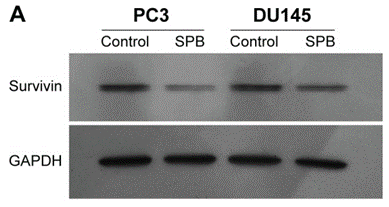
| Western blot | Survivin p38 / p-p38 / ERK / p-ERK / JNK / p-JNK |
|
27274278 |
Informazioni sullo studio clinico (Clinical Trial Information)
(dati da https://clinicaltrials.gov, aggiornato il 2026-07-06)
| Numero NCT | Reclutamento | Condizioni | Sponsor/Collaboratori | Data di inizio | Fasi |
|---|---|---|---|---|---|
| NCT06069375 | SUSPENDED | Medium-chain Acyl-CoA Dehydrogenase Deficiency |
Jerry Vockley, MD, PhD |
2024-04-01 | PHASE2 |
| NCT06645769 | NOT_YET_RECRUITING | Diabetes |
University of Pennsylvania |
2027-06-01 | EARLY_PHASE1 |
| NCT07125066 | ENROLLING_BY_INVITATION | Combined D,L-2-hydroxyglutaric Aciduria |
Jerry Vockley, MD, PhD |
2025-07-30 | PHASE1 |
| NCT06773026 | RECRUITING | Medium-chain Acyl-CoA Dehydrogenase Deficiency |
Jerry Vockley, MD, PhD |
2025-06-30 | PHASE2 |
| NCT05983588 | Recruiting | Corticobasal Syndrome (CBS) |
Technical University of Munich |
2023-12-12 | Phase 2 |
| NCT05028803 | COMPLETED | Obese Non Diabetic |
University of Nottingham |
2021-09-01 |

I prodotti sono solo per uso di ricerca. Non per uso umano. Non vendiamo a pazienti.
©Copyright 2013 Selleck Chemicals. Tutti i diritti riservati.