
solo per uso di ricerca
FCCP Disaccoppiante OXPHOS
N. Cat.S8276
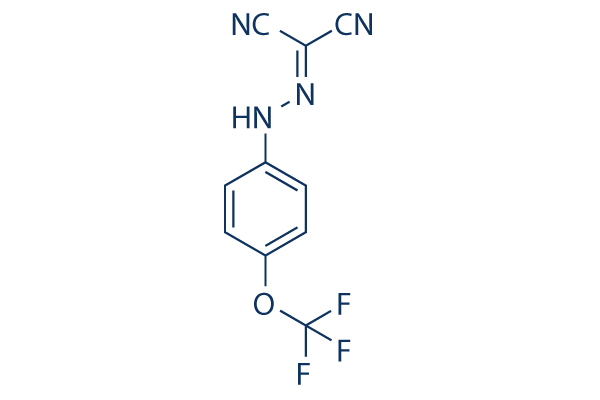
Struttura chimica
Peso molecolare: 254.17
Controllo Qualità
| Target correlati | Bcl-2 Caspase PD-1/PD-L1 Ferroptosis p53 Apoptosis related Synthetic Lethality STAT TNF-alpha Ras |
|---|---|
| Altro OXPHOS Inibitori | IACS-010759 (IACS-10759) ME-344 Gboxin S-Gboxin VLX600 4-Methyl-2-oxovaleric acid BAY-179 Diphenylamine Hydrochloride DX3-213B MS-L6 |
Coltura cellulare, trattamento e concentrazione di lavoro
| Linee cellulari | Tipo di saggio | Concentrazione | Tempo di incubazione | Formulazione | Descrizione dellattività | PMID |
|---|---|---|---|---|---|---|
| T47D | Function assay | Inhibition of 1, 10-phenanthroline-induced HIF1 activation in human T47D cells by HRE3-TK-luciferase reporter gene assay, IC50=0.31μM | 20929261 | |||
| T47D | Function assay | Inhibition of hypoxia-induced HIF1 activation in human T47D cells by HRE3-TK-luciferase reporter gene assay, IC50=0.51μM | 20929261 | |||
| T47D | Function assay | 1 to 10 uM | Inhibition of HIF1-mediated induction of secreted VEGF level in 1, 10-phenanthroline-stimulated human T47D cells at 1 to 10 uM by ELISA | 20929261 | ||
| T47D | Function assay | 0.3 uM | 15 mins | Decrease in mitochondrial membrane potential in human T47D cells 0.3 uM after 15 mins by TMRM assay | 20929261 | |
| MDA-MB-231 | Cytotoxicity assay | 1 uM | Cytotoxicity against human MDA-MB-231 cells assessed as inhibition of cell proliferation/viability at 1 uM | 23245650 | ||
| MDA-MB-231 | Cytotoxicity assay | 0.1 to 3 uM | Cytotoxicity against human MDA-MB-231 cells assessed as inhibition of cell proliferation/viability at 0.1 to 3 uM in presence of 0.1 uM rotenone mitochondrial electron transport inhibitor | 23245650 | ||
| MDA-MB-231 | Function assay | 0.3 uM | Stimulation of oligomycin-induced state 4 respiration in human MDA-MB-231 cells at 0.3 uM | 23245650 | ||
| T47D | Function assay | 0.1 to 3 uM | Effect on cellular respiration in human T47D cells assessed as increase in oxygen consumption at 0.1 to 3 uM | 22938093 | ||
| T47D | Function assay | 10 to 30 uM | Stimulation of state 4 cellular respiration in human T47D cells at 10 to 30 uM in presence of oligomycin | 22938093 | ||
| T47D | Function assay | 0.3 to 1 uM | Stimulation of state 4 cellular respiration in human T47D cells at 0.3 to 1 uM in presence of oligomycin | 22938093 | ||
| Hep3B | Function assay | 10 uM | Stimulation of state 4 cellular respiration in human Hep3B cells at 10 uM in presence of oligomycin | 22938093 | ||
| Hep3B | Function assay | 1 uM | Stimulation of state 4 cellular respiration in human Hep3B cells at 1 uM in presence of oligomycin | 22938093 | ||
| T47D | Function assay | 3 uM | 15 to 20 mins | Decrease in mitochondrial membrane potential in human T47D cells at 3 uM after 15 to 20 mins by TMRM assay | 22938093 | |
| TA3/Ha | Function assay | 6 uM | Induction of NAD(P)H oxidation in mouse TA3/Ha cells assessed as reduction of NAD(P)H/NAD(P)+ ratio at 6 uM by spectrofluorometer analysis | 24568614 | ||
| SH-SY5Y | Function assay | 10 uM | 5 mins | Inhibition of SOC in human SH-SY5Y cells assessed as reduction in thapsigargin-induced Ca2+ influx at 10 uM pre-incubated for 5 mins with 0.2 uM CsA followed by compound addition by FURA-2AM dye based fluorescence assay | 25265024 | |
| SH-SY5Y | Function assay | 10 uM | 10 mins | Induction of mitochondrial membrane potential loss in human SH-SY5Y cells at 10 uM incubated for 10 mins in presence of 0.2 uM CsA by TMRE dye based assay | 25265024 | |
| T47D | Function assay | 0.3 uM | 3 to 12 mins | Increase in oxygen consumption rate of mitochondrial state 4 respiration in human T47D cells assessed as reinitiation of oligomycin-stalled cellular respiration at 0.3 uM incubated for 3 to 12 mins by Clark-type oxygen electrode assay | 26637046 | |
| T47D | Function assay | 0.3 uM | 30 mins | Effect on mitochondrial membrane potential in human T47D cells at 0.3 uM after 30 mins by TMRM dye based fluorescence microscopy | 26637046 | |
| T47D | Function assay | 0.3 uM | Increase in oxygen consumption rate in digitonin permeabilized human T47D cells assessed as reinitiation of sodium azide-stalled cellular respiration at 0.3 uM by oxytherm Clark-type electrode assay in presence of ascorbate | 26637046 | ||
| HCT116 | Function assay | 2 uM | 30 mins | Induction of AMPK phosphorylation at Thr-172 residue in human HCT116 cells at 2 uM after 30 mins in glucose supplemented media by immunoblot method | 28233680 | |
| HCT116 | Function assay | 2 uM | 30 mins | Induction of AMPK phosphorylation at Thr-172 residue in human HCT116 cells at 2 uM after 30 mins in absence of glucose by immunoblot method | 28233680 | |
| DLD1 | Function assay | 1 uM | Induction of mitochondrial dysfunction in human DLD1 cells assessed as reduction in mitochondrial ATP production at 1 uM by Seahorse XF real-time assay | 31774672 | ||
| DLD1 | Function assay | 1 uM | Induction of mitochondrial dysfunction in human DLD1 cells assessed as increase in glycolytic ATP production at 1 uM by Seahorse XF real-time assay | 31774672 | ||
| LS174T | Function assay | 1 uM | Induction of mitochondrial dysfunction in human LS174T cells assessed as reduction in mitochondrial ATP production at 1 uM by Seahorse XF real-time assay | 31774672 | ||
| LS174T | Function assay | 1 uM | Induction of mitochondrial dysfunction in human LS174T cells assessed as increase in glycolytic ATP production at 1 uM by Seahorse XF real-time assay | 31774672 | ||
| DLD1 | Function assay | 1 uM | Uncoupling of mitochondrial oxidative phosphorylation in human DLD1 cells at 1 uM in presence of oligomycin A by seahorse XFe96 analyser based assay | 31774672 | ||
| DLD1 | Function assay | 1 uM | Uncoupling of mitochondrial oxidative phosphorylation in human DLD1 cells assessed as increase in oxygen consumption rate at 1 uM in presence of oligomycin A by seahorse XFe96 analyser based assay | 31774672 | ||
| HEK293 | Function assay | 1 to 3 uM | Inhibition of LiCl-activated Wnt signaling in HEK293 cells at 1 to 3 uM by TOPFlash reporter gene assay | 31774672 | ||
| KOPN8 | Function assay | 10 uM | 0.3 hrs | Induction of mitochondrial membrane potential loss in human KOPN8 cells at 10 uM after 0.3 hrs by TMRM staining based flow cytometric analysis | 31084028 | |
| HepG2 | Function assay | Luciferase/luciferin-expressing antifolate-resistant parasites were used to infect a culture of HepG2 cells that were pre-incubated with compounds. Infected hepatocytes emit light due to the luciferase reaction. Assay results are presented as the percent , IC50=0.245μM | ChEMBL | |||
| Clicca per visualizzare più dati sperimentali sulle linee cellulari | ||||||
Informazioni chimiche, conservazione e stabilità
| Peso molecolare | 254.17 | Formula | C10H5F3N4O |
Conservazione (Dalla data di ricezione) | |
|---|---|---|---|---|---|
| N. CAS | 370-86-5 | Scarica SDF | Conservazione delle soluzioni stock |
|
|
| Sinonimi | Trifluoromethoxy carbonylcyanide phenylhydrazone, Carbonyl cyanide 4-(trifluoromethoxy)phenylhydrazone | Smiles | C1=CC(=CC=C1NN=C(C#N)C#N)OC(F)(F)F | ||
Solubilità
|
In vitro |
DMSO
: 6 mg/mL
(23.6 mM)
Water : Insoluble Ethanol : Insoluble |
Calcolatore di Molarità
|
In vivo |
|||||
Calcolatore di formulazione in vivo (Soluzione chiara)
Passo 1: Inserire le informazioni di seguito (Consigliato: Un animale aggiuntivo per tenere conto della perdita durante lesperimento)
Passo 2: Inserire la formulazione in vivo (Questo è solo il calcolatore, non la formulazione. Contattateci prima se non cè una formulazione in vivo nella sezione Solubilità.)
Risultati del calcolo:
Concentrazione di lavoro: mg/ml;
Metodo per preparare il liquido master di DMSO: mg farmaco predissolto in μL DMSO ( Concentrazione del liquido master mg/mL, Vi preghiamo di contattarci prima se la concentrazione supera la solubilità del DMSO del lotto del farmaco. )
Metodo per preparare la formulazione in vivo: Prendere μL DMSO liquido master, quindi aggiungereμL PEG300, mescolare e chiarire, quindi aggiungereμL Tween 80, mescolare e chiarire, quindi aggiungere μL ddH2O, mescolare e chiarire.
Metodo per preparare la formulazione in vivo: Prendere μL DMSO liquido master, quindi aggiungere μL Olio di mais, mescolare e chiarire.
Nota: 1. Si prega di assicurarsi che il liquido sia limpido prima di aggiungere il solvente successivo.
2. Assicurarsi di aggiungere il/i solvente/i in ordine. È necessario assicurarsi che la soluzione ottenuta, nellaggiunta precedente, sia una soluzione limpida prima di procedere allaggiunta del solvente successivo. Metodi fisici come il vortex, gli ultrasuoni o il bagno dacqua calda possono essere utilizzati per facilitare la dissoluzione.
Meccanismo dazione
| Targets/IC50/Ki |
OXPHOS
ATP synthase
|
|---|---|
| In vitro |
Il trattamento con FCCP induce un rapidissimo aumento di 2 volte della concentrazione intracellulare di Ca2+ che è accompagnato da una forte inibizione del tasso di sintesi proteica. L'inibizione della traduzione correla con un aumento della fosforilazione della subunità α di eIF2 (eIF2α) e un aumento di 1,7 volte dell'attività della proteina chinasi dipendente dall'RNA a doppio filamento. Questo composto diminuisce anche leggermente i livelli di ATP e di specie reattive dell'ossigeno. Aumenta l'espressione di geni mitocondriali come Tfam e COXIV, inducendo al contempo caratteristiche morfologiche di HSC di topo quiescenti e abrogando la trasduzione del segnale TGF-β. |
| In vivo |
FCCP riduce significativamente il potenziale di membrana mitocondriale e la produzione di ATP in embrioni di topo a 8 cellule e il numero di cellule della massa cellulare interna all'interno delle blastocisti con sviluppo della blastocisti invariato. Questa funzione mitocondriale embrionale perturbata è concomitante con un ridotto peso alla nascita nella prole femminile dopo il trasferimento embrionale, che persiste fino allo svezzamento. Sebbene i maschi trattati con questo composto mostrino anche una ridotta tolleranza al glucosio come le femmine, la loro sensibilità all'insulina e l'aumento di adiposità tra 4 e 14 settimane rimangono invariati. La riduzione della funzione mitocondriale e, quindi, la diminuzione della produzione di ATP nell'embrione di pre-compattazione può influenzare il fenotipo della prole. |
Riferimenti |
|
Supporto tecnico
Istruzioni per la manipolazione
Tel: +1-832-582-8158 Ext:3
Per qualsiasi altra domanda, si prega di lasciare un messaggio.

I prodotti sono solo per uso di ricerca. Non per uso umano. Non vendiamo a pazienti.
©Copyright 2013 Selleck Chemicals. Tutti i diritti riservati.