
solo per uso di ricerca
Thiamine HCl (Vitamin B1) Vitamin chimico
N. Cat.S3211
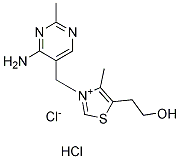
Struttura chimica
Peso molecolare: 337.27
Controllo Qualità
Informazioni chimiche, conservazione e stabilità
| Peso molecolare | 337.27 | Formula | C12 H17N4OS.HCl |
Conservazione (Dalla data di ricezione) | |
|---|---|---|---|---|---|
| N. CAS | 67-03-8 | Scarica SDF | Conservazione delle soluzioni stock |
|
|
| Sinonimi | N/A | Smiles | CC1=C(SC=[N+]1CC2=CN=C(N=C2N)C)CCO.Cl.[Cl-] | ||
Solubilità
|
In vitro |
Water : 67 mg/mL
DMSO
: Insoluble
Ethanol : Insoluble |
Calcolatore di Molarità
|
In vivo |
|||||
Calcolatore di formulazione in vivo (Soluzione chiara)
Passo 1: Inserire le informazioni di seguito (Consigliato: Un animale aggiuntivo per tenere conto della perdita durante lesperimento)
Passo 2: Inserire la formulazione in vivo (Questo è solo il calcolatore, non la formulazione. Contattateci prima se non cè una formulazione in vivo nella sezione Solubilità.)
Risultati del calcolo:
Concentrazione di lavoro: mg/ml;
Metodo per preparare il liquido master di DMSO: mg farmaco predissolto in μL DMSO ( Concentrazione del liquido master mg/mL, Vi preghiamo di contattarci prima se la concentrazione supera la solubilità del DMSO del lotto del farmaco. )
Metodo per preparare la formulazione in vivo: Prendere μL DMSO liquido master, quindi aggiungereμL PEG300, mescolare e chiarire, quindi aggiungereμL Tween 80, mescolare e chiarire, quindi aggiungere μL ddH2O, mescolare e chiarire.
Metodo per preparare la formulazione in vivo: Prendere μL DMSO liquido master, quindi aggiungere μL Olio di mais, mescolare e chiarire.
Nota: 1. Si prega di assicurarsi che il liquido sia limpido prima di aggiungere il solvente successivo.
2. Assicurarsi di aggiungere il/i solvente/i in ordine. È necessario assicurarsi che la soluzione ottenuta, nellaggiunta precedente, sia una soluzione limpida prima di procedere allaggiunta del solvente successivo. Metodi fisici come il vortex, gli ultrasuoni o il bagno dacqua calda possono essere utilizzati per facilitare la dissoluzione.
Meccanismo dazione
| In vitro |
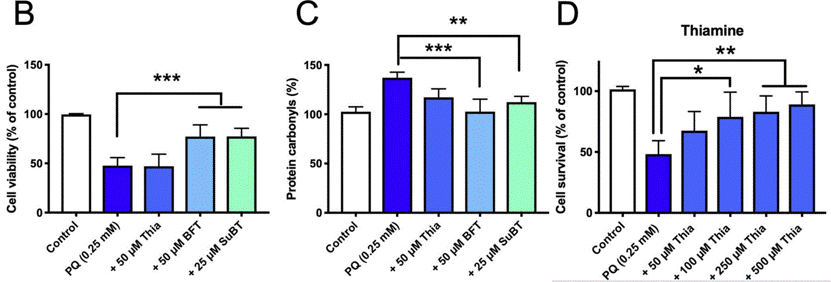
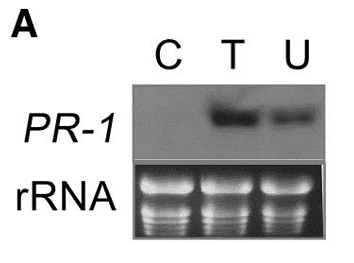
La Thiamine HCl (Vitamin B1) (50 mM), oltre al suo valore nutrizionale, induce resistenza sistemica acquisita (SAR) in riso, tabacco, cetriolo e Arabidopsis. Conferisce anche resistenza a infezioni fungine, batteriche e virali in riso, Arabidopsis (Arabidopsis thaliana) e ortaggi trattati. Questo composto induce l'espressione transitoria di geni correlati alla patogenesi (PR) in riso e altre piante, e potenzia un'espressione genica PR più forte e rapida insieme a un'attivazione dell'attività della proteina chinasi C. A una concentrazione di 10 μM, previene l'inibizione del raccorciamento dei miociti indotta dall'acetaldeide nei miociti ventricolari di ratto adulto, attenua efficacemente la depressione indotta dall'acetaldeide in ±dL/dt e previene il raccorciamento del tempo al picco di raccorciamento indotto dall'acetaldeide. Inoltre, inibisce l'elevazione indotta dall'acetaldeide sia nella formazione di carbonili proteici che nell'attivazione della caspasi-3 nei miociti ventricolari di ratto adulto. La sua captazione è dipendente dall'energia e dalla temperatura, sensibile al pH, indipendente dal Na+ e saturabile sia a concentrazioni nanomolari (Km apparente, 30 nM) che micromolari (Km apparente, 1,72 mM) nelle cellule ARPE-19. La captazione di questo composto è regolata adattivamente dal livello di substrato extracellulare tramite meccanismi mediati trascrizionalmente che coinvolgono sia hTHTR-1 che hTHTR-2 nelle cellule ARPE-19, ed è anche regolata da una via intracellulare mediata da Ca2+-calmodulina. I fibroblasti di anemia megaloblastica responsiva alla Thiamine (TRMA) vengono salvati dalla morte con 10 nM-30 nM di essa (nell'intervallo delle normali concentrazioni plasmatiche di Thiamine). I fibroblasti normali mostrano una captazione di Thiamine saturabile e ad alta affinità (Km 400 nM-550 nM; Vmax 11 pmol/min/1×106 cellule), mentre i fibroblasti TRMA mancano di una captazione ad alta affinità rilevabile. A 30 nM, il tasso di captazione di questo composto da parte dei fibroblasti TRMA è 10 volte inferiore a quello del tipo selvaggio, il che spiega l'aumentata apoptosi dei fibroblasti TRMA.
|
|---|---|
| In vivo |
La carenza di Thiamine HCl (Vitamin B1) provoca l'accumulo di immunoreattività della proteina precursore dell'amiloide in neuriti gonfi all'interno o intorno alle lesioni nei ratti, o in grappoli anomali nei topi.
|
Riferimenti |
|
Applicazioni
| Metodi | Biomarcatori | Immagini | PMID |
|---|---|---|---|
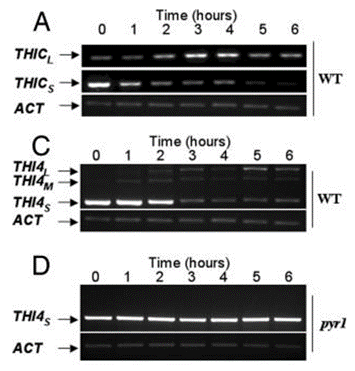
| Western blot | THICL / THICS / THI4L / THI4M / THI4S / ACT Bax / Bid / p53 / p84 Rpb1 / Fcp1 / f-Rpb3 / Tfg3 / Rpb7 / Rpb4 |
|
18093957 |
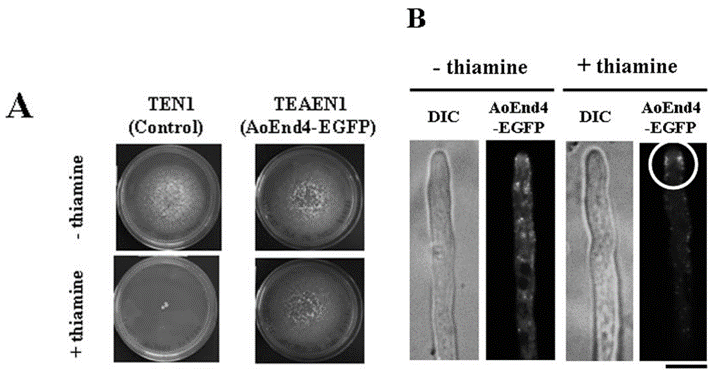
| Growth inhibition assay | TEN1 and TEAEN1 strains hippocampal Dcx+ cells |
|
19028995 |
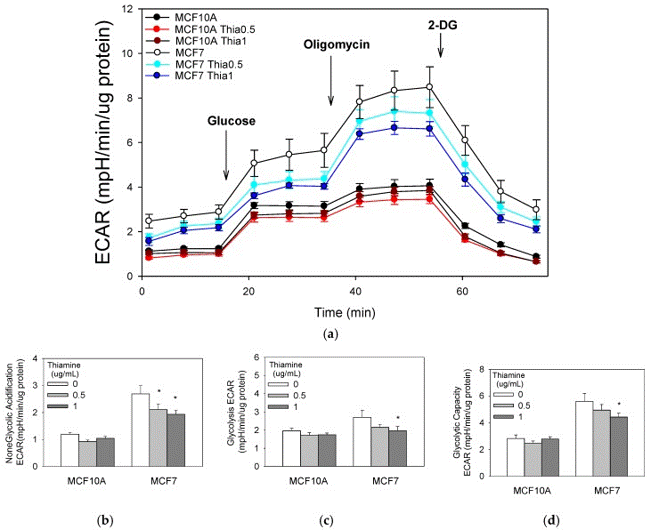
| Glycolysis stress test | Glycolysis stress |
|
29914147 |
| Cell death | Cell survival |
|
31193162 |
| Western blot / RNA Blot | PR-1 / rRNA PR-1 / rRNA |
|
15980201 |
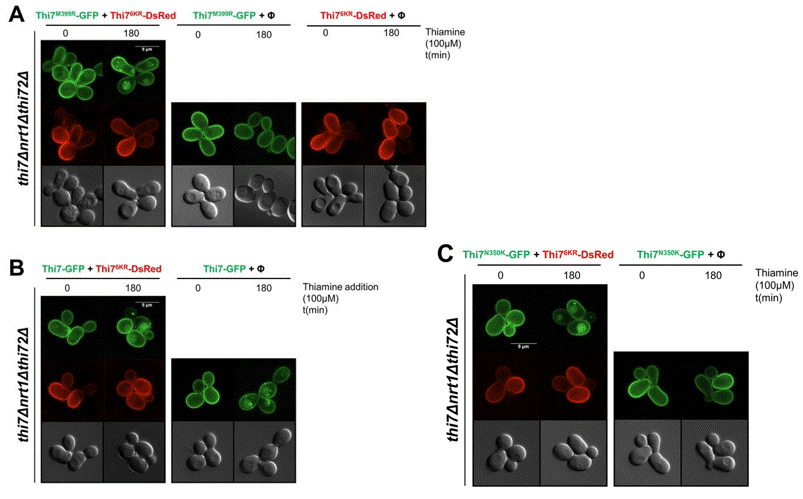
| Immunofluorescence | Thi76KR / Thi7M399R / ThiN350K |
|
31658248 |
Informazioni sullo studio clinico
(dati da https://clinicaltrials.gov, aggiornato il 2024-05-22)
| Numero NCT | Reclutamento | Condizioni | Sponsor/Collaboratori | Data di inizio | Fasi |
|---|---|---|---|---|---|
| NCT06298344 | Recruiting | Congenital Heart Disease|Thiamine Deficiency|Patent Ductus Arteriosus|Ventricular Septal Defect|Atrial Septal Defect |
Universitas Sumatera Utara |
May 1 2024 | Early Phase 1 |
| NCT06326996 | Not yet recruiting | Coronary Heart Disease|Coronary Artery Bypass Grafting |
University of California Los Angeles |
May 2024 | Not Applicable |
| NCT06322212 | Not yet recruiting | Type2diabetes |
University of California Los Angeles |
April 2024 | Not Applicable |
| NCT06323538 | Not yet recruiting | Dietary Exposure|Diabetes Mellitus Type 2|Cardiovascular Diseases|Bone Loss|Sustainability|Exposure|Obesity|Vitamin Deficiency|Mineral Deficiency |
German Federal Institute for Risk Assessment|Max Rubner-Institut|University of Bonn|Research Institute for Plant-Based Nutrition|University of Jena|University of Regensburg|Heidelberg University|University of Vienna |
April 1 2024 | -- |
Supporto tecnico
Istruzioni per la manipolazione
Tel: +1-832-582-8158 Ext:3
Per qualsiasi altra domanda, si prega di lasciare un messaggio.

I prodotti sono solo per uso di ricerca. Non per uso umano. Non vendiamo a pazienti.
©Copyright 2013 Selleck Chemicals. Tutti i diritti riservati.