
solo per uso di ricerca
ISX-9 (Isoxazole 9) Induttore della Differenziazione delle Cellule Staminali Neurali
N. Cat.S7914
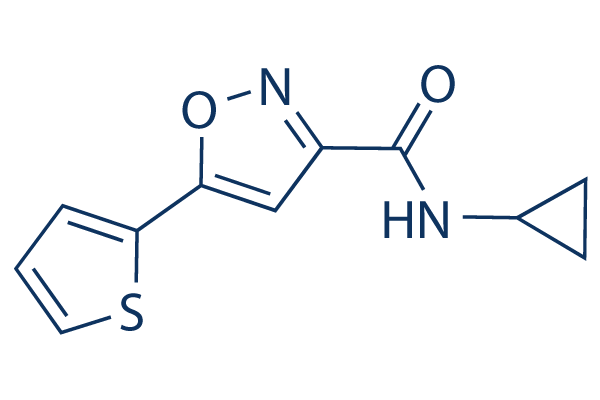
Struttura chimica
Peso molecolare: 234.27
Controllo Qualità
Coltura cellulare, trattamento e concentrazione di lavoro
| Linee cellulari | Tipo di saggio | Concentrazione | Tempo di incubazione | Formulazione | Descrizione dellattività | PMID |
|---|---|---|---|---|---|---|
| HCN | Function assay | Induction of NMDA receptor-mediated Ca2+ influx in rat HCN cells in presence of NMDA receptor antagonist MK801 | 18552832 | |||
| HCN | Function assay | 5 uM | Induction of L-type calcium channel/NMDA receptor-mediated Ca2+ influx in rat HCN cells at 5 uM by Fura-2 imaging analysis in presence of multiple of inhibitors | 18552832 | ||
| HCN | Function assay | 50 uM | 3 hrs | Induction of NMDA receptor-mediated neuroD gene expression in rat HCN cells at 50 uM after 3 hrs by RT-PCR analysis in presence of NMDA receptor antagonist MK801 | 18552832 | |
| HCN | Function assay | 25 uM | 4 days | Inhibition of gliogenesis differentiation in rat HCN cells at 25 uM after 4 days | 18552832 | |
| HCN | Function assay | 5 uM | Induction of L-type calcium channel/NMDA receptor-mediated Ca2+ influx in rat HCN cells at 5 uM by Fura-2 imaging analysis | 18552832 | ||
| HCN | Function assay | 5 uM | Induction of NMDA receptor-mediated Ca2+ influx in rat HCN cells at 5 uM by Fura-2 imaging analysis in presence of NMDA receptor antagonist MK801 | 18552832 | ||
| HCN | Function assay | 50 uM | 3 hrs | Induction of L-type calcium channel/NMDA receptor-mediated neuroD gene expression in rat HCN cells at 50 uM after 3 hrs by RT-PCR analysis in presence of multiple inhibitors | 18552832 | |
| HCN | Function assay | Induction of L-type calcium channel/NMDA receptor-mediated Ca2+ influx in rat HCN cells | 18552832 | |||
| HCN | Function assay | Induction of L-type calcium channel/NMDA receptor-mediated Ca2+ influx in rat HCN cells in presence multiple inhibitors | 18552832 | |||
| HCN | Function assay | 50 uM | 24 hrs | Induction of NMDA receptor-mediated neuroD gene expression in rat HCN cells at 50 uM after 24 hrs by RT-PCR analysis in presence of NMDA receptor antagonist MK801 | 18552832 | |
| HCN | Function assay | 50 uM | 24 hrs | Induction of NMDA receptor-mediated neuroD gene expression in rat HCN cells at 50 uM after 24 hrs by RT-PCR analysis in presence of NMDA receptor antagonist nifedipine | 18552832 | |
| HCN | Function assay | 50 uM | 24 hrs | Induction of L-type calcium channel/NMDA receptor-mediated neuroD gene expression in rat HCN cells at 50 uM after 24 hrs by RT-PCR analysis in presence of multiple inhibitors | 18552832 | |
| HCN | Function assay | 8 to 64 uM | 9 hrs | Induction of neurogenesis in undifferentiated rat HCN cells assessed as MAP2AB protein level at 8 to 64 uM after 9 hrs by protein blotting analysis | 18552832 | |
| HCN | Function assay | Induction of HDAC5 translocation in cytoplasm of rat HCN cells assessed as phosphorylated HDAC5 accumulation | 18552832 | |||
| HCN | Function assay | Induction of CAMK-mediated MREx3 activity in rat HCN cells by luciferase reporter gene assay in presence of 2.5 uM potassium channel inhibitor KN92 | 18552832 | |||
| HCN | Function assay | 8 to 64 uM | 9 hrs | Induction of neurogenesis in undifferentiated rat HCN cells assessed as GlR2/3 protein level at 8 to 64 uM after 9 hrs by protein blotting analysis | 18552832 | |
| HCN | Function assay | 6 hrs | Induction of HDAC5 phosphorylation in rat HCN cells after 6 hrs | 18552832 | ||
| HCN | Function assay | 24 hrs | Induction of HDAC5 phosphorylation in rat HCN cells after 24 hrs | 18552832 | ||
| HCN | Function assay | Induction of HDAC5 translocation in nucleus of rat HCN cells assessed as phosphorylated HDAC5 accumulation | 18552832 | |||
| HCN | Function assay | 5 uM | Induction of HDAC5 translocation in nucleus of rat HCN cells assessed as GFP-HDAC5 S258A S498A mutant fusion protein accumulation at 5 uM by fluorescence assay | 18552832 | ||
| HCN | Function assay | 50 uM | 3 hrs | Induction of NMDA receptor-mediated neuroD gene expression in rat HCN cells at 50 uM after 3 hrs by RT-PCR analysis in presence of NMDA receptor antagonist nifedipine | 18552832 | |
| HCN | Function assay | 20 uM | Induction of HDAC5 translocation in nucleus of rat HCN cells assessed as GFP-HDAC5 fusion protein accumulation at 20 uM by fluorescence assay | 18552832 | ||
| HCN | Function assay | Induction of CAMK-mediated MREx3 activity in rat HCN cells by luciferase reporter gene assay in presence of 200 nM PKC inhibitor Go6976 | 18552832 | |||
| HCN | Function assay | 24 hrs | Induction of L-type calcium channel-mediated neuroD gene expression in rat HCN cells after 24 hrs by luciferase reporter gene assay in presence of multiple inhibitors | 18552832 | ||
| HCN | Function assay | 24 hrs | Induction of L-type calcium channel-mediated neuroD gene expression in rat HCN cells after 24 hrs by luciferase reporter gene assay in presence of NMDA receptor antagonist MK801 | 18552832 | ||
| HCN | Function assay | 24 hrs | Induction of L-type calcium channel-mediated neuroD gene expression in rat HCN cells after 24 hrs by luciferase reporter gene assay in presence of NMDA receptor antagonist nifedipine | 18552832 | ||
| Clicca per visualizzare più dati sperimentali sulle linee cellulari | ||||||
Informazioni chimiche, conservazione e stabilità
| Peso molecolare | 234.27 | Formula | C11H10N2O2S |
Conservazione (Dalla data di ricezione) | |
|---|---|---|---|---|---|
| N. CAS | 832115-62-5 | Scarica SDF | Conservazione delle soluzioni stock |
|
|
| Sinonimi | N/A | Smiles | C1CC1NC(=O)C2=NOC(=C2)C3=CC=CS3 | ||
Solubilità
|
In vitro |
DMSO
: 47 mg/mL
(200.62 mM)
Ethanol : 12 mg/mL Water : Insoluble |
Calcolatore di Molarità
|
In vivo |
|||||
Calcolatore di formulazione in vivo (Soluzione chiara)
Passo 1: Inserire le informazioni di seguito (Consigliato: Un animale aggiuntivo per tenere conto della perdita durante lesperimento)
Passo 2: Inserire la formulazione in vivo (Questo è solo il calcolatore, non la formulazione. Contattateci prima se non cè una formulazione in vivo nella sezione Solubilità.)
Risultati del calcolo:
Concentrazione di lavoro: mg/ml;
Metodo per preparare il liquido master di DMSO: mg farmaco predissolto in μL DMSO ( Concentrazione del liquido master mg/mL, Vi preghiamo di contattarci prima se la concentrazione supera la solubilità del DMSO del lotto del farmaco. )
Metodo per preparare la formulazione in vivo: Prendere μL DMSO liquido master, quindi aggiungereμL PEG300, mescolare e chiarire, quindi aggiungereμL Tween 80, mescolare e chiarire, quindi aggiungere μL ddH2O, mescolare e chiarire.
Metodo per preparare la formulazione in vivo: Prendere μL DMSO liquido master, quindi aggiungere μL Olio di mais, mescolare e chiarire.
Nota: 1. Si prega di assicurarsi che il liquido sia limpido prima di aggiungere il solvente successivo.
2. Assicurarsi di aggiungere il/i solvente/i in ordine. È necessario assicurarsi che la soluzione ottenuta, nellaggiunta precedente, sia una soluzione limpida prima di procedere allaggiunta del solvente successivo. Metodi fisici come il vortex, gli ultrasuoni o il bagno dacqua calda possono essere utilizzati per facilitare la dissoluzione.
Meccanismo dazione
| In vitro |
ISX-9 (Isoxazole 9) aumenta il numero di cellule e promuove la differenziazione cellulare nelle NSPC, mentre induce danni cellulari nelle OPC. Nelle EPC in crescita, questo composto diminuisce la formazione di tubi senza effetto sulle EPC precoci.
|
|---|---|
| In vivo |
Nei topi, ISX-9 (Isoxazole 9) (20 mg/kg, i.p.) attraversa la BBB e aumenta la proliferazione dei neuroblasti e la neurogenesi tramite meccanismi specifici di Mef2 nella SGZ ippocampale. Questo composto aumenta anche la differenziazione e la complessità dendritica dei neuroni immaturi e migliora la memoria. Nel MWM, migliora la memoria spaziale.
|
Riferimenti |
|
Supporto tecnico
Istruzioni per la manipolazione
Tel: +1-832-582-8158 Ext:3
Per qualsiasi altra domanda, si prega di lasciare un messaggio.

I prodotti sono solo per uso di ricerca. Non per uso umano. Non vendiamo a pazienti.
©Copyright 2013 Selleck Chemicals. Tutti i diritti riservati.