
uitsluitend voor onderzoeksdoeleinden
A-674563 HCl Akt remmer
Cat.Nr.S2670
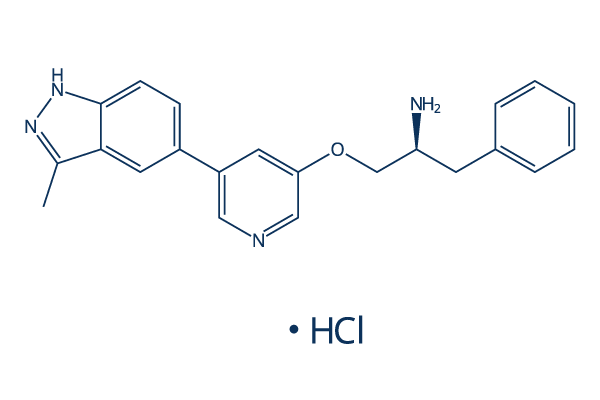
Chemische structuur
Moleculair gewicht: 394.9
Kwaliteitscontrole
| Gerelateerde doelwitten | PI3K mTOR GSK-3 ATM/ATR DNA-PK AMPK PDPK1 PTEN PP2A PDK |
|---|---|
| Overige Akt Inhibitoren | SC79 AZD5363 (Capivasertib) MK-2206 Dihydrochloride Ipatasertib (GDC-0068) Perifosine GSK690693 Triciribine (API-2) Afuresertib (GSK2110183) CCT128930 Akti-1/2 |
Celkweek, behandeling & werkconcentratie
| Cellijnen | Assaytype | Concentratie | Incubatietijd | Formulering | Activiteitsbeschrijving | PMID |
|---|---|---|---|---|---|---|
| MiaPaCa2 cell | Proliferation assay | Antiproliferative activity against human MiaPaCa2 cell line, EC50=0.4 μM | 16678413 | |||
| MIA PaCa cells | Cytotoxic assay | Cytotoxicity against human MIA PaCa cells by MTT assay, EC50=0.64 μM | 17523610 | |||
| MOLM14 | Cytotoxicity assay | Cytotoxicity against human MOLM14 cells, EC50=0.06μM. | 31207462 | |||
| MV4-11 | Cytotoxicity assay | Cytotoxicity against human MV4-11 cells, EC50=0.092μM. | 31207462 | |||
| MOLM13 | Cytotoxicity assay | Cytotoxicity against human MOLM13 cells, EC50=0.17μM. | 31207462 | |||
| KB-3-1 | Function assay | P-glycoprotein substrates identified in KB-3-1 adenocarcinoma cell line, qHTS therapeutic library screen | 31515284 | |||
| TC32 | qHTS assay | qHTS of pediatric cancer cell lines to identify multiple opportunities for drug repurposing: Primary screen for TC32 cells | 31515284 | |||
| DAOY | qHTS assay | qHTS of pediatric cancer cell lines to identify multiple opportunities for drug repurposing: Primary screen for DAOY cells | 31515284 | |||
| SJ-GBM2 | qHTS assay | qHTS of pediatric cancer cell lines to identify multiple opportunities for drug repurposing: Primary screen for SJ-GBM2 cells | 29435139 | |||
| A673 | qHTS assay | qHTS of pediatric cancer cell lines to identify multiple opportunities for drug repurposing: Primary screen for A673 cells | 29435139 | |||
| SK-N-MC | qHTS assay | qHTS of pediatric cancer cell lines to identify multiple opportunities for drug repurposing: Primary screen for SK-N-MC cells | 29435139 | |||
| BT-37 | qHTS assay | qHTS of pediatric cancer cell lines to identify multiple opportunities for drug repurposing: Primary screen for BT-37 cells | 29435139 | |||
| NB-EBc1 | qHTS assay | qHTS of pediatric cancer cell lines to identify multiple opportunities for drug repurposing: Primary screen for NB-EBc1 cells | 29435139 | |||
| Saos-2 | qHTS assay | qHTS of pediatric cancer cell lines to identify multiple opportunities for drug repurposing: Primary screen for Saos-2 cells | 29435139 | |||
| SK-N-SH | qHTS assay | qHTS of pediatric cancer cell lines to identify multiple opportunities for drug repurposing: Primary screen for SK-N-SH cells | 29435139 | |||
| NB1643 | qHTS assay | qHTS of pediatric cancer cell lines to identify multiple opportunities for drug repurposing: Primary screen for NB1643 cells | 29435139 | |||
| LAN-5 | qHTS assay | qHTS of pediatric cancer cell lines to identify multiple opportunities for drug repurposing: Primary screen for LAN-5 cells | 29435139 | |||
| BT-12 | qHTS assay | qHTS of pediatric cancer cell lines to identify multiple opportunities for drug repurposing: Primary screen for BT-12 cells | 29435139 | |||
| Rh18 | qHTS assay | qHTS of pediatric cancer cell lines to identify multiple opportunities for drug repurposing: Primary screen for Rh18 cells | 29435139 | |||
| RD | qHTS assay | qHTS of pediatric cancer cell lines to identify multiple opportunities for drug repurposing: Primary screen for RD cells | 29435139 | |||
| MG 63 (6-TG R) | qHTS assay | qHTS of pediatric cancer cell lines to identify multiple opportunities for drug repurposing: Primary screen for MG 63 (6-TG R) cells | 29435139 | |||
| Rh41 | qHTS assay | qHTS of pediatric cancer cell lines to identify multiple opportunities for drug repurposing: Primary screen for Rh41 cells | 29435139 | |||
| NB1643 | qHTS assay | qHTS of pediatric cancer cell lines to identify multiple opportunities for drug repurposing: Confirmatory screen for NB1643 cells | 29435139 | |||
| A673 | qHTS assay | qHTS of pediatric cancer cell lines to identify multiple opportunities for drug repurposing: Confirmatory screen for A673 cells) | 29435139 | |||
| SK-N-MC | qHTS assay | qHTS of pediatric cancer cell lines to identify multiple opportunities for drug repurposing: Confirmatory screen for SK-N-MC cells | 29435139 | |||
| BT-12 | qHTS assay | qHTS of pediatric cancer cell lines to identify multiple opportunities for drug repurposing: Confirmatory screen for BT-12 cells | 29435139 | |||
| LAN-5 | qHTS assay | qHTS of pediatric cancer cell lines to identify multiple opportunities for drug repurposing: Confirmatory screen for LAN-5 cells | 29435139 | |||
| DAOY | qHTS assay | qHTS of pediatric cancer cell lines to identify multiple opportunities for drug repurposing: Confirmatory screen for DAOY cells | 29435139 | |||
| BT-37 | qHTS assay | qHTS of pediatric cancer cell lines to identify multiple opportunities for drug repurposing: Confirmatory screen for BT-37 cells | 29435139 | |||
| TC32 | qHTS assay | qHTS of pediatric cancer cell lines to identify multiple opportunities for drug repurposing: Confirmatory screen for TC32 cells | 29435139 | |||
| MG 63 (6-TG R) | qHTS assay | qHTS of pediatric cancer cell lines to identify multiple opportunities for drug repurposing: Confirmatory screen for MG 63 (6-TG R) cells | 29435139 | |||
| fibroblast cells | qHTS assay | qHTS of pediatric cancer cell lines to identify multiple opportunities for drug repurposing: Confirmatory screen for control Hh wild type fibroblast cells | 29435139 | |||
| Rh18 | qHTS assay | qHTS of pediatric cancer cell lines to identify multiple opportunities for drug repurposing: Confirmatory screen for Rh18 cells | 29435139 | |||
| Rh30 | qHTS assay | qHTS of pediatric cancer cell lines to identify multiple opportunities for drug repurposing: Confirmatory screen for Rh30 cells | 29435139 | |||
| Saos-2 | qHTS assay | qHTS of pediatric cancer cell lines to identify multiple opportunities for drug repurposing: Confirmatory screen for Saos-2 cells | 29435139 | |||
| OHS-50 | qHTS assay | qHTS of pediatric cancer cell lines to identify multiple opportunities for drug repurposing: Confirmatory screen for OHS-50 cells | 29435139 | |||
| SK-N-SH | qHTS assay | qHTS of pediatric cancer cell lines to identify multiple opportunities for drug repurposing: Confirmatory screen for SK-N-SH cells | 29435139 | |||
| Klik om meer experimentele gegevens over de cellijn te bekijken | ||||||
Chemische informatie, Opslag en Stabiliteit
| Moleculair gewicht | 394.9 | Formule | C22H22N4O.CIH |
Opslag (Vanaf de ontvangstdatum) | |
|---|---|---|---|---|---|
| CAS-nr. | 2070009-66-2 | -- | Opslag van stamoplossingen |
|
|
| Synoniemen | N/A | Smiles | CC1=C2C=C(C=CC2=NN1)C3=CC(=CN=C3)OCC(CC4=CC=CC=C4)N | ||
Oplosbaarheid
|
In vitro |
DMSO
: 72 mg/mL
(182.32 mM)
Water : 72 mg/mL Ethanol : 18 mg/mL |
Molariteitscalculator
|
In vivo |
|||||
In vivo Formuleringscalculator (Heldere oplossing)
Stap 1: Voer de onderstaande informatie in (Aanbevolen: Een extra dier voor het geval van verlies tijdens het experiment)
Stap 2: Voer de in vivo formulering in (Dit is alleen de calculator, geen formulering. Neem eerst contact met ons op als er geen in vivo formulering is in het gedeelte Oplosbaarheid.)
Berekeningsresultaten:
Werkconcentratie: mg/ml;
Methode voor het bereiden van DMSO-mastervloeistof: mg geneesmiddel vooraf opgelost in μL DMSO ( Concentratie mastervloeistof mg/mL, Neem eerst contact met ons op als de concentratie de DMSO-oplosbaarheid van de partij geneesmiddel overschrijdt. )
Methode voor het bereiden van in vivo formulering: Neem μL DMSO mastervloeistof, voeg vervolgens toeμL PEG300, mengen en helder maken, voeg vervolgens toeμL Tween 80, mengen en helder maken, voeg vervolgens toe μL ddH2O, mengen en helder maken.
Methode voor het bereiden van in vivo formulering: Neem μL DMSO mastervloeistof, voeg vervolgens toe μL Maïsolie, mengen en helder maken.
Opmerking: 1. Zorg ervoor dat de vloeistof helder is voordat u het volgende oplosmiddel toevoegt.
2. Zorg ervoor dat u het/de oplosmiddel(en) in de juiste volgorde toevoegt. U moet ervoor zorgen dat de verkregen oplossing, bij de vorige toevoeging, een heldere oplossing is voordat u verdergaat met het toevoegen van het volgende oplosmiddel. Fysische methoden zoals vortexen, echografie of een warmwaterbad kunnen worden gebruikt om het oplossen te bevorderen.
Werkingsmechanisme
| Kenmerken |
Orally bioavailable compound (achieved by replacing indole of A-443654 with phenyl moiety) and somewhat less selective for Akt over PKA than A-443654.
|
|---|---|
| Targets/IC50/Ki |
Akt1
(Cell-free assay) 11 nM(Ki)
PKA
(Cell-free assay) 16 nM(Ki)
CDK2
(Cell-free assay) 46 nM(Ki)
GSK-3β
(Cell-free assay) 110 nM(Ki)
ERK2
(Cell-free assay) 260 nM(Ki)
PKCδ
(Cell-free assay) 360 nM(Ki)
RSK2
(Cell-free assay) 580 nM(Ki)
|
| In vitro |
A-674563 HCl wordt verkregen uit A-443654 door de indoolgroep te vervangen door een fenylgroep en zo orale activiteit te verkrijgen. A-674563 vertraagt de proliferatie van tumorcellen met een EC50 van 0,4 The kinase assay uses His-Akt1 and a biotinylated mouse Bad peptide as substrate. The kinase assay is carried out at room temperature for 30 minutes in 50 M. A-674563 remt de Akt-fosforylering niet op zichzelf, maar blokkeert de fosforylering van Akt-downstreamtargets op een dosisafhankelijke manier. De door A-674563 geïnduceerde Akt-blokkade resulteert in verminderde STS-cel-downstreamtargetfosforylering en remming van de groei van tumorcellen. A-674563 induceert G2-celcyclusarrest en apoptose in STS-cellen. |
| Kinase Assay |
Akt Kinase Assay
|
|
De kinase-assay maakt gebruik van His-Akt1 en een gebiotinyleerd muizen Bad-peptide als substraat. De kinase-assay wordt uitgevoerd bij kamertemperatuur gedurende 30 minuten in 50
M. The kinase assay uses His-Akt1 and a biotinylated mouse Bad peptide as substrate. The kinase assay is carried out at room temperature for 30 minutes in 50
L reactiebuffer [20 mM HEPES, pH 7,5, 10 mM MgCl2, 0,1% (m/v) Triton X-100, 5
L reactiebuffer [20 mM HEPES, pH 7.5, 10 mM MgCl2, 0.1% (w/v) Triton X-100, 5
M ATP (Km = 40
M ATP (Km = 40
M), 5
M), 5
M peptide (Km = 15
M peptide (Km = 15
M), 1 mM DTT, 60 ng Akt1 en 0,5
M), 1 mM DTT, 60 ng of Akt1, and 0.5
Ci [γ-33P]ATP] in aanwezigheid van verschillende concentraties A-674563. Elke reactie wordt gestopt door toevoeging van 50
Ci of [
33P]ATP] in the presence of different concentrations of A-674563. Each reaction is stopped by adding 50
L terminatiebuffer (0,1 M EDTA, pH 8,0 en 4 M NaCl). De gebiotinyleerde Bad-peptiden worden geïmmobiliseerd op streptavidine-gecoate FLASH-platen. Na te zijn gewassen met PBS-Tween 20 (0,05%), wordt het 33P-fosfopeptide, gevangen op de FLASH-platen, gemeten met een TopCount Packard Instruments γ-teller.
|
|
| In vivo |
A-674563 vertoont geen significante monotherapie-tumorremmende activiteit; de werkzaamheid van de combinatietherapie is significant verbeterd in vergelijking met monotherapie. Met A674563 behandelde (20 mg/kg/bid, p.o.) muizen vertonen een langzamere tumorgroei en een daling van meer dan 50% in het tumorvolume aan het einde van de studie in vergelijking met de controlegroep. A-674563 is geïdentificeerd met een drastisch verbeterd PK-profiel met een orale biologische beschikbaarheid van 67% bij muizen, maar is 70 keer minder actief dan A-443654. |
Referenties |
|
Technische ondersteuning
Tel: +1-832-582-8158 Ext:3
Als u nog andere vragen heeft, kunt u een bericht achterlaten.

Producten zijn uitsluitend voor onderzoeksdoeleinden. Niet voor menselijk gebruik. Wij verkopen niet aan patiënten.
©Copyright 2013 Selleck Chemicals. Alle rechten voorbehouden.