
Dati tecnici
| Formula |
C18H18N4
|
||||||||||
| Peso molecolare | 290.36 | Numero CAS | 55778-02-4 | ||||||||
| Solubilità (25°C)* | In vitro | DMSO | 30 mg/mL (103.32 mM) | ||||||||
| Water | Insoluble | ||||||||||
| Ethanol | Insoluble | ||||||||||
| In vivo (Aggiungere i solventi al prodotto singolarmente e in ordine.) |
|
||||||||||
|
* <1 mg/ml significa leggermente solubile o insolubile. * Si prega di notare che Selleck testa la solubilità di tutti i composti internamente e la solubilità effettiva può differire leggermente dai valori pubblicati. Ciò è normale ed è dovuto a leggere variazioni da lotto a lotto. * Spedizione a temperatura ambiente (I test di stabilità mostrano che questo prodotto può essere spedito senza alcuna misura di raffreddamento.) |
|||||||||||
Preparazione delle soluzioni stock
Attività biologica
| Descrizione | WZ811 è un antagonista competitivo di CXCR4 altamente potente con un'EC50 di 0,3 nM. | ||
|---|---|---|---|
| Target |
|
||
| In vitro | WZ811 è un antagonista competitivo altamente potente di CXCR4. Questo composto è efficace nel contrastare l'SDF-1 sulla riduzione del cAMP a dosi di pochi nanomoli. Blocca l'invasione mediata da SDF-1 con una EC50 di 5,2 nM. |
Protocollo (da riferimento)
Riferimenti
|
Convalida del prodotto da parte del cliente
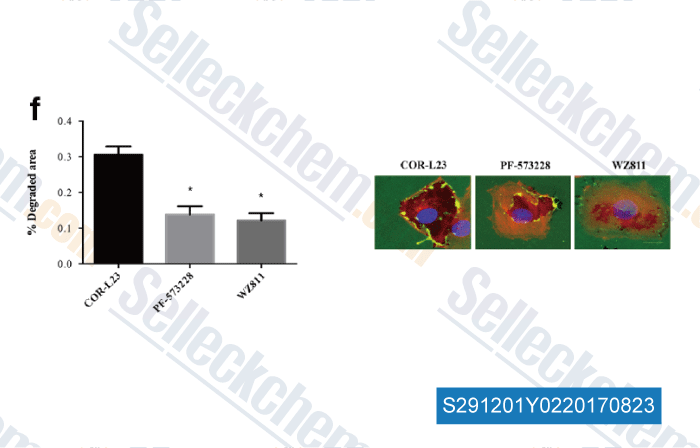
-
, , Invest New Drugs, 2017, 35(6):718-732
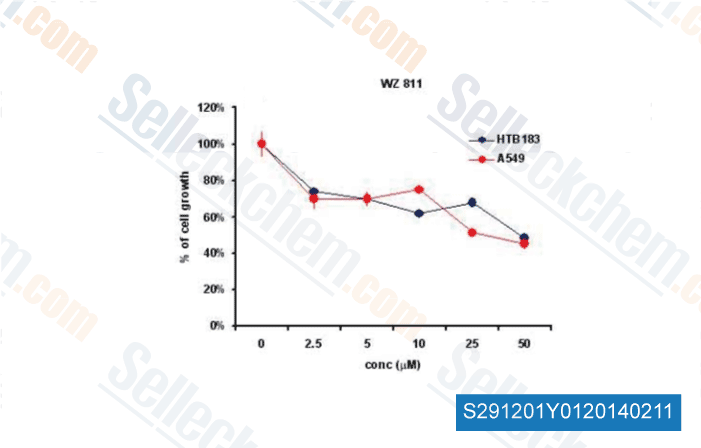
-
, , Dr.Milica Pesic from Institute for Biological Research
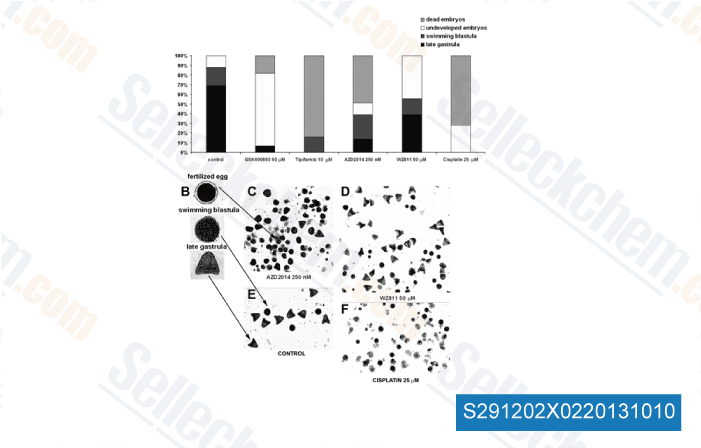
-
, , Dr. Milica Pesic from Institute for Biological Research
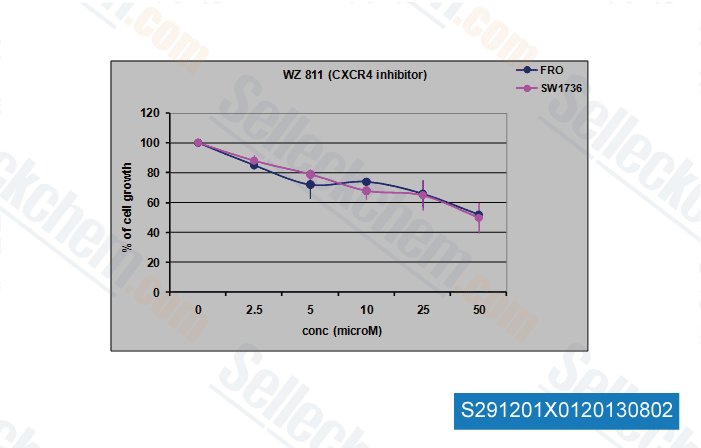
-
,
Sellecks WZ811 È stato citato da 20 Pubblicazioni
| Immunoglobulin-like transcript 2 as an impaired anti-tumor cytotoxicity marker of natural killer cells in patients with hepatocellular carcinoma [ Front Immunol, 2024, 15:1389411] | PubMed: 38638429 |
| MicroRNA-301a knockout attenuates peripheral nerve regeneration by delaying Wallerian degeneration [ Neural Regen Res, 2024, 10.4103/NRR.NRR-D-24-00081] | PubMed: 39101651 |
| Exploring the Interplay of RUNX2 and CXCR4 in Melanoma Progression [ Cells, 2024, 13(5)408] | PubMed: 38474372 |
| Modeling the SDF-1/CXCR4 protein using advanced artificial intelligence and antagonist screening for Japanese anchovy [ Front Physiol, 2024, 15:1349119] | PubMed: 38370015 |
| Metformin potentiates nephrotoxicity by promoting NETosis in response to renal ferroptosis [ Cell Discov, 2023, 9(1):104] | PubMed: 37848438 |
| Berbamine targets cancer stem cells and reverses cabazitaxel resistance via inhibiting IGF2BP1 and p-STAT3 in prostate cancer [ Prostate, 2023, 10.1002/pros.24632] | PubMed: 37828768 |
| The CXCR4-CXCL12 axis promotes T-cell reconstitution via efficient hematopoietic immigration [ J Genet Genomics, 2022, S1673-8527(22)00125-4] | PubMed: 35483564 |
| Single-cell transcriptomic reveals molecular diversity and developmental heterogeneity of human stem cell-derived oligodendrocyte lineage cells [ Nat Commun, 2021, 12(1):652] | PubMed: 33510160 |
| TGFβR-SMAD3 Signaling Induces Resistance to PARP Inhibitors in the Bone Marrow Microenvironment [ Cell Rep, 2020, 33(1):108221] | PubMed: 33027668 |
| Megakaryocytes participate in the occurrence of bleomycin-induced pulmonary fibrosis [ Cell Death Dis, 2019, 10(9):648] | PubMed: 31501415 |
POLITICA DI RESO
La politica di reso incondizionato di Selleck Chemical garantisce ai nostri clienti unesperienza di acquisto online senza problemi. Se non sei in alcun modo soddisfatto del tuo acquisto, puoi restituire qualsiasi articolo entro 7 giorni dalla ricezione. In caso di problemi di qualità del prodotto, sia relativi al protocollo che al prodotto, puoi restituire qualsiasi articolo entro 365 giorni dalla data di acquisto originale. Si prega di seguire le istruzioni seguenti per la restituzione dei prodotti.
SPEDIZIONE E CONSERVAZIONE
I prodotti Selleck vengono trasportati a temperatura ambiente. Se ricevi il prodotto a temperatura ambiente, ti assicuriamo che il Dipartimento di Ispezione Qualità di Selleck ha condotto esperimenti per verificare che la conservazione a temperatura normale per un mese non influirà sullattività biologica dei prodotti in polvere. Dopo la raccolta, conservare il prodotto secondo le indicazioni descritte nella scheda tecnica. La maggior parte dei prodotti Selleck è stabile nelle condizioni raccomandate.
NON PER USO UMANO, DIAGNOSTICO VETERINARIO O TERAPEUTICO.