
Dati tecnici
| Formula | C17H11F6N7O |
||||||
| Peso molecolare | 443.31 | Numero CAS | 1393477-72-9 | ||||
| Solubilità (25°C)* | In vitro | DMSO | 89 mg/mL (200.76 mM) | ||||
| Ethanol | 89 mg/mL (200.76 mM) | ||||||
| Water | Insoluble | ||||||
| In vivo (Aggiungere i solventi al prodotto singolarmente e in ordine.) |
|
||||||
|
* <1 mg/ml significa leggermente solubile o insolubile. * Si prega di notare che Selleck testa la solubilità di tutti i composti internamente e la solubilità effettiva può differire leggermente dai valori pubblicati. Ciò è normale ed è dovuto a leggere variazioni da lotto a lotto. * Spedizione a temperatura ambiente (I test di stabilità mostrano che questo prodotto può essere spedito senza alcuna misura di raffreddamento.) |
|||||||
Preparazione delle soluzioni stock
Attività biologica
| Descrizione | Selinexor (KPT-330, ATG-010) è un inibitore selettivo di CRM1 biodisponibile per via orale. Questo composto è in Fase 2. | |
|---|---|---|
| Target |
|
|
| In vitro | Come analogo candidato clinico di KPT-185, Selinexor (KPT-330) mostra effetti simili sulla vitalità delle cellule T-ALL e provoca una rapida risposta apoptotica. Riduce anche la crescita cellulare nelle linee cellulari MOLT-4, Jurkat, HBP-ALL, KOPTK-1, SKW-3 e DND-41, con valori di IC50 di 34-203 nM. | |
| In vivo | Selinexor (KPT-330) sopprime drasticamente la crescita delle cellule T-ALL (MOLT-4) e delle cellule AML (MV4–11) in vivo, con poca tossicità per le normali cellule ematopoietiche. Nei topi SCID con lesioni ossee diffuse di mieloma multiplo umano, questo composto inibisce la lisi ossea indotta dal mieloma multiplo e prolunga la sopravvivenza. Inoltre, compromette direttamente l'osteoclastogenesi e il riassorbimento osseo bloccando NF-κB e NFATc1 indotti da RANKL, con un impatto minimo su osteoblasti e BMSCs. |
Protocollo (da riferimento)
| Saggio cellulare:[1] |
|
|---|---|
| Studio sugli animali:[1] |
|
Riferimenti
|
Convalida del prodotto da parte del cliente

-
, , Mol Cancer Ther, 2017, 16(4):717-728
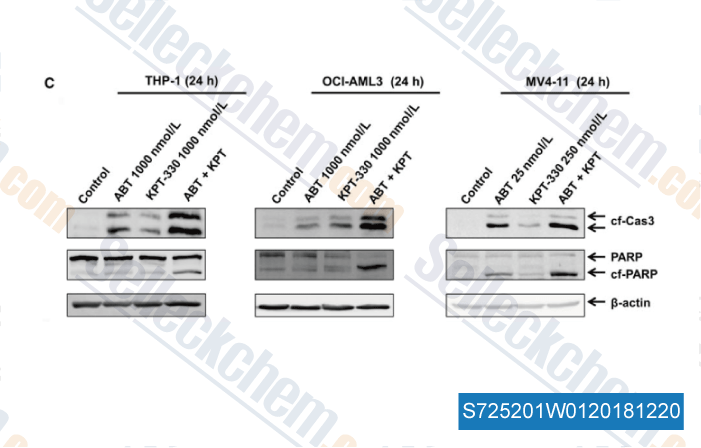
-
Dati da [ , , J Cell Mol Med, 2018, doi:10.1111/jcmm.13886 ]
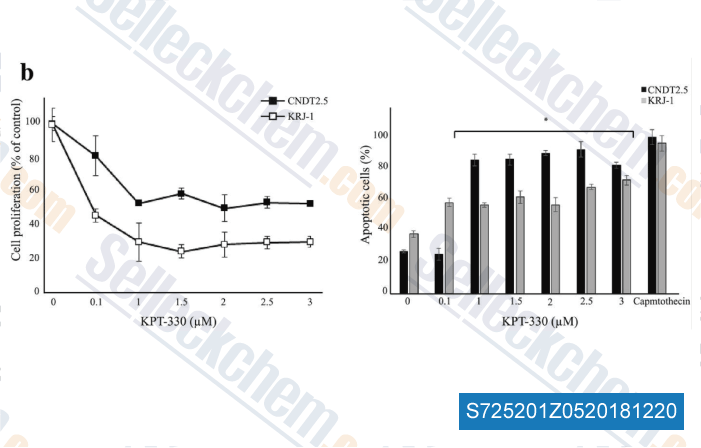
-
Dati da [ , , BMC Cancer, 2018, 18(1):764 ]
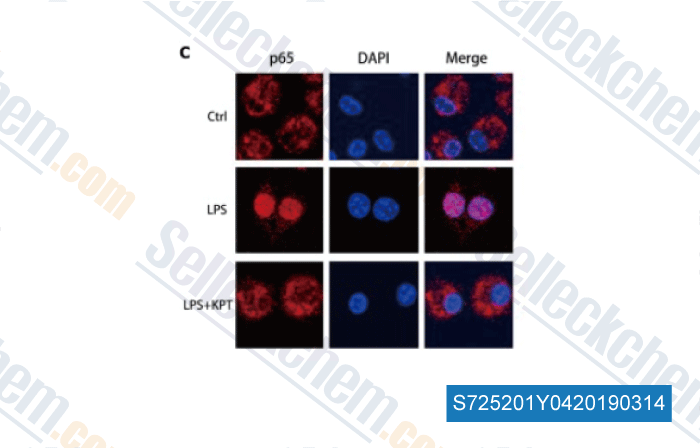
-
Dati da [ , , Biochem Biophys Res Commun, 2018, 503(3):1773-1779 ]
Sellecks Selinexor (KPT-330) È stato citato da 130 Pubblicazioni
| Disparate leukemia mutations converge on nuclear phase-separated condensates [ Cell, 2025, S0092-8674(25)01149-3] | PubMed: 41192422 |
| Human iPSC-derived nephron progenitor cells treat acute kidney injury and chronic kidney disease in mouse models [ Sci Transl Med, 2025, 17(792):eadt5553] | PubMed: 40173262 |
| The macrophage-intrinsic MDA5/IRF5 axis drives HIV-1 intron-containing RNA-induced inflammatory responses [ J Clin Invest, 2025, 135(16)e187663] | PubMed: 40493408 |
| Nuclear to Cytoplasmic Transport Is a Druggable Dependency in HDAC7-driven Small Cell Lung Cancer [ Adv Sci (Weinh), 2025, 12(14):e2413445] | PubMed: 39887933 |
| A patient-derived T cell lymphoma biorepository uncovers pathogenetic mechanisms and host-related therapeutic vulnerabilities [ Cell Rep Med, 2025, S2666-3791(25)00102-8] | PubMed: 40147445 |
| Nuclear paxillin functions as a molecular switch for alternative splicing in neurons during a critical period of brain development [ EMBO J, 2025, 44(21):5965-5992] | PubMed: 40926123 |
| NPM1-fusion proteins promote myeloid leukemogenesis through XPO1-dependent HOX activation [ Leukemia, 2025, 39(1):75-86] | PubMed: 39443736 |
| Atovaquone and selinexor as a novel combination treatment option in acute myeloid leukemia [ Cancer Lett, 2025, 613:217501] | PubMed: 39864539 |
| Targeting fucosyltransferase FUT8 as a prospective therapeutic approach for DLBCL [ Oncogenesis, 2025, 14(1):1] | PubMed: 39881135 |
| Regulation of chromatin modifications through coordination of nucleus size and epithelial cell morphology heterogeneity [ Commun Biol, 2025, 8(1):269] | PubMed: 39979587 |
POLITICA DI RESO
La politica di reso incondizionato di Selleck Chemical garantisce ai nostri clienti unesperienza di acquisto online senza problemi. Se non sei in alcun modo soddisfatto del tuo acquisto, puoi restituire qualsiasi articolo entro 7 giorni dalla ricezione. In caso di problemi di qualità del prodotto, sia relativi al protocollo che al prodotto, puoi restituire qualsiasi articolo entro 365 giorni dalla data di acquisto originale. Si prega di seguire le istruzioni seguenti per la restituzione dei prodotti.
SPEDIZIONE E CONSERVAZIONE
I prodotti Selleck vengono trasportati a temperatura ambiente. Se ricevi il prodotto a temperatura ambiente, ti assicuriamo che il Dipartimento di Ispezione Qualità di Selleck ha condotto esperimenti per verificare che la conservazione a temperatura normale per un mese non influirà sullattività biologica dei prodotti in polvere. Dopo la raccolta, conservare il prodotto secondo le indicazioni descritte nella scheda tecnica. La maggior parte dei prodotti Selleck è stabile nelle condizioni raccomandate.
NON PER USO UMANO, DIAGNOSTICO VETERINARIO O TERAPEUTICO.