
Dati tecnici
| Formula | C13H10BrN3O4 |
||||||
| Peso molecolare | 352.14 | Numero CAS | 182498-32-4 | ||||
| Solubilità (25°C)* | In vitro | DMSO | 70 mg/mL (198.78 mM) | ||||
| Ethanol | 14 mg/mL (39.75 mM) | ||||||
| Water | Insoluble | ||||||
| In vivo (Aggiungere i solventi al prodotto singolarmente e in ordine.) |
|
||||||
|
* <1 mg/ml significa leggermente solubile o insolubile. * Si prega di notare che Selleck testa la solubilità di tutti i composti internamente e la solubilità effettiva può differire leggermente dai valori pubblicati. Ciò è normale ed è dovuto a leggere variazioni da lotto a lotto. * Spedizione a temperatura ambiente (I test di stabilità mostrano che questo prodotto può essere spedito senza alcuna misura di raffreddamento.) |
|||||||
Preparazione delle soluzioni stock
Attività biologica
| Descrizione | SB225002 è un antagonista potente e selettivo di CXCR2 con una IC50 di 22 nM per l'inibizione del legame dell'interleuchina IL-8 a CXCR2, con una selettività > 150 volte superiore rispetto agli altri 7-TMR testati. | ||
|---|---|---|---|
| Target |
|
||
| In vitro | In vitro, SB225002 inibisce la mobilizzazione del calcio stimolata da GROα e inibisce potentemente la chemiotassi dei neutrofili umani e di coniglio indotta sia da IL-8 che da GROalpha. Questo composto riduce sostanzialmente i livelli di ERK1/2 fosforilata e diminuisce la proliferazione cellulare nelle cellule WHCO1. Mostra anche attività antitumorale come inibitore dei microtubuli. | ||
| In vivo | Nei conigli, SB225002 blocca selettivamente la marginazione dei neutrofili indotta da IL-8. Nel modello murino di carcinoma colangiocellulare intraepatico, questo composto (1 mg/kg i.p.) sopprime la crescita dei tumori sottocutanei trapiantati. Inoltre, mostra anche effetti antinocicettivi di lunga durata e riduce la colite indotta da TNBS nei modelli murini. |
Protocollo (da riferimento)
| Saggio della chinasi:[1] |
|
|---|---|
| Saggio cellulare:[2] |
|
| Studio sugli animali:[1] |
|
Riferimenti
|
Convalida del prodotto da parte del cliente
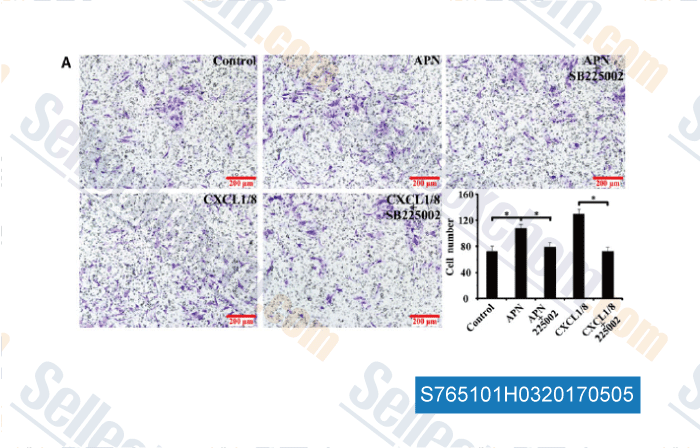
-
, , J Cell Mol Med, 2017, 21(7):1411-1419
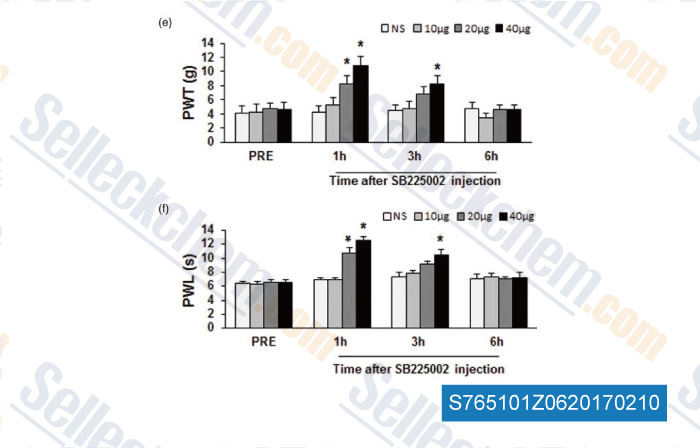
-
, , Mol Pain, 2016, doi: 10.1177/1744806916646381
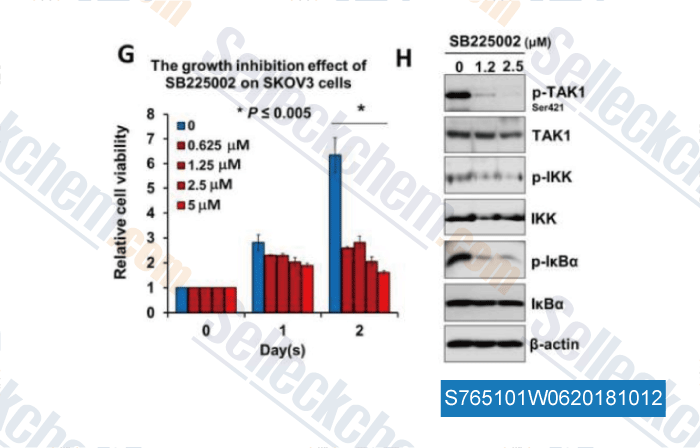
-
Dati da [ , , Theranostics, 2018, 8(5):1270-1285 ]
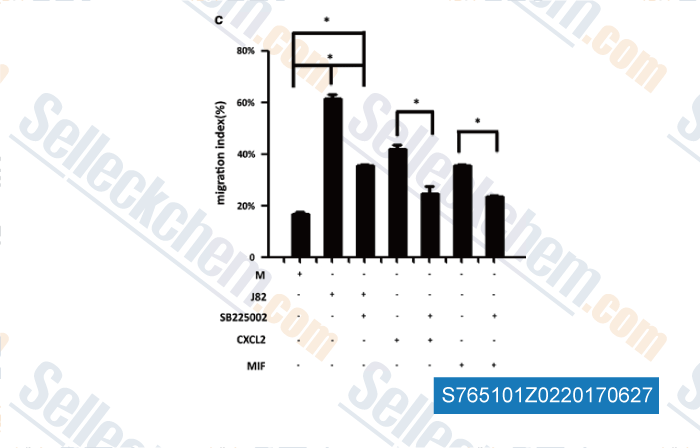
-
Dati da [ , , Oncogene, 2017, 36(15):2095-2104 ]
Sellecks SB 225002 È stato citato da 91 Pubblicazioni
| Myeloid-Derived Suppressor Cell Accumulation Drives Intestinal Fibrosis through mCCL6/hCCL15 Chemokine-Mediated Fibroblast Activation [ Adv Sci (Weinh), 2025, 12(8):e2411711] | PubMed: 39739231 |
| Tumor-derived exosomes induce neutrophil infiltration and reprogramming to promote T-cell exhaustion in hepatocellular carcinoma [ Theranostics, 2025, 15(7):2852-2869] | PubMed: 40083930 |
| USP15 Facilitates Colorectal Cancer Immune Evasion through SMYD3/CCL2-Dependent Myeloid-Derived Suppressor Cell Recruitment [ Cancer Immunol Res, 2025, 10.1158/2326-6066.CIR-24-1194] | PubMed: 40323348 |
| Cholesterol 25-Hydroxylase Enhances Myeloid-Derived Suppressor Cell (MDSC) Immunosuppression via the Stimulator of Interferon Genes (STING)-Tank-Binding Kinase 1 (TBK1)-Receptor-Interacting Protein Kinase 3 (RIPK3) Pathway in Colorectal Cancer [ MedComm (2020), 2025, 6(10):e70411] | PubMed: 41020041 |
| CXCR2 mediates rotenone-induced neuroinflammation and neurodegeneration through neurotrophil infiltration and extracellular traps formation in mice [ Int J Biol Macromol, 2025, 330(Pt 4):148305] | PubMed: 41093199 |
| KRASG12D drives immunosuppression in lung adenocarcinoma through paracrine signaling [ JCI Insight, 2025, 10(1)e182228] | PubMed: 39782689 |
| Induction of cell death by the CXCR2 antagonist SB225002 in colorectal cancer and stromal cells [ Biomed Pharmacother, 2025, 188:118203] | PubMed: 40412356 |
| The crosstalk of monocyte-neutrophil in hair follicles regulates neutrophil transepidermal migration in contact dermatitis [ Commun Biol, 2025, 8(1):564] | PubMed: 40185981 |
| IDO1 promotes Echinococcus multilocularis infection by regulating the formation of neutrophil extracellular traps [ Vet Res, 2025, 56(1):131] | PubMed: 40597301 |
| Extracellular-vesicle-packaged S100A11 from osteosarcoma cells mediates lung premetastatic niche formation by recruiting gMDSCs [ Cell Rep, 2024, 43(2):113751] | PubMed: 38341855 |
POLITICA DI RESO
La politica di reso incondizionato di Selleck Chemical garantisce ai nostri clienti unesperienza di acquisto online senza problemi. Se non sei in alcun modo soddisfatto del tuo acquisto, puoi restituire qualsiasi articolo entro 7 giorni dalla ricezione. In caso di problemi di qualità del prodotto, sia relativi al protocollo che al prodotto, puoi restituire qualsiasi articolo entro 365 giorni dalla data di acquisto originale. Si prega di seguire le istruzioni seguenti per la restituzione dei prodotti.
SPEDIZIONE E CONSERVAZIONE
I prodotti Selleck vengono trasportati a temperatura ambiente. Se ricevi il prodotto a temperatura ambiente, ti assicuriamo che il Dipartimento di Ispezione Qualità di Selleck ha condotto esperimenti per verificare che la conservazione a temperatura normale per un mese non influirà sullattività biologica dei prodotti in polvere. Dopo la raccolta, conservare il prodotto secondo le indicazioni descritte nella scheda tecnica. La maggior parte dei prodotti Selleck è stabile nelle condizioni raccomandate.
NON PER USO UMANO, DIAGNOSTICO VETERINARIO O TERAPEUTICO.