
MK-2206 Dihydrochloride

N. catalogoS1078 Lotto:S107812

Stampa

Dati tecnici

Formula

C25H21N5O.2HCl

Peso molecolare 480.39 Numero CAS 1032350-13-2
Solubilità (25°C)* In vitro DMSO 25 mg/mL (52.04 mM)
Water 2 mg/mL (4.16 mM)
Ethanol Insoluble
In vivo (Aggiungere i solventi al prodotto singolarmente e in ordine.)
Homogeneous suspension
CMC-NA
≥5mg/ml Taking the 1 mL working solution as an example, add 5 mg of this product to 1 ml of CMC-Na solution, mix evenly to obtain a homogeneous suspension with a final concentration of 5 mg/ml.
Clear solution
5%DMSO 40%PEG300 5%Tween80 50%ddH2O

Convalidato dai laboratori Selleck. Se sono necessarie modifiche a questa formulazione, contattare il nostro team di vendita per test personalizzati.

0.630mg/ml (1.31mM) Taking the 1 mL working solution as an example, add 50 μL of 12.5 mg/ml clarified DMSO stock solution to 400 μL of PEG300, mix evenly to clarify it; add 50 μL of Tween80 to the above system, mix evenly to clarify; then continue to add 500 μL of ddH2O to make it clear. Volume up to 1 mL. The mixed solution should be used immediately for optimal results. 
* <1 mg/ml significa leggermente solubile o insolubile.
* Si prega di notare che Selleck testa la solubilità di tutti i composti internamente e la solubilità effettiva può differire leggermente dai valori pubblicati. Ciò è normale ed è dovuto a leggere variazioni da lotto a lotto.
* Spedizione a temperatura ambiente (I test di stabilità mostrano che questo prodotto può essere spedito senza alcuna misura di raffreddamento.)

Preparazione delle soluzioni stock

Attività biologica

Descrizione MK-2206 2HCl è un inibitore altamente selettivo di Akt1/2/3 con IC50 di 8 nM/12 nM/65 nM in saggi senza cellule, rispettivamente; non sono state osservate attività inibitorie contro altre 250 proteine chinasi. Questo composto induce autophagy e apoptosis nelle cellule tumorali. Fase 2.
Target
Akt1
(Cell-free assay)
Akt2
(Cell-free assay)
Akt3
(Cell-free assay)
8 nM 12 nM 65 nM
In vitro

MK-2206 2HCl è un inibitore allosterico ed è attivato dal dominio di omologia della pleckstrina. Questo composto inibisce l'autofosforilazione di Akt T308 e S473. Previene anche la fosforilazione mediata da Akt delle molecole di segnalazione a valle, tra cui TSC2, PRAS40 e le proteine ribosomiali S6. Questa sostanza chimica inibisce le linee cellulari Ras wild-type (WT) (A431, HCC827 e NCI-H292) più potentemente rispetto alle linee cellulari mutanti Ras (NCI-H358, NCI-H23, NCI-H1299 e Calu-6). Mostra anche risposte sinergiche in combinazione con agenti citotossici nelle cellule tumorali polmonari NCI-H460 o ovariche A2780. MK-2206 o l'inibizione di Akt mediata da siRNA attiva fortemente l'autophagy nelle cellule di glioma umano. Tuttavia, il silenziamento del fattore di allungamento eucariotico-2 (eEF-2) sopprime l'autophagy indotta da questo composto, con una promozione della morte cellulare apoptotica.

In vivo

MK-2206 2HCl mostra il 60% di TGI e inibisce più del 70% di fosfo-Akt1/2 (T308 e S473) in xenotrapianti di cancro ovarico A2780 a una dose di 240 mg/kg. Questo composto mostra una significativa attività antitumorale in xenotrapianti NCI-H292 in combinazione.

Caratteristiche Il primo inibitore allosterico a piccola molecola di Akt ad entrare nello sviluppo clinico.

Protocollo (da riferimento)

Saggio della chinasi:

[4]

  • Saggio delle chinasi Akt

    Le chinasi Akt vengono saggiate mediante un substrato peptidico biotinilato derivato da GSK. L'entità della fosforilazione del peptide viene determinata mediante Homogeneous Time Resolved Fluorescence (HTRF) utilizzando un anticorpo monoclonale accoppiato a un chelato di lantanidi (Lance) specifico per il fosfopeptide in combinazione con un fluoroforo di alloficocianina legata a streptavidina (SA-APC) che si legherà alla porzione biotinica del peptide. Quando Lance e APC sono in prossimità, ha luogo un trasferimento di energia non radiativo da Lance ad APC, seguito dall'emissione di luce da APC a 655 nm. Tampone di saggio 10X: 500 mM HEPES, pH 7,5, 1% PEG, 16,6 mM EDTA, 1 mM EGTA, 1% BSA, 20 mM 9-glicerolo fosfato; Tampone di spegnimento: 50 mM HEPES pH 7,3, 16,6 mM EDTA, 0,1% BSA, 0,1% Triton X-100, 0,17 nM di anticorpo monoclonale marcato, 0,0067 mg/mL SA-APC; Soluzione di lavoro ATP/MgCl2: tampone di saggio 1X, 1 mM DTT, 1X PIC, 5% glicerolo, Akt attivo; Soluzione di lavoro peptidica: tampone di saggio 1X, 1 mM DTT, 1X PIC, 5% glicerolo, 2 TM peptide biotinilato GSK. La reazione viene assemblata aggiungendo 16 µL di soluzione di lavoro ATP/MgCl2 ai pozzetti appropriati. Si aggiunge MK-2206 2HCl o veicolo (1,0 µL) seguito da 10 µL di soluzione di lavoro peptidica. La reazione viene avviata aggiungendo 13 μL della soluzione di lavoro enzimatica e miscelando. La reazione viene lasciata procedere per 50 min e quindi interrotta con l'aggiunta di 60 µL di tampone di spegnimento HTRF. Le reazioni interrotte vengono incubate a temperatura ambiente per almeno 30 min e quindi lette nello strumento.

Saggio cellulare:

[2]

  • Linee cellulari

    A431, HCC827, NCI-H292, NCI-H358, NCI-H23, NCI-H1299, Calu-6 and NCI-H460 cells

  • Concentrazioni

    0, 0.3, 1 and 3 μM

  • Tempo di incubazione

    72 or 96 hours

  • Metodo

    MK-2206 2HCl is dissolved in DMSO as a stock solution and diluted by culture media before use. Cells are seeded at a density of 2-3 × 10³ in 96-well plates and incubated for 24 hours. Then this compound (0, 0.3, 1 and 3 μM) is added to the cells. Cell proliferation is determined after 72 or 96 hours.

Studio sugli animali:

[2]

  • Modelli animali

    SK-OV-3, NCI-H292, HCC70, PC-3, and NCI-H460 models in male CD1-nude mice

  • Dosaggi

    120 mg/kg

  • Somministrazione

    Orally administered

Riferimenti

  • http://cancerres.aacrjournals.org/content/69/9_Supplement/DDT01-1
  • https://pubmed.ncbi.nlm.nih.gov/20571069/
  • https://pubmed.ncbi.nlm.nih.gov/21307130/
  • http://worldwide.espacenet.com/publicationDetails/biblio?CC=WO&NR=2008070016A2&KC=A2&FT=D&ND=5&date=

Convalida del prodotto da parte del cliente
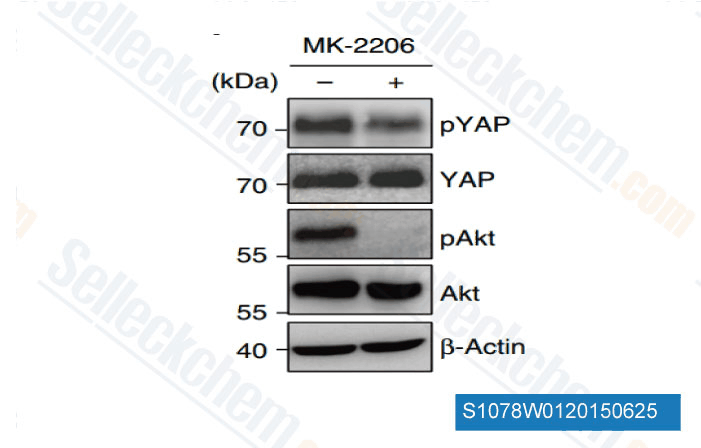
VE-cadherin-induced Akt activation mediates YAP phosphorylation and translocation in ECs. HUVECs were starved for 1h and treated with thrombin (1U) for 1h. Total cell lysates were probed with anti-pAkt, Akt or b-actin antibody. The representative blots of three independent experiments are depicted, and the normalized values for p-Akt are shown. HUVECs were cultured and starved as described as in d and incubated for 8h in complete medium with the Akt inhibitor, MK-2206 (1 uM). pAkt, Akt, pYAP and YAP were detected by western blotting using specific antibodies.

Dati da [ Nat Commun , 2015 , 6:6943 ]
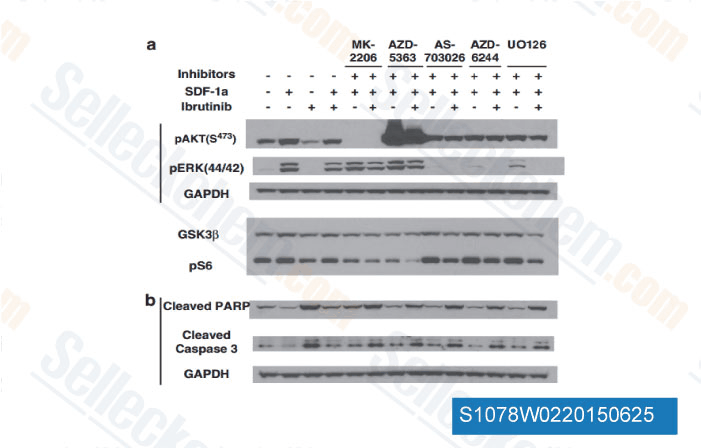
Inhibitors of AKT or ERK overcome SDF-1a-mediated resistance to ibrutinib-triggered PARP and caspase 3 cleavage in CXCR4S338X-expressing BCWM.1 cells. CXCR4S338X-expressing WM cells were treated with ibrutinib (0.5 uM) alone or in the presence of SDF-1a (20 nM) and/or the AKT inhibitors MK-2206 (0.5 uM) and AZD-5363 (0.5 uM); or the MEK inhibitors AS-703026 (0.25 uM), AZD-6244 (0.5 uM) and UO126 (5.0 uM). (a) Immunoblotting results for phosphoAKT (S473) and phospho-ERK (T202/Y204) in CXCR4S338X-expressing BCWM.1 cells pretreated with ibrutinib with and without AKT or ERK inhibitors, then subjected to SDF-1a stimulation for 2 min. The inhibitory effect of AZD-5363 on AKT, which is known to paradoxically hyper-phosphorylate pAKT(S473) was confirmed by inhibition of the phospho-activity for the downstream AKT targets glycogen synthase kinase 3b and pS6. (b) Immunoblotting results for cleaved PARP and cleaved caspase 3 in CXCR4S338X-expressing BCWM.1 cells treated with ibrutinib and/or AKT or ERK inhibitors for 6 h at IC50 doses. GAPDH, glyceraldehyde 3-phosphate dehydrogenase.

Dati da [ Leukemia , 2015 , 29(1), 169-76 ]
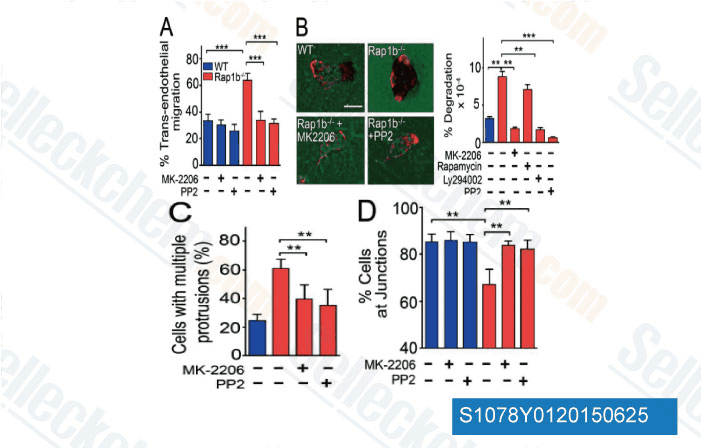
Rap1b negatively regulates neutrophil transcellular migration by limiting PI3K-Akt signaling. (A-D) Effect of Akt inhibitor MK2206 (2 uM), Src inhibitor PP2 (10 uM), or vehicle control (DMSO) on WT or Rap1b-/- neutrophil functions. (A) Percentage of neutrophil transendothelial migration in 3D migration model. (B) ECM degradation assessed on Oregon green-labeled gelatin matrix; (left) representative images on (bar, 10 um) and (right) bar graph is percentage of matrix degradation. (C) Percentage of cells forming multiple protrusions. (D) Percentage of neutrophils present at junction of activated bEND.3 in 3D migration assay. Mean ?SD; n = 3 independent experiments. **, P < 0.01; ***, P < 0.001; NS, not significant using unpaired Student

Dati da [ J Exp Med , 2014 , 211(9), 1741-58 ]
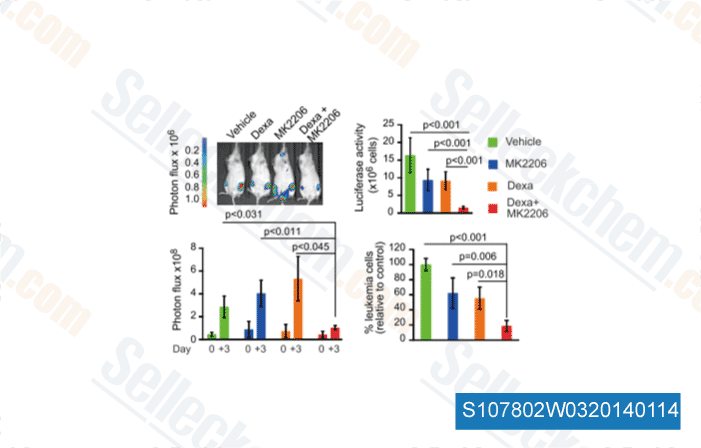
Dati da [ Cancer Cell , 2013 , 24, 766-76 ]

Sellecks MK-2206 Dihydrochloride È stato citato da 1974 Pubblicazioni

Lysosomal EGFR acts as a Rheb-GEF independent of its kinase activity to activate mTORC1 [ Cell Res, 2025, 10.1038/s41422-025-01110-x] PubMed: 40259053
Oncogenic RAS induces a distinctive form of non-canonical autophagy mediated by the P38-ULK1-PI4KB axis [ Cell Res, 2025, 10.1038/s41422-025-01085-9] PubMed: 40055523
IFITM3-MET interaction drives osimertinib resistance through AKT pathway activation in EGFR-mutant non-small cell lung cancer [ Mol Cancer, 2025, 24(1):272] PubMed: 41152910
APOBEC3 mutagenesis drives therapy resistance in breast cancer [ Nat Genet, 2025, 57(6):1452-1462] PubMed: 40379787
Chromosome mis-segregation triggers cell cycle arrest through a mechanosensitive nuclear envelope checkpoint [ Nat Cell Biol, 2025, 27(1):73-86] PubMed: 39779939
Nucleus-translocated glucokinase functions as a protein kinase to phosphorylate TAZ and promote tumour growth [ Nat Commun, 2025, 16(1):7156] PubMed: 40759645
RIOK3 mediates the degradation of 40S ribosomes [ Mol Cell, 2025, 85(4):802-814.e12] PubMed: 39947183
CD24 Regulates the Formation of Ectosomes in B Lymphocytes [ J Extracell Vesicles, 2025, 14(5):e70093] PubMed: 40415253
PIP5K1A Suppresses Ferroptosis and Induces Sorafenib Resistance by Stabilizing NRF2 in Hepatocellular Carcinoma [ Adv Sci (Weinh), 2025, 12(30):e04372] PubMed: 40405713
EGFR TKIs suppress MUC1 glycosylation through the PI3K/AKT/SP1/C1GALT1 pathway to enhance TnMUC1 CAR-T efficacy in EGFR-mutant NSCLC [ Cell Rep Med, 2025, S2666-3791(25)00272-1] PubMed: 40562040

POLITICA DI RESO
La politica di reso incondizionato di Selleck Chemical garantisce ai nostri clienti unesperienza di acquisto online senza problemi. Se non sei in alcun modo soddisfatto del tuo acquisto, puoi restituire qualsiasi articolo entro 7 giorni dalla ricezione. In caso di problemi di qualità del prodotto, sia relativi al protocollo che al prodotto, puoi restituire qualsiasi articolo entro 365 giorni dalla data di acquisto originale. Si prega di seguire le istruzioni seguenti per la restituzione dei prodotti.

SPEDIZIONE E CONSERVAZIONE
I prodotti Selleck vengono trasportati a temperatura ambiente. Se ricevi il prodotto a temperatura ambiente, ti assicuriamo che il Dipartimento di Ispezione Qualità di Selleck ha condotto esperimenti per verificare che la conservazione a temperatura normale per un mese non influirà sullattività biologica dei prodotti in polvere. Dopo la raccolta, conservare il prodotto secondo le indicazioni descritte nella scheda tecnica. La maggior parte dei prodotti Selleck è stabile nelle condizioni raccomandate.

NON PER USO UMANO, DIAGNOSTICO VETERINARIO O TERAPEUTICO.