
Dati tecnici
| Formula | C25H34N6O3S |
||||||
| Peso molecolare | 498.64 | Numero CAS | 873652-48-3 | ||||
| Solubilità (25°C)* | In vitro | DMSO | 99 mg/mL (198.54 mM) | ||||
| Ethanol | 99 mg/mL (198.54 mM) | ||||||
| Water | 3 mg/mL (6.01 mM) | ||||||
| In vivo (Aggiungere i solventi al prodotto singolarmente e in ordine.) |
|
||||||
|
* <1 mg/ml significa leggermente solubile o insolubile. * Si prega di notare che Selleck testa la solubilità di tutti i composti internamente e la solubilità effettiva può differire leggermente dai valori pubblicati. Ciò è normale ed è dovuto a leggere variazioni da lotto a lotto. * Spedizione a temperatura ambiente (I test di stabilità mostrano che questo prodotto può essere spedito senza alcuna misura di raffreddamento.) |
|||||||
Preparazione delle soluzioni stock
Attività biologica
| Descrizione | GDC-0152 è un potente antagonista di XIAP-BIR3, ML-IAP-BIR3, cIAP1-BIR3 e cIAP2-BIR3 con Ki di 28 nM, 14 nM, 17 nM e 43 nM in saggi acellulari, rispettivamente; è stata mostrata minore affinità per cIAP1-BIR2 e cIAP2-BIR2. Fase 1. | ||||||||||
|---|---|---|---|---|---|---|---|---|---|---|---|
| Target |
|
||||||||||
| In vitro | GDC-0152 può bloccare le interazioni proteina-proteina che coinvolgono le proteine IAP e le molecole pro-apoptotiche. Utilizzando cellule HEK293T transitoriamente trasfettate, è stato dimostrato che questo composto interrompe il legame di XIAP alla caspasi-9 parzialmente elaborata e interrompe l'associazione di ML-IAP, cIAP1 e cIAP2 con Smac. Nelle cellule di melanoma SK-MEL28, l'associazione endogena di ML-IAP e Smac viene efficacemente abolita anche da questa sostanza chimica. Porta a una diminuzione della vitalità cellulare nella linea cellulare di cancro al seno MDA-MB-231, pur non avendo alcun effetto sulle normali cellule epiteliali mammarie umane (HMEC). Questo composto è risultato attivare le caspasi 3 e 7 in modo dose- e tempo-dipendente. È stato dimostrato che induce una rapida degradazione di cIAP1 nelle cellule di melanoma A2058. Induce efficacemente la degradazione di cIAP1 a concentrazioni anche di 10 nM, coerentemente con la sua affinità per cIAP1. | ||||||||||
| In vivo | GDC-0152 ha una clearance epatica prevista moderata basata su saggi di stabilità metabolica condotti utilizzando microsomi epatici umani. Il legame plasma-proteico di questo composto è moderato e paragonabile tra topi (88-91%), ratti (89-91%), cani (81-90%), scimmie (76-85%) e umani (75-83%) nell'intervallo di concentrazioni investigate (0,1-100 μM); un legame plasma-proteico più elevato è osservato nei conigli (95-96%). Non si distribuisce preferenzialmente nei globuli rossi con rapporti di ripartizione sangue-plasma che vanno da 0,6 a 1,1 in tutte le specie testate. La farmacocinetica di questa sostanza chimica è ottenuta con una Cmax di 53,7 μM e un'AUC di 203,5 h•μM. |
Protocollo (da riferimento)
| Saggio della chinasi:[1] |
|
|---|---|
| Saggio cellulare:[1] |
|
| Studio sugli animali:[1] |
|
Riferimenti
|
Convalida del prodotto da parte del cliente
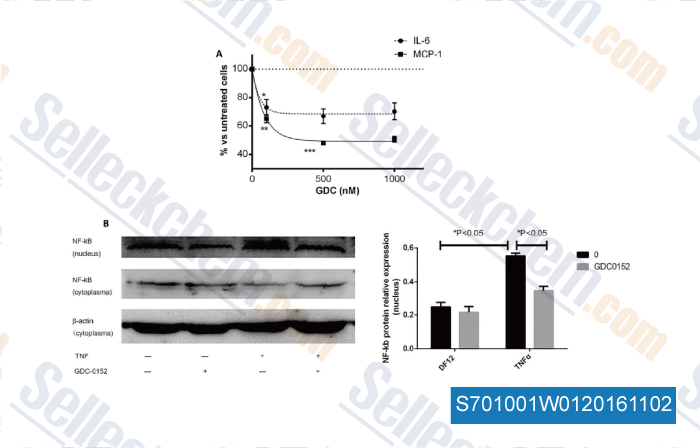
-
, , PLoS One, 2015, 10(5):e0128647.
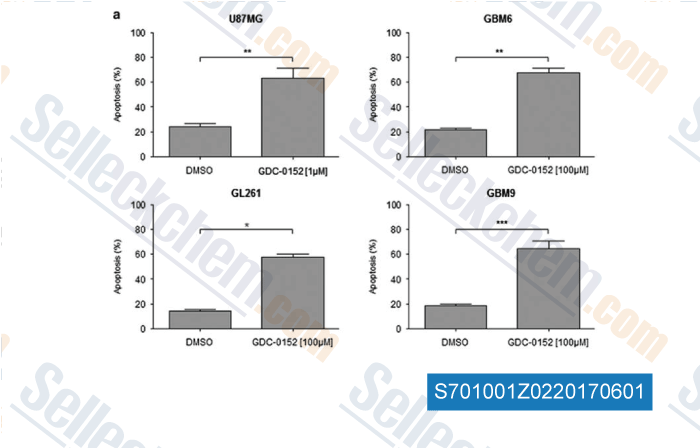
-
Dati da [ , , Cell Death Dis, 2016, 7(8):e2325 ]
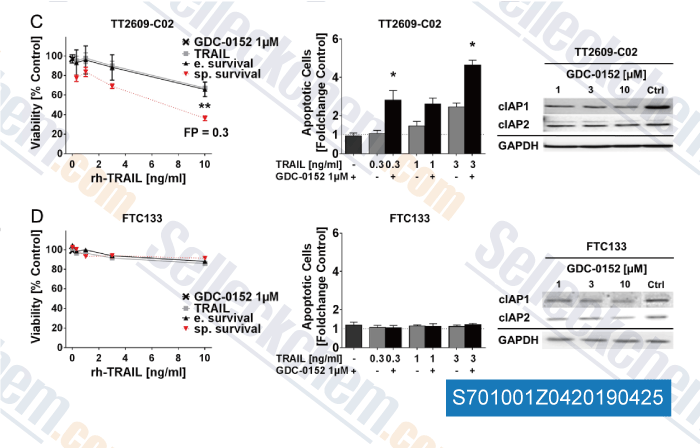
-
Dati da [ , , Endocr Relat Cancer, 2018, 25(3):295-308 ]
Sellecks GDC-0152 È stato citato da 22 Pubblicazioni
| Tailoring glioblastoma treatment based on longitudinal analysis of post-surgical tumor microenvironment [ J Exp Clin Cancer Res, 2024, 43(1):311] | PubMed: 39605004 |
| Single-molecule fingerprinting of protein-drug interaction using a funneled biological nanopore [ Nat Commun, 2023, 14(1):1461] | PubMed: 37015934 |
| Protein folding stress potentiates NLRP1 and CARD8 inflammasome activation [ Cell Rep, 2023, 42(1):111965] | PubMed: 36649711 |
| In vitro analysis reveals necroptotic signaling does not provoke DNA damage or HPRT mutations [ Cell Death Dis, 2020, 11(8):680] | PubMed: 32826875 |
| Smac Mimetics Can Provoke Lytic Cell Death That Is Neither Apoptotic Nor Necroptotic [ Apoptosis, 2020, 21] | PubMed: 32440848 |
| EBV(LMP1)-induced metabolic reprogramming inhibits necroptosis through the hypermethylation of the RIP3 promoter. [ Theranostics, 2019, 9(9):2424-2438] | PubMed: 31131045 |
| HTiP: High-Throughput Immunomodulator Phenotypic Screening Platform to Reveal IAP Antagonists as Anti-cancer Immune Enhancers [ Cell Chem Biol, 2019, 26(3):331-339] | PubMed: 30639259 |
| WX20120108, a novel IAP antagonist, induces tumor cell autophagy via activating ROS-FOXO pathway. [ Acta Pharmacol Sin, 2019, 10.1038/s41401-019-0253-5] | PubMed: 31316176 |
| Enteroendocrine Progenitor Cell-Enriched miR-7 Regulates Intestinal Epithelial Proliferation in an Xiap-Dependent Manner. [ Cell Mol Gastroenterol Hepatol, 2019, 10.1016/j] | PubMed: 31756561 |
| Inhibitor of Apoptosis Proteins Determines Glioblastoma Stem-Like Cell Fate in an Oxygen-Dependent Manner [ Stem Cells, 2019, 37(6):731-742] | PubMed: 30920104 |
POLITICA DI RESO
La politica di reso incondizionato di Selleck Chemical garantisce ai nostri clienti unesperienza di acquisto online senza problemi. Se non sei in alcun modo soddisfatto del tuo acquisto, puoi restituire qualsiasi articolo entro 7 giorni dalla ricezione. In caso di problemi di qualità del prodotto, sia relativi al protocollo che al prodotto, puoi restituire qualsiasi articolo entro 365 giorni dalla data di acquisto originale. Si prega di seguire le istruzioni seguenti per la restituzione dei prodotti.
SPEDIZIONE E CONSERVAZIONE
I prodotti Selleck vengono trasportati a temperatura ambiente. Se ricevi il prodotto a temperatura ambiente, ti assicuriamo che il Dipartimento di Ispezione Qualità di Selleck ha condotto esperimenti per verificare che la conservazione a temperatura normale per un mese non influirà sullattività biologica dei prodotti in polvere. Dopo la raccolta, conservare il prodotto secondo le indicazioni descritte nella scheda tecnica. La maggior parte dei prodotti Selleck è stabile nelle condizioni raccomandate.
NON PER USO UMANO, DIAGNOSTICO VETERINARIO O TERAPEUTICO.