
Dati tecnici
| Formula | C32H47F5O3S |
||||||
| Peso molecolare | 606.77 | Numero CAS | 129453-61-8 | ||||
| Solubilità (25°C)* | In vitro | DMSO | 100 mg/mL (164.8 mM) | ||||
| Ethanol | 100 mg/mL (164.8 mM) | ||||||
| Water | Insoluble | ||||||
| In vivo (Aggiungere i solventi al prodotto singolarmente e in ordine.) |
|
||||||
|
* <1 mg/ml significa leggermente solubile o insolubile. * Si prega di notare che Selleck testa la solubilità di tutti i composti internamente e la solubilità effettiva può differire leggermente dai valori pubblicati. Ciò è normale ed è dovuto a leggere variazioni da lotto a lotto. * Spedizione a temperatura ambiente (I test di stabilità mostrano che questo prodotto può essere spedito senza alcuna misura di raffreddamento.) |
|||||||
Preparazione delle soluzioni stock
Attività biologica
| Descrizione | Il Fulvestrant è un antagonista del recettore degli estrogeni (ER) con IC50 di 0,94 nM in un saggio senza cellule. Il Fulvestrant induce anche l'autophagy e l'apoptosis e ha attività antitumorale. | ||
|---|---|---|---|
| Target |
|
||
| In vitro | Il Fulvestrant è un efficace inibitore della crescita delle cellule MCF-7 ER-positive (con IC50 di 0,29 nM) ma senza effetti sulla crescita delle cellule di cancro al seno umane BT-20 ER-negative. Questo composto provoca l'accumulo di cellule in G0/G1 e riduce anche la proporzione di cellule capaci di sintesi continua del DNA. Inibisce competitivamente il legame dell'estradiolo al recettore degli estrogeni. Questo agente blocca la localizzazione nucleare dell'ER compromettendo la dimerizzazione del recettore e il trasporto nucleo-citoplasmatico energia-dipendente. A causa dell'instabilità del complesso fulvestrant-ER, il legame di questo composto con l'ER porta infine a una degradazione accelerata della proteina ER. Questa sostanza chimica (10 nM) non solo diminuisce i livelli di mRNA di IGF-IR ma diminuisce anche l'emivita. Il trattamento con 100 μM di questo composto porta a un aumento dipendente dal tempo dei livelli di mRNA a stato stazionario di TNFR1 e TRADD nelle cellule MCF-7. È in grado di down-regolare l'espressione del recettore degli androgeni e diminuisce le risposte androgeniche nelle cellule di cancro alla prostata umane LNCaP. Questo agente attenua anche significativamente la crescita stimolata da R1881 del 70%. È in grado di modulare la mitosi e la morte cellulare nei neuroni cerebellari immaturi tramite rapida attivazione di MAPK. | ||
| In vivo | Il Fulvestrant è privo di attività uterotrofica e, quando co-somministrato con estradiolo, blocca efficacemente l'azione uterotrofica dell'estradiolo con ED50 di 0,06 mg/kg/giorno s.c. in ratti femmine immature. Una singola iniezione s.c. di 5 mg di questa sospensione del composto blocca completamente la crescita degli xenotrapianti MCF-7. La crescita dei trapianti del tumore mammario umano BrlO è anche efficacemente soppressa da 10 μM di questa sostanza chimica. Questo composto (10 mg/ratto, s.c.) riduce l'espressione del recettore degli androgeni, la fosforilazione di ERK1/2 e la proliferazione cellulare nella prostata ventrale del ratto. Mostra anche attività anti-angiogenesi nella membrana corioallantoidea dell'uovo di pulcino. |
Protocollo (da riferimento)
| Saggio cellulare:[1] |
|
|---|---|
| Studio sugli animali:[6] |
|
Riferimenti
|
Convalida del prodotto da parte del cliente
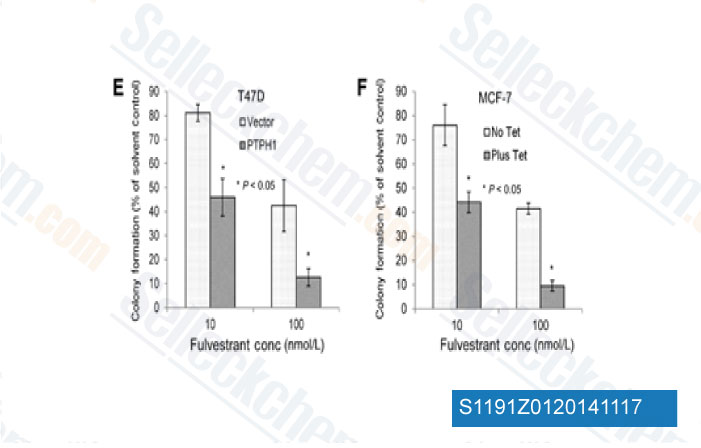
-
Dati da [ Mol Cancer Ther , 2014 , 13(1), 230-8 ]
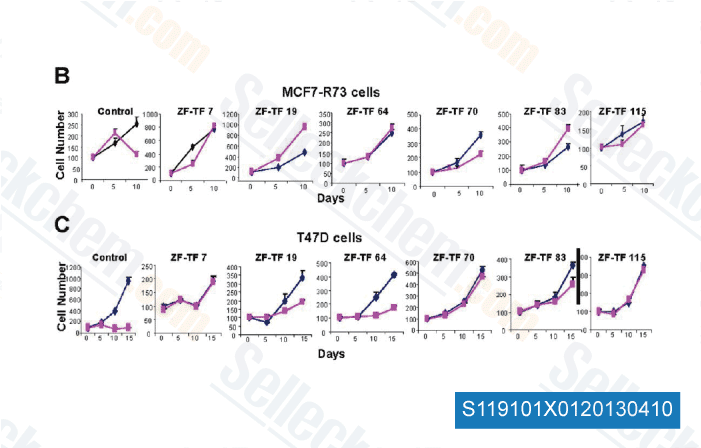
-
Dati da [ PLoS One , 2011 , 6, e21112 ]
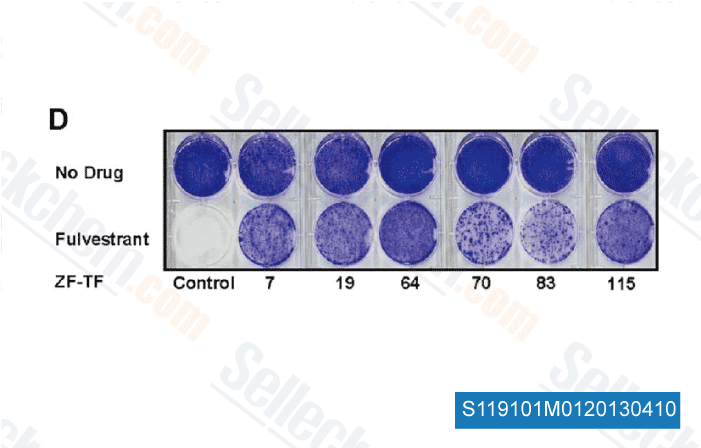
-
Dati da [ PLoS One , 2011 , 6, e21112 ]
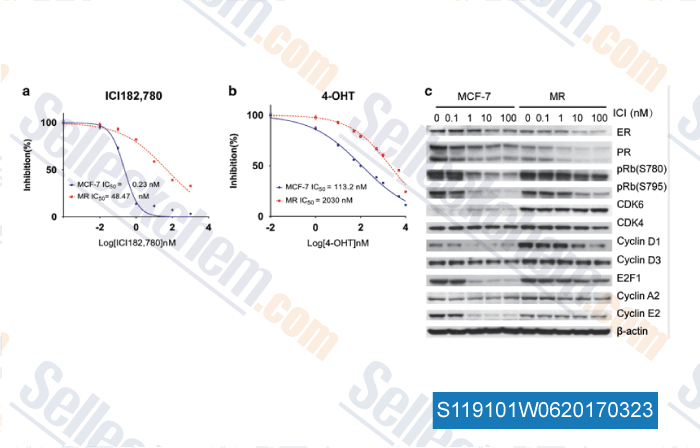
-
, , Oncogene, 2017, 36(16):2255-2264
Sellecks Fulvestrant (ICI-182780) È stato citato da 188 Pubblicazioni
| APOBEC3 mutagenesis drives therapy resistance in breast cancer [ Nat Genet, 2025, 57(6):1452-1462] | PubMed: 40379787 |
| Dual targeting CDK4/6 and CDK7 augments tumor response and anti-tumor immunity in breast cancer models [ J Clin Invest, 2025, e188839] | PubMed: 40794455 |
| Combined inhibition of KAT6A/B and Menin reverses estrogen receptor-driven gene expression programs in breast cancer [ Cell Rep Med, 2025, 6(7):102192] | PubMed: 40516531 |
| A bedside-to-bench translational analysis of NF1 alterations and CDK4/6 inhibitor resistance in hormone receptor-positive metastatic breast cancer [ EBioMedicine, 2025, 118:105828] | PubMed: 40578027 |
| Blocking cancer-fibroblast mutualism inhibits proliferation of endocrine therapy resistant breast cancer [ Mol Syst Biol, 2025, 10.1038/s44320-025-00104-6] | PubMed: 40341770 |
| Selective degradation of FGFR1/2 overcomes antiestrogen resistance in ER+ breast cancer with FGFR1/2 alterations [ Cancer Lett, 2025, 619:217668] | PubMed: 40127812 |
| Targeting estrogen-regulated system xc- promotes ferroptosis and endocrine sensitivity of ER+ breast cancer [ Cell Death Dis, 2025, 16(1):30] | PubMed: 39833180 |
| Oestrogen Receptor Alpha in Myocyte Maintains Muscle Regeneration in Duchenne Muscular Dystrophy [ J Cachexia Sarcopenia Muscle, 2025, 16(2):e13807] | PubMed: 40258782 |
| Annotation-free deep learning algorithm trained on hematoxylin & eosin images predicts epithelial-to-mesenchymal transition phenotype and endocrine response in estrogen receptor-positive breast cancer [ Breast Cancer Res, 2025, 27(1):6] | PubMed: 39800743 |
| Progranulin deficiency associates with postmenopausal osteoporosis via increasing ubiquitination of estrogen receptor α [ Genes Dis, 2025, 12(1):101221] | PubMed: 39559258 |
POLITICA DI RESO
La politica di reso incondizionato di Selleck Chemical garantisce ai nostri clienti unesperienza di acquisto online senza problemi. Se non sei in alcun modo soddisfatto del tuo acquisto, puoi restituire qualsiasi articolo entro 7 giorni dalla ricezione. In caso di problemi di qualità del prodotto, sia relativi al protocollo che al prodotto, puoi restituire qualsiasi articolo entro 365 giorni dalla data di acquisto originale. Si prega di seguire le istruzioni seguenti per la restituzione dei prodotti.
SPEDIZIONE E CONSERVAZIONE
I prodotti Selleck vengono trasportati a temperatura ambiente. Se ricevi il prodotto a temperatura ambiente, ti assicuriamo che il Dipartimento di Ispezione Qualità di Selleck ha condotto esperimenti per verificare che la conservazione a temperatura normale per un mese non influirà sullattività biologica dei prodotti in polvere. Dopo la raccolta, conservare il prodotto secondo le indicazioni descritte nella scheda tecnica. La maggior parte dei prodotti Selleck è stabile nelle condizioni raccomandate.
NON PER USO UMANO, DIAGNOSTICO VETERINARIO O TERAPEUTICO.