
Dati tecnici
| Formula | C21H20N4O3 |
||||||
| Peso molecolare | 376.41 | Numero CAS | 209783-80-2 | ||||
| Solubilità (25°C)* | In vitro | DMSO | 75 mg/mL (199.25 mM) | ||||
| Water | Insoluble | ||||||
| Ethanol | Insoluble | ||||||
| In vivo (Aggiungere i solventi al prodotto singolarmente e in ordine.) |
|
||||||
|
* <1 mg/ml significa leggermente solubile o insolubile. * Si prega di notare che Selleck testa la solubilità di tutti i composti internamente e la solubilità effettiva può differire leggermente dai valori pubblicati. Ciò è normale ed è dovuto a leggere variazioni da lotto a lotto. * Spedizione a temperatura ambiente (I test di stabilità mostrano che questo prodotto può essere spedito senza alcuna misura di raffreddamento.) |
|||||||
Preparazione delle soluzioni stock
Attività biologica
| Descrizione | Entinostat (MS-275, SNDX-275) inibisce fortemente HDAC1 e HDAC3 con IC50 di 0,51 μM e 1,7 μM in saggi senza cellule, rispetto a HDACs 4, 6, 8 e 10. Questo composto induce l'autophagy e l'apoptosis. Fase 3. | ||||
|---|---|---|---|---|---|
| Target |
|
||||
| In vitro | Entinostat (MS-275) mostra un'inibizione delle HDACs tramite il gruppo 2'-ammino. Induce l'accumulo di p21WAF1/CIP1 e gelsolina nelle cellule K562, e potrebbe ridurre le cellule in fase S e indurre le cellule in fase G1 nelle cellule A2780. Questo composto inibisce la proliferazione delle linee cellulari tumorali umane, incluse A2780, Calu-3, HL-60, K562, St-4, HT-29, KB-3-1, Capan-1, 4-1St e HCT-15 con IC50 da 41,5 nM a 4,71 μM, il che è dovuto all'inibizione di HAD. Non è sensibile ad altre HDACs (4, 6, 8 e 10) con IC50 di circa/superiore a 100 μM. Mostra una grande inibizione delle cellule di leucemia e linfoma umane, incluse U937, HL-60, K562 e Jurkat. MS-275 diminuisce anche l'espressione della ciclina D1 e delle proteine antiapoptotiche Mcl-1 e XIAP. | ||||
| In vivo | Entinostat (MS-275) mostra una grande attività antitumorale contro gli xenotrapianti tumorali umani, eccetto HCT-15, a 49 mg/kg. Dimostra un promettente potenziale terapeutico sia nelle neoplasie solide che ematologiche, nonché la regolazione dell'espressione genica fisiologica e aberrante. Se combinato con IL-2, questo composto ha una grande attività antitumorale in un modello di xenotrapianto di carcinoma a cellule renali, il che è dovuto alla diminuzione delle cellule T regolatorie e all'aumento degli splenociti. |
Protocollo (da riferimento)
| Saggio della chinasi: |
|
|---|---|
| Saggio cellulare: |
|
| Studio sugli animali: |
|
Riferimenti
|
Convalida del prodotto da parte del cliente
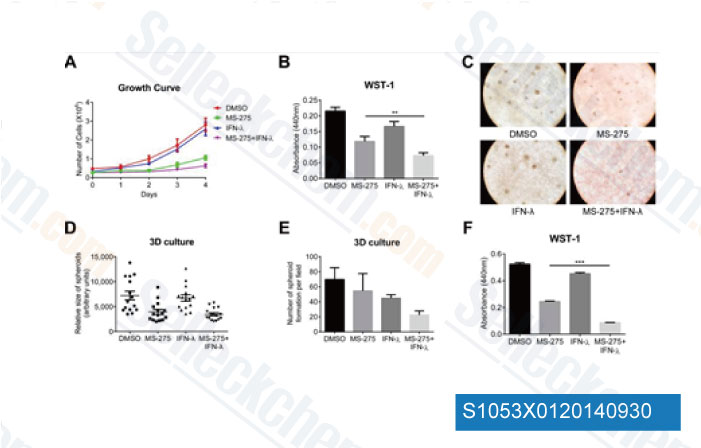
-
Dati da [ PLoS Biol , 2014 , 12, e1001758 ]
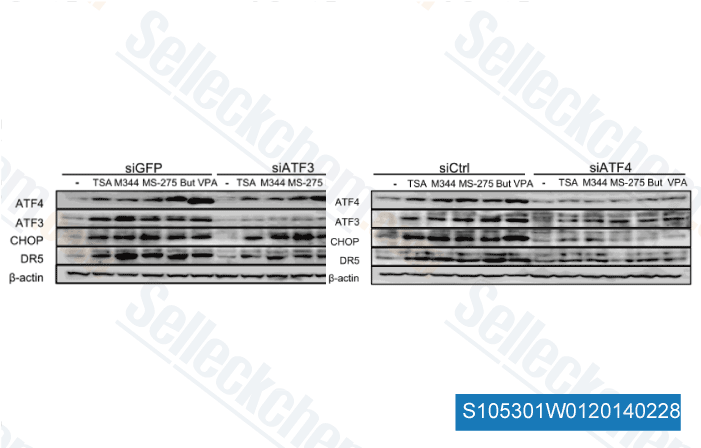
-
Dati da [ Biochem Biophys Res Commun , 2014 , 10.1016/j.bbrc.2014.01.184 ]
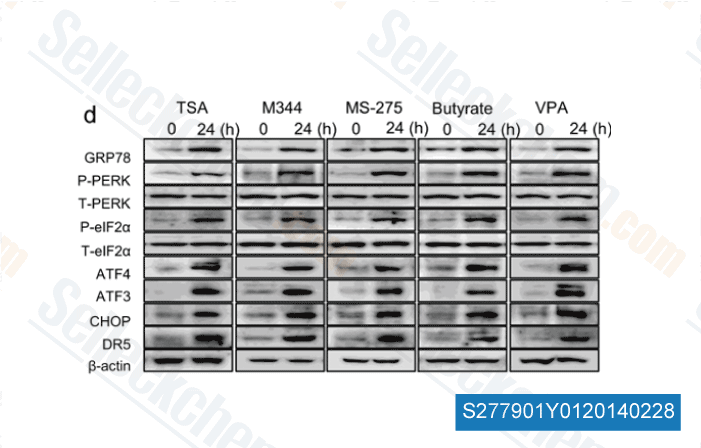
-
Dati da [ Biochem Biophys Res Commun , 2014 , 10.1016/j.bbrc.2014.01.184 ]
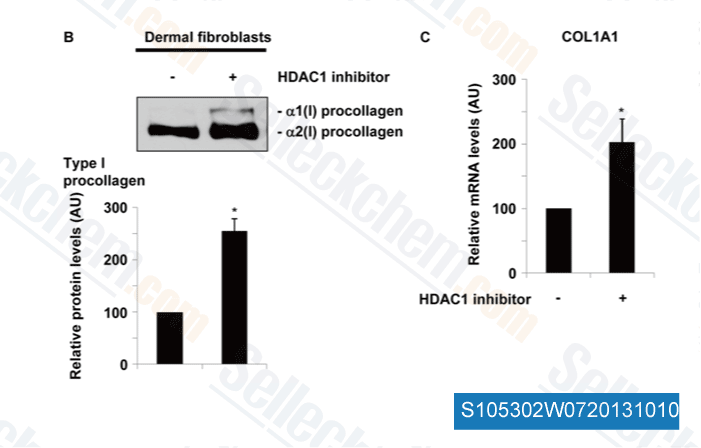
-
Dati da [ PLoS One , 2013 , 8, e74930 ]
Sellecks Entinostat (MS-275) È stato citato da 437 Pubblicazioni
| Reprogramming aerobic metabolism mitigates Streptococcus pyogenes tissue damage in a mouse necrotizing skin infection model [ Nat Commun, 2025, 16(1):2559] | PubMed: 40089471 |
| PROX1 is an early driver of lineage plasticity in prostate cancer [ J Clin Invest, 2025, 135(11)e187490] | PubMed: 40454483 |
| Early growth response 1 as a key regulator of PD-L1 expression and immune evasion in extranodal NK/T-cell lymphoma [ Blood Cancer J, 2025, 15(1):108] | PubMed: 40514360 |
| HDAC1 acts as a tumor suppressor in ALK-positive anaplastic large cell lymphoma: implications for HDAC inhibitor therapy [ Leukemia, 2025, 10.1038/s41375-025-02584-9] | PubMed: 40175628 |
| Stochastic demethylation and redundant epigenetic suppressive mechanisms generate highly heterogeneous responses to pharmacological DNA methyltransferase inhibition [ J Exp Clin Cancer Res, 2025, 44(1):21] | PubMed: 39844304 |
| Dual targeting of CDK6 and LSD1 is synergistic and overcomes differentiation blockade in AML [ EMBO Mol Med, 2025, 10.1038/s44321-025-00296-2] | PubMed: 40883610 |
| Engineering a multilayered 3D stromal barrier model for quantitative analysis of T cell infiltration and cytotoxicity [ Acta Biomater, 2025, S1742-7061(25)00677-4] | PubMed: 40939760 |
| Epigenomic regulation of stemness contributes to the low immunogenicity of the most mutated human cancer [ Cell Rep, 2025, S2211-1247(25)00332-8] | PubMed: 40250424 |
| Pharmacologically induced proteolysis of histone deacetylase-6 attenuates influenza virus replication despite limited anti-tumor effects [ Life Sci, 2025, 363:123401] | PubMed: 39814129 |
| HDAC1-3 inhibition triggers NEDD4-mediated CCR2 downregulation and attenuates immunosuppression in myeloid-derived suppressor cells [ Cancer Immunol Immunother, 2025, 74(3):81] | PubMed: 39891718 |
POLITICA DI RESO
La politica di reso incondizionato di Selleck Chemical garantisce ai nostri clienti unesperienza di acquisto online senza problemi. Se non sei in alcun modo soddisfatto del tuo acquisto, puoi restituire qualsiasi articolo entro 7 giorni dalla ricezione. In caso di problemi di qualità del prodotto, sia relativi al protocollo che al prodotto, puoi restituire qualsiasi articolo entro 365 giorni dalla data di acquisto originale. Si prega di seguire le istruzioni seguenti per la restituzione dei prodotti.
SPEDIZIONE E CONSERVAZIONE
I prodotti Selleck vengono trasportati a temperatura ambiente. Se ricevi il prodotto a temperatura ambiente, ti assicuriamo che il Dipartimento di Ispezione Qualità di Selleck ha condotto esperimenti per verificare che la conservazione a temperatura normale per un mese non influirà sullattività biologica dei prodotti in polvere. Dopo la raccolta, conservare il prodotto secondo le indicazioni descritte nella scheda tecnica. La maggior parte dei prodotti Selleck è stabile nelle condizioni raccomandate.
NON PER USO UMANO, DIAGNOSTICO VETERINARIO O TERAPEUTICO.