
Dati tecnici
| Formula | C23H31NO7 |
||||||
| Peso molecolare | 433.49 | Numero CAS | 128794-94-5 | ||||
| Solubilità (25°C)* | In vitro | DMSO | 86 mg/mL (198.38 mM) | ||||
| Water | Insoluble | ||||||
| Ethanol | Insoluble | ||||||
| In vivo (Aggiungere i solventi al prodotto singolarmente e in ordine.) |
|
||||||
|
* <1 mg/ml significa leggermente solubile o insolubile. * Si prega di notare che Selleck testa la solubilità di tutti i composti internamente e la solubilità effettiva può differire leggermente dai valori pubblicati. Ciò è normale ed è dovuto a leggere variazioni da lotto a lotto. * Spedizione a temperatura ambiente (I test di stabilità mostrano che questo prodotto può essere spedito senza alcuna misura di raffreddamento.) |
|||||||
Preparazione delle soluzioni stock
Attività biologica
| Descrizione | Mycophenolate mofetil è un inibitore non competitivo, selettivo e reversibile dell'inosina monofosfato deidrogenasi I/II con IC50 di 39 nM e 27 nM, rispettivamente. Questo composto induce apoptosi caspasi-dipendente e inibizione del ciclo cellulare nelle cellule di mieloma multiplo. | ||||
|---|---|---|---|---|---|
| Target |
|
||||
| In vitro | Mycophenolate mofetil è un profarmaco estere dell'immunosoppressore attivo acido micofenolico (MPA). Quest'ultimo mostra un'attività di inibizione non competitiva, selettiva e reversibile contro l'inosina monofosfato deidrogenasi di tipo I/II con IC50 di 39 nM e 27 nM, rispettivamente. Inoltre, l'MPA produce anche l'inibizione concentrazione-dipendente della proliferazione delle cellule T stimolate da ConA, delle cellule B stimolate da LPS e delle cellule T specifiche per alloantigeni con IC50 di 100 nM, 120 nM e 51 nM, rispettivamente. Questo composto con alta concentrazione di 10 μg/mL induce una forte apoptosis nelle colture di cellule microgliali e aumenta il numero di cellule apoptotiche immunoreattive alla caspasi-3 attivata. Inoltre, (1 μg/mL) inibisce fortemente la proliferazione sia delle cellule microgliali che degli astrociti. Uno studio recente mostra che questa sostanza chimica attenua significativamente l'entità della morte delle cellule neuronali delle colture di sezioni ippocampali organotipiche dopo lesione neuronale in modo tempo-dipendente. |
||||
| In vivo | In un modello di trapianto cardiaco eterotopico di ratto ACI-a-Lewis, il trattamento con Mycophenolate mofetil a dosi di 20 mg/kg e 40 mg/kg porta a un prolungamento della sopravvivenza dell'innesto, con un tempo medio di sopravvivenza (MST) di 14,5 giorni e 18,5 giorni, rispettivamente. Nel modello murino di sclerodermia indotta da bleomicina (BLM), questo composto riduce l'infiltrazione di cellule infiammatorie, il contenuto tissutale di idrossiprolina e lo spessore dermico. |
Protocollo (da riferimento)
| Saggio della chinasi: |
|
|---|---|
| Saggio cellulare: |
|
| Studio sugli animali: |
|
Riferimenti
|
Convalida del prodotto da parte del cliente
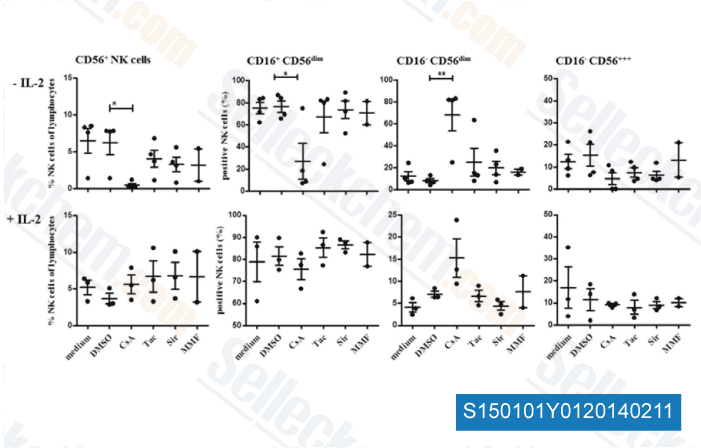
-
Dati da [ Front Immunol , 2013 , 4, 46 ]
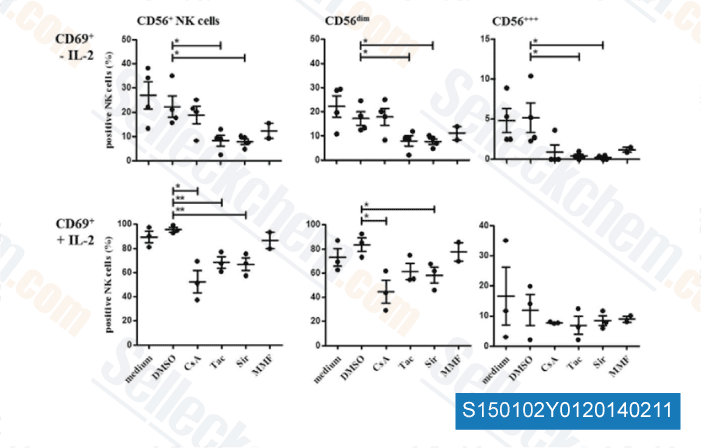
-
Dati da [ Front Immunol , 2013 , 4, 46 ]
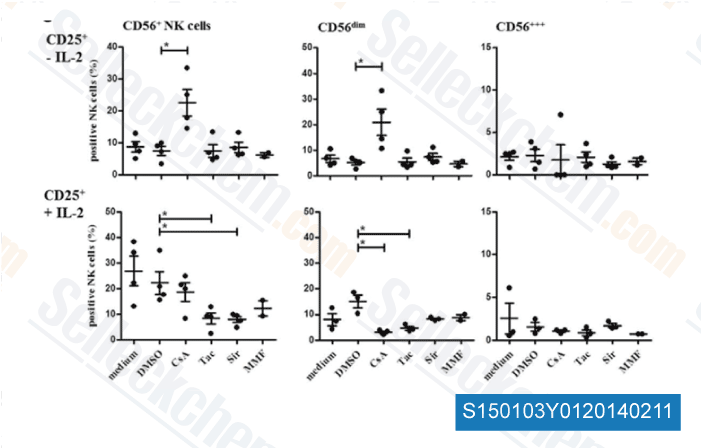
-
Dati da [ Front Immunol , 2013 , 4:, 46 ]
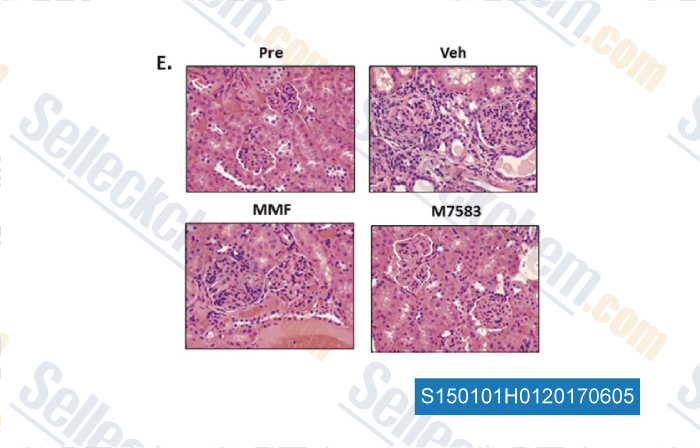
-
Dati da [ , , Clin Immunol, 2016, 164:65-77 ]
Sellecks Mycophenolate mofetil È stato citato da 14 Pubblicazioni
| Digital twins for in vivo metabolic flux estimations in patients with brain cancer [ Cell Metab, 2025, S1550-4131(25)00482-6] | PubMed: 41330373 |
| Genome-scale clustered regularly interspaced short palindromic repeats screen identifies nucleotide metabolism as an actionable therapeutic vulnerability in diffuse large B-cell lymphoma [ Haematologica, 2024, 109(12):3989-4006] | PubMed: 38841800 |
| Spatiotemporal Regulation of De Novo and Salvage Purine Synthesis during Brain Development [ eNeuro, 2023, 10(10)ENEURO.0159-23.2023] | PubMed: 37770184 |
| Spatiotemporal regulation ofde novoand salvage purine synthesis during brain development [ bioRxiv, 2023, 10.1101/2023.03.01.530588] | PubMed: None |
| Reversal of cancer gene expression identifies repurposed drugs for diffuse intrinsic pontine glioma [ Acta Neuropathol Commun, 2022, 10(1):150] | PubMed: 36274161 |
| Comprehensive drug response profiling and pan-omic analysis identified therapeutic candidates and prognostic biomarkers for Asian cholangiocarcinoma [ iScience, 2022, 25(10):105182] | PubMed: 36248745 |
| GATA4 regulates mitochondrial biogenesis and functions during cardiac development and rescues cardiac and mitochondrial functions impaired by TKIs [ Research Square, 2022, Version 1] | PubMed: None |
| The effect of nintedanib versus mycophenolate mofetil in the Fra2 mouse model of systemic sclerosis-associated interstitial lung disease [ Clin Exp Rheumatol, 2021, N/A] | PubMed: 33886452 |
| Purine metabolism regulates DNA repair and therapy resistance in glioblastoma [ Nat Commun, 2020, 11(1):3811] | PubMed: 32732914 |
| IMPDH Inhibitors for Antitumor Therapy in Tuberous Sclerosis Complex [ JCI Insight, 2020, 9;5(7):e135071] | PubMed: 32271165 |
POLITICA DI RESO
La politica di reso incondizionato di Selleck Chemical garantisce ai nostri clienti unesperienza di acquisto online senza problemi. Se non sei in alcun modo soddisfatto del tuo acquisto, puoi restituire qualsiasi articolo entro 7 giorni dalla ricezione. In caso di problemi di qualità del prodotto, sia relativi al protocollo che al prodotto, puoi restituire qualsiasi articolo entro 365 giorni dalla data di acquisto originale. Si prega di seguire le istruzioni seguenti per la restituzione dei prodotti.
SPEDIZIONE E CONSERVAZIONE
I prodotti Selleck vengono trasportati a temperatura ambiente. Se ricevi il prodotto a temperatura ambiente, ti assicuriamo che il Dipartimento di Ispezione Qualità di Selleck ha condotto esperimenti per verificare che la conservazione a temperatura normale per un mese non influirà sullattività biologica dei prodotti in polvere. Dopo la raccolta, conservare il prodotto secondo le indicazioni descritte nella scheda tecnica. La maggior parte dei prodotti Selleck è stabile nelle condizioni raccomandate.
NON PER USO UMANO, DIAGNOSTICO VETERINARIO O TERAPEUTICO.