
Lapatinib Ditosylate

N. catalogoS1028 Lotto:S102812

Stampa

Dati tecnici

Formula

C29H26ClFN4O4S.2C7H8O3S

Peso molecolare 925.46 Numero CAS 388082-77-7
Solubilità (25°C)* In vitro DMSO 100 mg/mL (108.05 mM)
Water Insoluble
Ethanol Insoluble
In vivo (Aggiungere i solventi al prodotto singolarmente e in ordine.)
Homogeneous suspension
CMC-NA
≥5mg/ml Taking the 1 mL working solution as an example, add 5 mg of this product to 1 ml of CMC-Na solution, mix evenly to obtain a homogeneous suspension with a final concentration of 5 mg/ml.
Clear solution
2%DMSO 40%PEG300 5%Tween80 53%ddH2O

Convalidato dai laboratori Selleck. Se sono necessarie modifiche a questa formulazione, contattare il nostro team di vendita per test personalizzati.

1.250mg/ml (1.35mM) Taking the 1 mL working solution as an example, add 20 μL 62.5 mg/ml clear DMSO stock solution to 400 μL PEG300, mix evenly to clarify it; add 50 μL Tween80 to the above system, mix evenly to clarify it; then continue to add 530 μL ddH2O to make it clear. Volume up to 1 mL. The mixed solution should be used immediately for optimal results. 
* <1 mg/ml significa leggermente solubile o insolubile.
* Si prega di notare che Selleck testa la solubilità di tutti i composti internamente e la solubilità effettiva può differire leggermente dai valori pubblicati. Ciò è normale ed è dovuto a leggere variazioni da lotto a lotto.
* Spedizione a temperatura ambiente (I test di stabilità mostrano che questo prodotto può essere spedito senza alcuna misura di raffreddamento.)

Preparazione delle soluzioni stock

Attività biologica

Descrizione Lapatinib Ditosilato è un potente inibitore di EGFR ed ErbB2 con IC50 di 10,8 e 9,2 nM in saggi acellulari, rispettivamente.
Target
ErbB2
(Cell-free assay)
EGFR
(Cell-free assay)
ErbB4
(Cell-free assay)
9.2 nM 10.8 nM 367 nM
In vitro Lapatinib Ditosilato inibisce debolmente l'attività di ErbB4 con IC50 di 367 nM e mostra una selettività >300 volte superiore per EGFR ed ErbB2 rispetto ad altre chinasi come c-Src, c-Raf, MEK, ERK, c-Fms, CDK1, CDK2, p38, Tie-2 e VEGFR2. Questo composto inibisce significativamente l'autofosforilazione del recettore di EGFR ed ErbB2 in modo dose-dipendente con IC50 di 170 nM e 80 nM, rispettivamente nelle cellule HN5; così come 210 nM e 60 nM, rispettivamente nelle cellule BT474. A differenza di OSI-774 e Iressa (ZD1839) che inibiscono preferenzialmente la crescita delle cellule che sovraesprimono EGFR, inibisce la crescita di cellule che sovraesprimono sia EGFR che ErbB2. Mostra una maggiore attività inibitoria contro le cellule che sovraesprimono EGFR o ErbB2 con IC50 di 0,09-0,21 μM, rispetto alle cellule che esprimono bassi livelli di EGFR o ErbB2 con IC50 di 3-12 μM, ed esibisce una selettività di circa 100 volte rispetto alle normali cellule fibroblastiche. Questa sostanza chimica inibisce potentemente la crescita delle cellule HN5 e A-431 che sovraesprimono EGFR, così come delle cellule BT474 e N87 che sovraesprimono ErbB2, e induce significativamente l'arresto in fase G1 delle cellule HN5 e l'apoptosi delle cellule BT474, che sono associate all'inibizione della fosforilazione di AKT.
In vivo La somministrazione orale di Lapatinib Ditosilato (~100 mg/kg) due volte al giorno inibisce significativamente la crescita di xenotrapianti BT474 e HN5 in modo dose-dipendente.

Protocollo (da riferimento)

Saggio della chinasi:[1]
  • Saggi chinasici in vitro

    I valori di IC50 per l'inibizione dell'attività enzimatica sono generati misurando l'inibizione della fosforilazione di un substrato peptidico. I domini chinasici intracellulari di EGFR ed ErbB2 sono purificati da un sistema di espressione con baculovirus. Le reazioni di EGFR ed ErbB2 vengono eseguite in piastre di polistirene a 96 pozzetti con fondo arrotondato in un volume finale di 45 μL. Le miscele di reazione contengono 50 mM di acido 4-morfolinopropansolfonico (pH 7,5), 2 mM di MnCl2, 10 μM di ATP, 1 μCi di [γ33P] ATP/reazione, 50 μM di Peptide A [Biotina-(acido amino esanoico)-EEEEYFELVAKKK-CONH2], 1 mM di ditiotreitolo e 1 μL di DMSO contenente diluizioni seriali di questo composto a partire da 10 μM. La reazione viene avviata aggiungendo il dominio intracellulare del recettore di tipo 1 purificato indicato. La quantità di enzima aggiunta è di 1 pmol/reazione (20 nM). Le reazioni vengono terminate dopo 10 minuti a 23°C aggiungendo 45 μL di acido fosforico allo 0,5% in acqua. La miscela di reazione terminata (75 μL) viene trasferita su piastre filtranti di fosfocellulosa. Le piastre vengono filtrate e lavate tre volte con 200 μL di acido fosforico allo 0,5%. Un cocktail scintillante (50 μL) viene aggiunto a ciascun pozzetto e il saggio viene quantificato tramite conteggio in un Packard Topcount. I valori di IC50 sono generati da curve dose-risposta a 10 punti.

Saggio cellulare:[1]
  • Linee cellulari

    HFF, MCF-7, T47D, A-431, HN5, BT474, N87, CaLu-3, HB4a, and HB4a c5.2

  • Concentrazioni

    Dissolved in DMSO, final concentrations ~100 μM

  • Tempo di incubazione

    72 hours

  • Metodo

    Cells are exposed to various concentrations of Lapatinib Ditosylate for 72 hours. Relative cell number is estimated using methylene blue staining. The absorbance at 620 nm is read in a Spectra microplate reader. Cell death and cell cycle analysis are assessed by propidium iodide staining and antibody detection of incorporated BrdUrd and staining with propidium iodide.

Studio sugli animali:[1]
  • Modelli animali

    CD-1 nude female mice implanted s.c. with HN5 cells, and C.B-17 SCID female mice implanted s.c. with BT474 cells

  • Dosaggi

    ~100 mg/kg

  • Somministrazione

    Orally twice daily

Riferimenti

  • https://pubmed.ncbi.nlm.nih.gov/12467226/

Convalida del prodotto da parte del cliente
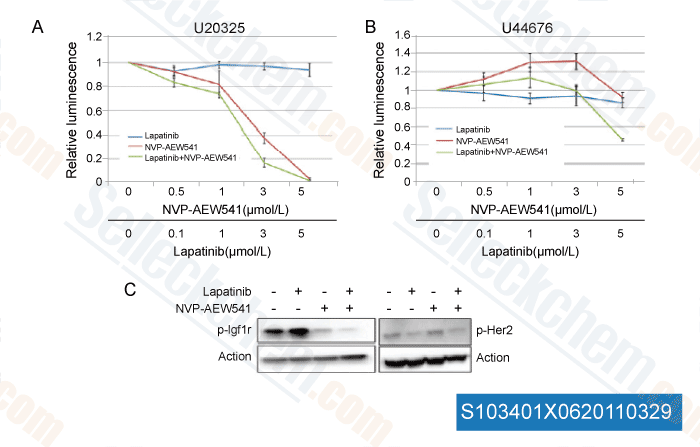
<p>Combination of NVP-AEW541 and lapatinib cooperatively inhibits the growth of NVP-AEW541 resistant murine rhabdomyosarcoma primary cell cultures with Igf1r/Her2 complexes. Cell viability assay for Naïve, untreated (U20325; A) and NVP-AEW541 innately resistant mouse rhabdomyosarcoma primary culture (U44676; B) treated with varying concentrations of NVP-AEW541, lapatinib, or a combination of both. Naïve cells (U20325) were sensitive to NVP-AEW541, but lapatinib had no cooperativity. In contrast, NVP-AEW541 at moderate doses increased cell growth in resistant cell cultures (U44676). However, this paradoxical effect was reduced by the addition of lapatinib, although lapatinib treatment alone had very little effect. C, the NVP-AEW541 resistant primary tumor cell line (U44676) was treated with DMSO, 5 μmol/L lapatinib, 5 μmol/L NVP-AEW541, and a combination of 5 μmol/L NVP-AEW541+lapatinib for 25 minutes and Western blot analysis was done on lysates for p-Igf1r and p-Her2.</p>

Dati da [ Mol Cancer Ther , 2011 , 10:697-707 ]
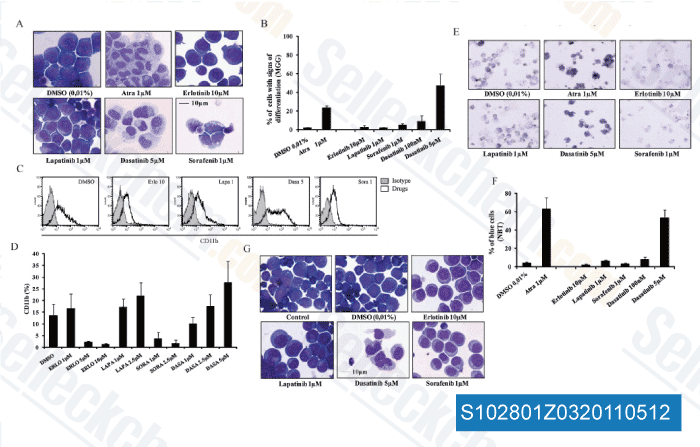
<p>Capacity of the TKI to overcome the AML-typical differentiation blockage. The myeloid cell lines MOLM-13 and HL-60 were incubated for 6 days with 0.01% DMSO (serving as a negative solvent control), 1 μM of ATRA (serving as a positive control), as well as with the indicated doses of the four TKI. (A) Representative May-Gruenwald-Giemsa staining of MOLM-13 cells, (B) quantitation of the percentage of MOLM-13 cells exhibiting at least two morphological signs of differentiation (that is a decrease in cytoplasmic basophilia, a reduction of the nucleo-cytoplasmic ratio, appearance of nuclear lobulation and/or cytoplasmic granules). Percentages were evaluated by examining at least 100 cells/condition; (C) representative FACS overlays of MOLM-13 cells depicting TKI-induced CD11b expression (black line) as compared to the isotype (shaded grey); (D) quantitation of TKI-induced CD11b-expression in MOLM-13 cells; (E) representative slides depicting morphology/staining of MOLM-13 cells assessed in the NBT-reduction assay; (F) respective quantitative assessment demonstrating the NBT-reducing capacity under the different drugs; (G) representative May-Gruenwald-Giemsa staining of HL-60 cells.</p><div><div> </div></div><p> </p>

Dati da [ Biochem Pharmacol , 2011 , 82, 1457-1466 ]
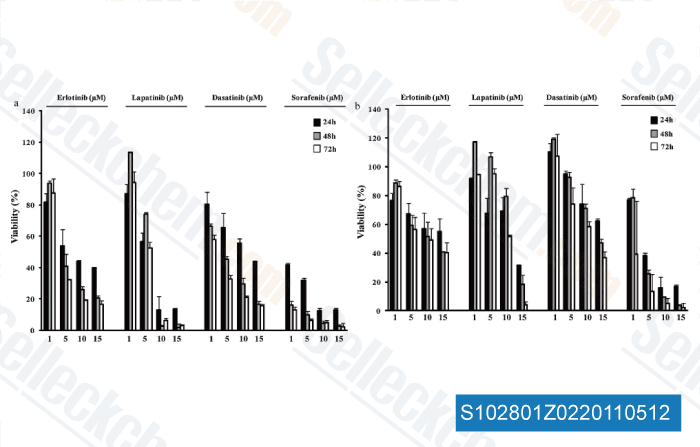
<p>Impact of the TKI erlotinib, lapatinib, dasatinib, and sorafenib on the viability of MDS/AML cells. MOLM-13 (A) and HL-60 (B) cells were incubated with the indicated doses (given in mM below the x-axis) of the 4 TKI, and cellular viability was assessed by MTT assay after 24, 48 and 72 h of incubation. Changes in viability are given as percentage of cells as compared to non-treated control samples. This experiment was repeated at least three times, yielding comparable results. Graphs show representative results of one experiment carried out in duplicates (mean   standard deviation).</p><div><div> </div></div><p> </p>

Dati da [ Biochem Pharmacol , 2011 , 82, 1457-1466 ]
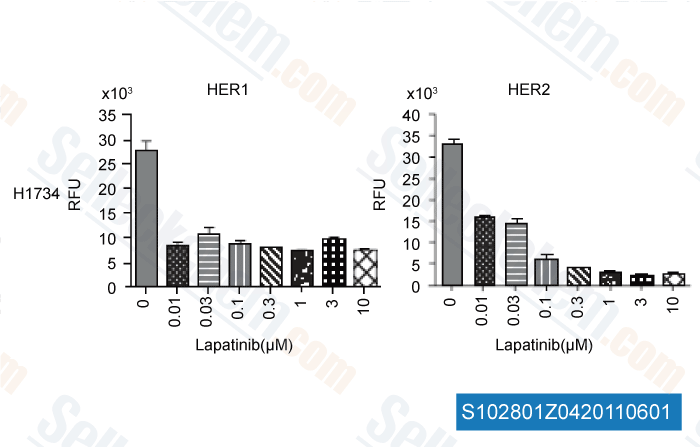
<p>Inhibition of signaling pathway activation in lung tumor cell lines by kinase inhibitors. Lung tumor cells were cultured in 10% FBS until reaching ∼80% confluence and then the cells were starved in serum-free medium for overnight, followed by 4-hour treatment with the inhibitors. Cell lysates were then prepared and used for determination of the pathway activation signals by the CEER assay.</p>

Dati da [ Int J Proteomics , 2011 , 2011, 215496 ]

Sellecks Lapatinib Ditosylate È stato citato da 149 Pubblicazioni

Inactivation of necroptosis-promoting protein MLKL creates a therapeutic vulnerability in colorectal cancer cells [ Cell Death Dis, 2025, 16(1):118] PubMed: 39979285
Multiscale Modeling Uncovers Macrophage Infiltration and TNF-α Signaling Networks for Targeting in Inflammatory Breast Cancer Tumor Emboli [ bioRxiv, 2025, 2025.05.29.656249] PubMed: 40502021
Altered ribosomal profile in acquired resistance and reversal associates with pathological response to chemotherapy in inflammatory breast cancer [ NPJ Breast Cancer, 2024, 10(1):65] PubMed: 39075068
Patient-derived rhabdomyosarcoma cells recapitulate the genetic and transcriptomic landscapes of primary tumors [ iScience, 2024, 27(10):110862] PubMed: 39319271
Profiling of ERBB receptors and downstream pathways reveals selectivity and hidden properties of ERBB4 antagonists [ iScience, 2024, 27(2):108839] PubMed: 38303712
Massively parallel reporter assays identify enhancer elements in oesophageal Adenocarcinoma [ NAR Cancer, 2024, 6(4):zcae041] PubMed: 39417090
Overcoming brain-derived therapeutic resistance in HER2+ breast cancer brain metastasis [ bioRxiv, 2024, 2024.02.19.581073] PubMed: 38529509
Proteomic Assessment of SKBR3/HER2+ Breast Cancer Cellular Response to Lapatinib and Investigational Ipatasertib Kinase Inhibitors [ bioRxiv, 2024, 2024.04.02.587656] PubMed: 38617302
Protocol for identifying properties of ERBB receptor antagonists using the barcoded ERBBprofiler assay [ STAR Protoc, 2024, 5(2):102987] PubMed: 38635397
Analysis and modeling of cancer drug responses using cell cycle phase-specific rate effects [ Nat Commun, 2023, 14(1):3450] PubMed: 37301933

POLITICA DI RESO
La politica di reso incondizionato di Selleck Chemical garantisce ai nostri clienti unesperienza di acquisto online senza problemi. Se non sei in alcun modo soddisfatto del tuo acquisto, puoi restituire qualsiasi articolo entro 7 giorni dalla ricezione. In caso di problemi di qualità del prodotto, sia relativi al protocollo che al prodotto, puoi restituire qualsiasi articolo entro 365 giorni dalla data di acquisto originale. Si prega di seguire le istruzioni seguenti per la restituzione dei prodotti.

SPEDIZIONE E CONSERVAZIONE
I prodotti Selleck vengono trasportati a temperatura ambiente. Se ricevi il prodotto a temperatura ambiente, ti assicuriamo che il Dipartimento di Ispezione Qualità di Selleck ha condotto esperimenti per verificare che la conservazione a temperatura normale per un mese non influirà sullattività biologica dei prodotti in polvere. Dopo la raccolta, conservare il prodotto secondo le indicazioni descritte nella scheda tecnica. La maggior parte dei prodotti Selleck è stabile nelle condizioni raccomandate.

NON PER USO UMANO, DIAGNOSTICO VETERINARIO O TERAPEUTICO.