
Dati tecnici
| Formula | C33H38N4O6.HCl.3H2O |
||||||
| Peso molecolare | 677.18 | Numero CAS | 136572-09-3 | ||||
| Solubilità (25°C)* | In vitro | DMSO | 100 mg/mL (147.67 mM) | ||||
| Ethanol | 12 mg/mL (17.72 mM) | ||||||
| Water | 1 mg/mL (1.47 mM) | ||||||
| In vivo (Aggiungere i solventi al prodotto singolarmente e in ordine.) |
|
||||||
|
* <1 mg/ml significa leggermente solubile o insolubile. * Si prega di notare che Selleck testa la solubilità di tutti i composti internamente e la solubilità effettiva può differire leggermente dai valori pubblicati. Ciò è normale ed è dovuto a leggere variazioni da lotto a lotto. * Spedizione a temperatura ambiente (I test di stabilità mostrano che questo prodotto può essere spedito senza alcuna misura di raffreddamento.) |
|||||||
Preparazione delle soluzioni stock
Attività biologica
| Descrizione | Irinotecan HCl Trihydrate è un triidrato di cloridrato di irinotecan (Camptosar, Campto, CPT-11) che è un inibitore della Topoisomerase I con IC50 di 15,8 e 5,17 μM rispettivamente per le cellule LoVo e le cellule HT-29. | |
|---|---|---|
| Target |
|
|
| In vitro | Irinotecan viene attivato a SN-38 dalle carbossilesterasi per poter interagire con il suo bersaglio, la Topoisomerase I. Irinotecan induce quantità simili di complessi clivabili al suo IC50 nelle cellule LoVo e nelle linee cellulari HT-29. SN-38 induce una formazione concentrazione-dipendente di complessi clivabili, che non è significativamente diversa nelle cellule LoVo e nelle linee cellulari HT-29. L'accumulo cellulare di Irinotecan è marcatamente diverso, raggiungendo livelli costantemente più elevati nelle cellule HT-29 rispetto alle cellule LoVo. L'anello E lattonico di Irinotecan e SN-38 si idrolizza reversibilmente in soluzioni acquose, e l'interconversione tra le forme lattonica e carbossilica dipende dal pH e dalla temperatura. Il fegato è il principale responsabile dell'attivazione di Irinotecan a SN-38. A parità di concentrazioni di Irinotecan e SN-38 glucuronide, la velocità di produzione di SN-38 mediata dalla beta-glucuronidasi è maggiore di quella formata da Irinotecan sia nel tessuto tumorale che normale. Irinotecan viene convertito a SN-38 anche nell'intestino, nel plasma e nei tessuti tumorali. Irinotecan è significativamente più attivo nelle cellule SCLC che nelle linee cellulari NSCLC, mentre non si osserva alcuna differenza significativa tra i tipi istologici con SN-38. | |
| In vivo | Negli xenotrapianti COLO 320, Irinotecan induce un'inibizione massima della crescita del 92%. Una singola dose di Irinotecan aumenta significativamente le quantità di Topoisomerase I legata covalentemente al DNA nello stomaco, nel duodeno, nel colon e nel fegato. Contestualmente, il gruppo trattato con Irinotecan mostra quantità significativamente maggiori di rotture del filamento di DNA nelle cellule della mucosa del colon rispetto al gruppo di controllo. | |
| Caratteristiche | Irinotecan è un profarmaco utilizzato per trattare il cancro colorettale metastatico. |
Protocollo (da riferimento)
| Saggio cellulare: |
|
|---|---|
| Studio sugli animali: |
|
Riferimenti
|
Convalida del prodotto da parte del cliente
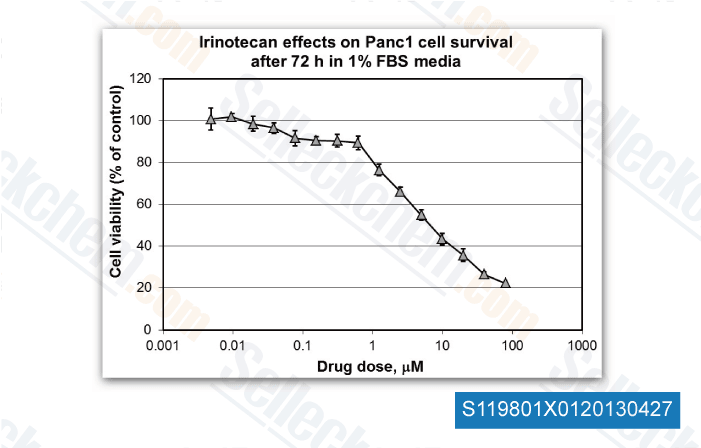
-
Dr. Edita Aksamitiene from Thomas Jefferson University, , Dr. Mikhail Menshikov of Cardiology Research Center
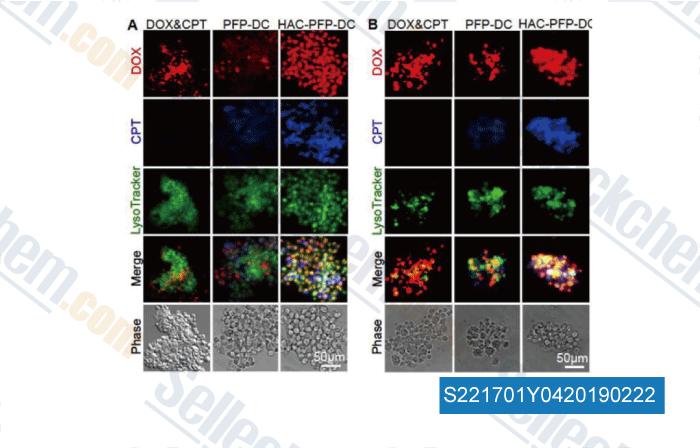
-
Dati da [ , , Biomaterials, 2015, 72:74-89 ]
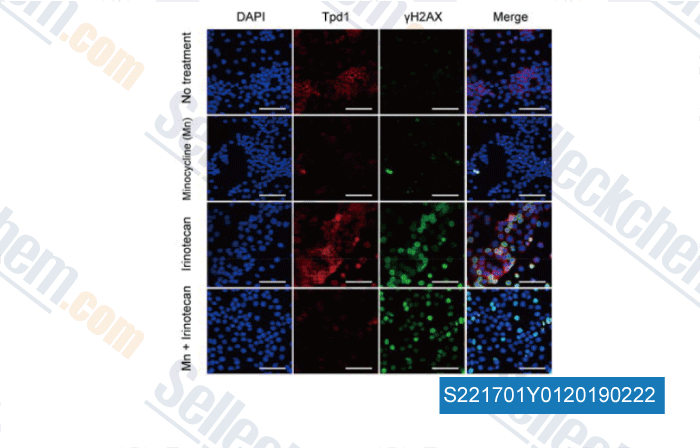
-
Dati da [ , , Mol Cancer Ther, 2018, 17(2):508-520 ]
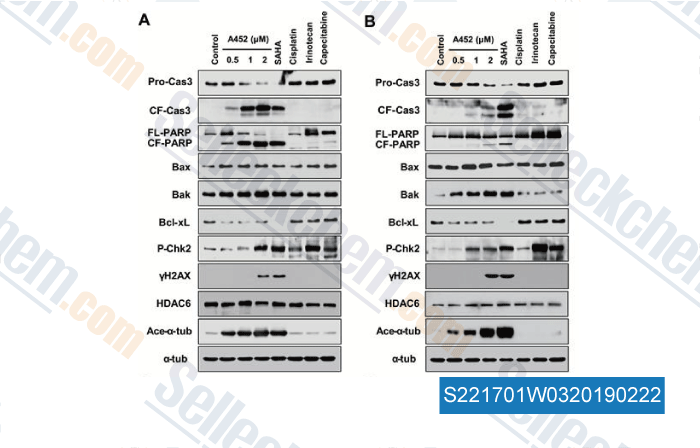
-
Dati da [ , , Carcinogenesis, 2018, 39(1):72-83 ]
Sellecks Irinotecan Hydrochloride Trihydrate È stato citato da 90 Pubblicazioni
| NSUN5 Mediates Resistance to Doxorubicin via Up-regulation of DNA Damage Repair Proteins BRCA2 and BRIP1 in Colorectal Cancer [ Am J Pathol, 2025, S0002-9440(25)00252-4] | PubMed: 40713976 |
| The novel SMYD3 inhibitor EM127 impairs DNA repair response to chemotherapy-induced DNA damage and reverses cancer chemoresistance [ J Exp Clin Cancer Res, 2024, 43(1):151] | PubMed: 38812026 |
| Establishment, characterization, and biobanking of 36 pancreatic cancer organoids: prediction of metastasis in resectable pancreatic cancer [ Cell Oncol (Dordr), 2024, 10.1007/s13402-024-00939-5] | PubMed: 38619751 |
| CHD1L Inhibitor OTI-611 Synergizes with Chemotherapy to Enhance Antitumor Efficacy and Prolong Survival in Colorectal Cancer Mouse Models [ Int J Mol Sci, 2024, 25(23)13160] | PubMed: 39684869 |
| Effects of simulated microgravity on colorectal cancer organoids growth and drug response [ Sci Rep, 2024, 14(1):25526] | PubMed: 39462078 |
| Assessment of stromal SCD-induced drug resistance of PDAC using 3D-printed zPDX model chips [ iScience, 2023, 26(1):105723] | PubMed: 36590169 |
| Artesunate ameliorates irinotecan-induced intestinal injury by suppressing cellular senescence and significantly enhances anti-tumor activity [ Int Immunopharmacol, 2023, 119:110205] | PubMed: 37104917 |
| Cutoff value of IC50 for drug sensitivity in patient-derived tumor organoids in colorectal cancer [ iScience, 2023, 26(7):107116] | PubMed: 37426352 |
| The role of pregnane X receptor (PXR-in cancer drug resistance and identification of novel PXR antagonists [ Tübingen, 2023, ] | PubMed: None |
| p53 controls choice between apoptotic and non-apoptotic death following DNA damage [ bioRxiv, 2023, 2023.01.17.524444] | PubMed: 36712034 |
POLITICA DI RESO
La politica di reso incondizionato di Selleck Chemical garantisce ai nostri clienti unesperienza di acquisto online senza problemi. Se non sei in alcun modo soddisfatto del tuo acquisto, puoi restituire qualsiasi articolo entro 7 giorni dalla ricezione. In caso di problemi di qualità del prodotto, sia relativi al protocollo che al prodotto, puoi restituire qualsiasi articolo entro 365 giorni dalla data di acquisto originale. Si prega di seguire le istruzioni seguenti per la restituzione dei prodotti.
SPEDIZIONE E CONSERVAZIONE
I prodotti Selleck vengono trasportati a temperatura ambiente. Se ricevi il prodotto a temperatura ambiente, ti assicuriamo che il Dipartimento di Ispezione Qualità di Selleck ha condotto esperimenti per verificare che la conservazione a temperatura normale per un mese non influirà sullattività biologica dei prodotti in polvere. Dopo la raccolta, conservare il prodotto secondo le indicazioni descritte nella scheda tecnica. La maggior parte dei prodotti Selleck è stabile nelle condizioni raccomandate.
NON PER USO UMANO, DIAGNOSTICO VETERINARIO O TERAPEUTICO.